Back-leg limping with no crying: what it can mean and what to do next

Back-leg limping with no crying: what it can mean and what to do next
Your dog is eating, wagging, and acting normal. But their back leg looks "off." It is hard to know whether to worry or wait.
A limp still matters, even if your dog isn't yelping. Here is a calm way to check what you can at home and decide what to do next.
Why dogs can limp without acting like they hurt
Many dogs don't yelp, even with a real injury. Some are stoic by nature. Others are so focused on being with you that they push through discomfort without showing it.
Adrenaline can also mask pain. Your dog might look completely fine during a walk, then limp more once they settle down and the adrenaline drops.
Some issues feel unstable before they feel painful. A slightly loose knee or a kneecap that slips can cause an odd step well before it becomes obviously sore. The limp is still useful information, even if your dog seems cheerful.
Quick triage: how fast does your dog need help?
You are not trying to diagnose the cause at home. You are deciding how urgently your dog needs to be seen.
Go the same day if you see any of these:
- Not bearing any weight on the leg at all
- Obvious swelling, deformity, or an open wound
- Dragging the leg or knuckling — toes curling under when walking
- Crying or yelping when the leg is touched
- Sudden hind-end weakness or wobbliness
- Suspected fracture or dislocation
These signs can point to a significant injury, nerve involvement, or infection risk. Don't wait.
Aim to be seen within 24 to 72 hours if:
- The limp has been going on for more than 48 hours
- It keeps coming back — limping, then fine, then limping again
- Your dog is toe-touching or resting that foot when standing still
- There's a mild but consistent limp with no obvious cause
- Your dog has known risk factors — large breed, overweight, or previous joint issues
On-and-off limping is a clue, not a comfort. It can mean something is slipping, getting irritated with use, or slowly worsening.
Short rest and monitor (24 to 48 hours) is reasonable if:
- The limp is mild and appeared after obvious exertion — zoomies, a slip, a big jump
- Your dog is bright, eating normally, and putting some weight through the leg
- There are no other symptoms
If you're unsure at any point, call your vet. That's always the right move.
Signs your dog is improving:
- Putting more weight through the leg consistently
- Less stiffness after rest
- Walking at their normal pace without hesitation
- Willing to use stairs or jump again
- Settled overnight rather than restless
Common back-leg causes when your dog seems fine otherwise
The goal here is to spot patterns you can describe — not to diagnose it yourself.
Minor sprain or strainOften shows up after zoomies, a slip on tiles, or an awkward jump off the sofa. Usually worse after play and better after rest. Many dogs act completely normal apart from the limp.
Early cruciate ligament problemIn dogs, a cruciate ligament injury can start as a partial tear. You might notice toe-touching, or your dog resting that foot when standing. Some dogs sit slightly off to one side. It can suddenly worsen after what looked like a minor slip.
Luxating patella (kneecap that slips)The classic sign is a "skip" or hop for a few steps, then back to normal. It can happen on a walk and then disappear for hours. Some dogs look completely unbothered, which makes it easy to dismiss.
Arthritis or early joint wearOften looks like stiffness after rest that loosens up after a few minutes of movement. Many owners notice it more in the morning, in cold weather, or after a longer day out.
Paw, pad, or nail problemsEasy to miss and capable of causing a surprisingly significant limp. Check for a cut pad, a cracked or broken nail, or something stuck between the toes. Even a small grass seed can change how a dog walks.
Hip issuesSome dogs bunny-hop when running. Others slow down on stairs or hesitate before jumping into the car. It can be subtle early on — more noticeable after longer walks or exercise.
Hip flexor strain (iliopsoas strain)A lingering, hard-to-pin-down back-leg limp. Often worse with running, jumping, and sharp turns. Dogs can look completely fine at a slow walk, then limp noticeably after activity.
Nerve or spine issuesLess common, but important to catch early. Watch for knuckling, dragging toes, scuffed toenails, or wobbliness. If you see any of these, move this into the urgent category.
What you can safely do at home for the next 24 to 48 hours
If your dog is in the rest-and-monitor category, treat it like a short injury time-out.
Enforce a calm resetNo running, jumping, rough play, or off-lead time. This can feel counterintuitive when your dog seems fine and wants to play. Rest is often what stops a minor tweak becoming a bigger setback.
Do a quick 2 to 5 minute checkPick a calm moment with good light. Keep it relaxed — if your dog is anxious or might snap, stop.
- Check the paw first — look between the toes, check the pads for cuts or foreign material, check each nail
- Run your hand gently along the leg — feel for swelling, heat, or areas your dog reacts to
- Watch them stand still — are they resting the foot, or weight-bearing normally?
- Do not force any joint bending or try to "find the spot" by pressing hard
Take a short daily videoFilm 10 to 20 seconds from the side and from behind. Once a day for three to five days. Small changes are hard to remember — video lets you see whether things are improving, staying the same, or getting worse, and it's genuinely useful to share with your vet.
Make the floor saferSlippery floors make back-leg limps worse and knock confidence. Add rugs or runners where your dog turns, launches, or navigates most — hallways, near doors, around their bed.
What not to do
What the clinic might check, and how to prevent repeat limps
Most visits follow a similar pattern. The clinician will watch your dog walk first, then do a hands-on exam — usually starting at the paw and working up the leg. They'll flex and extend joints and feel muscles for soreness or asymmetry.
Mild sedation is sometimes recommended for parts of the exam, particularly if your dog is tense or the area is sore. This isn't cause for concern — it often means a more accurate assessment.
X-rays are useful for ruling out fractures and identifying joint changes or arthritis. They don't always show soft tissue injuries clearly, so additional imaging is sometimes needed for things like cruciate damage.
Arriving with a clear timeline — when it started, which leg, what happened beforehand, and a short daily video — makes the appointment more efficient and often leads to a clearer answer faster.
Reducing the chance of repeat limps
- Keep weight in a healthy range — joint load is one of the most modifiable risk factors
- Consistent, low-impact movement beats irregular big exercise days
- Non-slip flooring on high-traffic routes at home
- Warm up before activity, especially in cold weather — a slow five-minute walk before anything more vigorous
- Stay up to date with parasite prevention
- Regular check-ins for dogs with known joint issues — early changes are easier to manage than advanced ones
Track the pattern, not just today
Mild limps and on-and-off limps are the ones that make owners second-guess themselves. It's easy to forget when it started, which side it was on, or what made it worse.
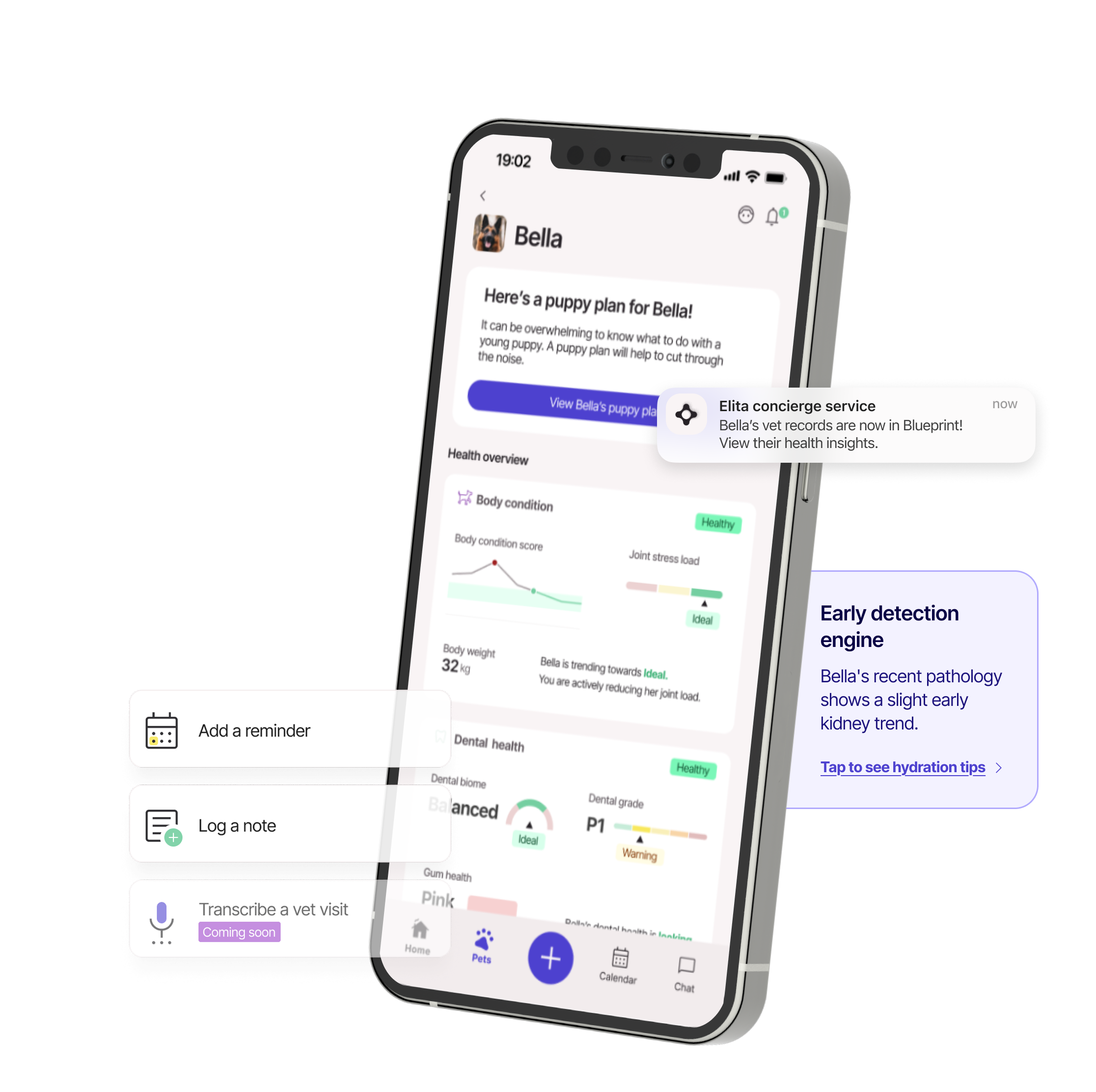
Blueprint helps you log the details that matter — start date, which leg, what happened beforehand, how it looked on the walk. Save a short daily video so you can compare day one to day three. That kind of clear timeline leads to the right next step sooner, with a lot less guesswork.

Your dog’s health, made simple.
Feel confident in every decision you make for your dog’s health. All the personalised support you need, finally in one place.