How much does cruciate ligament surgery cost for dogs in Australia?

Cruciate ligament surgery for dogs in Australia costs between $4,000 and $10,000 AUD, depending on the procedure, the size of your dog, and whether you're in a metro or regional clinic. TPLO (the current gold standard) typically runs $5,000–$9,000 per knee. Costs can double if both knees go, which happens in roughly 40–60% of cases over the following 12–24 months.
Cranial cruciate ligament (CCL) rupture is the most common orthopaedic injury in dogs. Unlike ACL injuries in humans, it's usually caused by slow degeneration rather than a single trauma, which is why surgery isn't always the only path, and why the way you care for your dog before the injury matters as much as what you do after.A quick note: this is general guidance based on what we see most often in Australia. Your vet knows your dog and your specific situation — their advice should always come first.
What are the different types of cruciate surgery?
There are three main options in Australia. The right one depends on your dog's size, age, activity level, and your budget.
TPLO has become the default recommendation for dogs over 15kg because it produces the most consistent long-term outcomes. Lateral suture is largely reserved for small or less active dogs. Most referral surgeons no longer recommend it for medium-to-large dogs given the higher reinjury rate.
What's included in the quote, and what isn't?
Most AU clinics quote the surgery itself, which usually covers anaesthesia, imaging, implants, and the first check-up. What's often not included:
- Additional diagnostics if the contralateral knee or hips need imaging ($300–$600)
- Post-op rehab / physiotherapy ($100–$180 per session, usually 6–10 sessions)
- Anti-inflammatories and pain relief for the first 4 weeks ($150–$400)
- Cone, harness or recovery suit ($30–$200)
- Required follow-up x-ray at 6 weeks ($250–$500)
Budget an extra $1,000–$2,500 on top of the surgery quote for a realistic total.
Are there alternatives to cruciate surgery?
Conservative care isn't always a fallback, for some dogs, it's the right call. The aim isn't to repair the ligament: it's to manage pain, protect joint comfort, and keep your dog's quality of life high. Reasons it can be the right route include older dogs where general anaesthesia carries more risk than living with the injury, dogs where a 12-week post-surgery recovery would cause significant stress that outweighs the mechanical gain, and smaller or less active dogs and partial tears caught early. Done well, this is active care, pain management, weight control and physiotherapy can do the heavy lifting.
For smaller dogs (under 15kg), mild tears, or dogs where anaesthesia is high-risk, conservative management can be a serious option:
- Strict rest for 6–8 weeks, then graduated exercise
- Weight loss if overweight (often the single biggest lever)
- Physiotherapy and hydrotherapy
- Joint supplements and anti-inflammatories
- Stem cell therapy as an adjunct or alternative in partial tears
Conservative management works best for partial tears caught early, dogs under 15kg, and older dogs where surgery risks outweigh benefits. It does not work for complete tears in active medium-to-large dogs.
Will my dog get arthritis after cruciate surgery?
Almost certainly, yes. Radiographic osteoarthritis progresses in nearly every dog after a cruciate injury, regardless of which surgery they have. TPLO is the best tool we have for stabilising the joint and slowing the damage, it doesn't stop it.
The dogs who do best long-term are the ones whose owners get ahead of the changes early, before stiffness becomes lameness and lameness becomes a second surgery.
Two things make a meaningful difference:
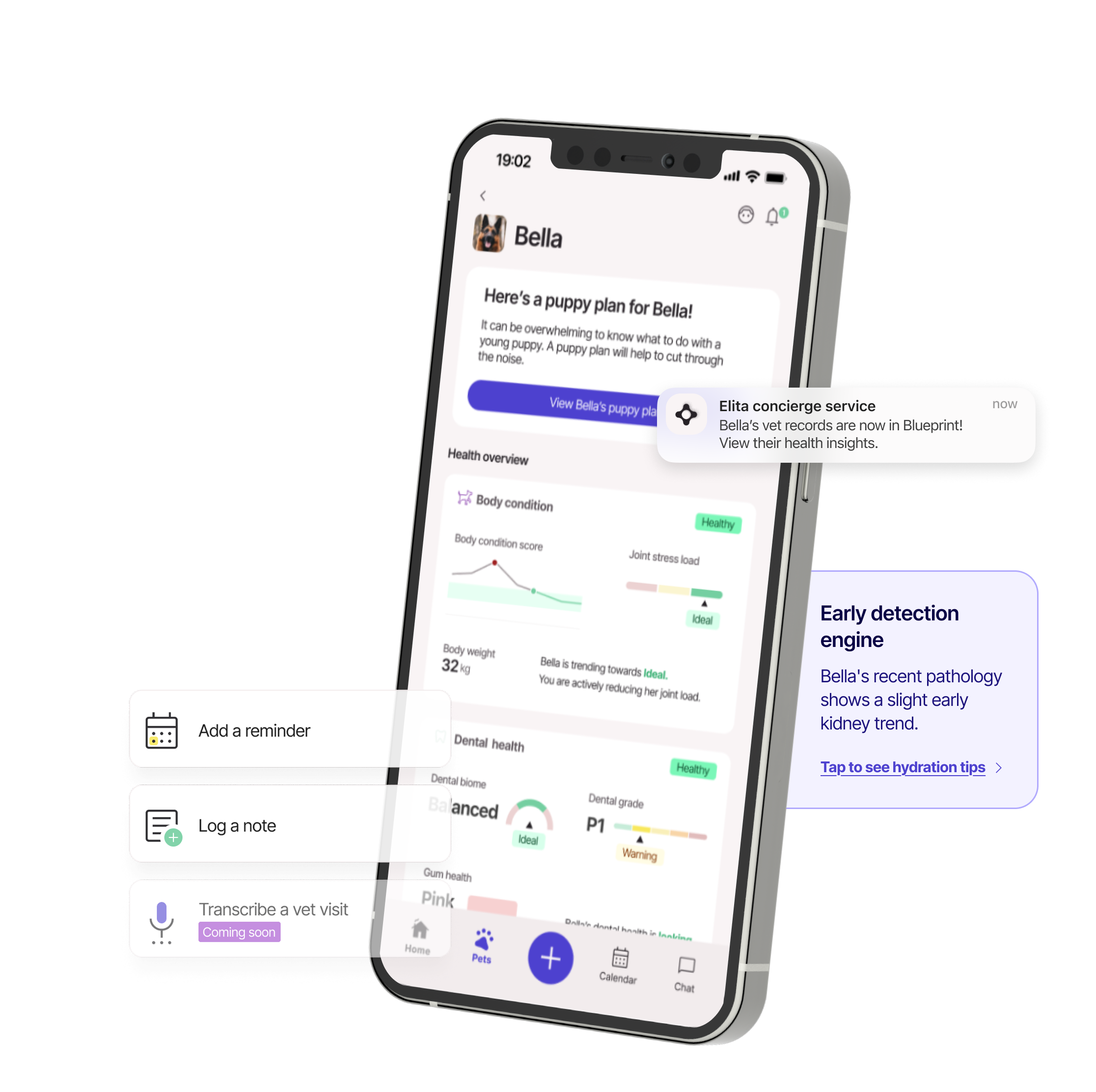
- Track it. We built Elita Blueprint to catch the subtle gait, activity, and recovery changes that come months before owners (and often vets) notice them. Earlier signal = earlier intervention = more good years on that joint.
- Bank the biology. If you're already going under for cruciate surgery, it's one of the most efficient moment in your dog's life to bank stem cells. We can collect adipose tissue at the same time, under the same anaesthesia. The sample comes from a separate site (there isn’t much adipose at the joint itself!), so it’s no second procedure and a good time combine recovery. Those cells stay viable for future treatment as they're developed. See if your dog qualifies.
A note on timing
Banking stem cells from a young, healthy dog yields significantly more viable cells than harvesting from an older or already-injured dog. If your dog is in a higher-risk breed (Labradors, Rottweilers, Staffies, Bullmastiffs, Newfoundlands), the lowest-friction window is now — not after the injury.
How can you reduce the risk of cruciate injury?
You cannot prevent every case, but these four things meaningfully reduce risk:
- Keep your dog at a lean body condition score (4–5/9).
- Avoid high-impact starts and stops on slippery floors — a common trigger event in dogs with already-degenerating ligaments.
- Don't skip warm-ups before agility, fetch, or long runs.
- Track activity and gait changes with the Elita Blueprint — early stiffness is often a precursor to a full tear.
FAQ: Cruciate surgery for dogs
Does pet insurance cover cruciate surgery in Australia?
Most policies do, provided the condition wasn't pre-existing and you chose a policy with orthopaedic cover. Waiting periods for cruciate cover are often 6 months — check before you claim.
Note: many policies treat the second cruciate as pre-existing once the first is claimed, even if the other leg hasn't shown symptoms. Read the bilateral exclusion clause carefully.
How long is the recovery after TPLO?
Most dogs begin to bear weight on the affected leg within 24 hours and are on short controlled leash walks by week 1–2. A required post-op x-ray confirms full bone healing at 6 weeks, with return to normal activity by weeks 10–12.
Will my dog rupture the other cruciate?
Around 40–60% of dogs rupture the opposite cruciate within two years. Weight management and rehab significantly reduce the odds.
Is TPLO worth the extra cost over lateral suture?
For dogs over 15kg or active dogs of any size, yes. The long-term arthritis outcomes and lower reinjury rate generally justify the cost.
Can a dog live with a torn cruciate without surgery?
Some small, sedentary dogs can. Most medium-to-large dogs develop severe arthritis and chronic pain without intervention.
TL;DR
- TPLO is the AU gold standard for dogs over 15kg, costing $5,000–$9,000 per knee plus ~$2,000 in extras.
- Lateral suture is cheaper but has a higher reinjury rate; reserve it for small or less active dogs.
- 40–60% of dogs rupture the other knee within 2 years, banking stem cells early gives you more options for the second round.

Your dog’s health, made simple.
Feel confident in every decision you make for your dog’s health. All the personalised support you need, finally in one place.