Hip dysplasia in dogs: symptoms, treatment and cost in Australia

Hip dysplasia is a genetic condition where a dog's hip joint doesn't form properly, causing the ball and socket to rub and wear down over time. It affects up to 70% of some large breeds in Australia, usually appearing between 4 months and 2 years of age, and can progress silently for years before pain becomes obvious.
The good news: caught early, most dogs live full, mobile lives with the right combination of weight management, joint support, and modern treatment.
Hip dysplasia is one of the most common orthopaedic issues in Australian dogs, particularly in Labradors, Golden Retrievers, German Shepherds, Rottweilers and Staffies. It is inherited, but diet, growth rate, exercise type during puppyhood, and body condition all shape how it develops.
What are the early signs of hip dysplasia in dogs?
Most owners miss hip dysplasia in its early stages because dogs hide pain well. The six early signs worth knowing:
- Bunny hopping running with both back legs moving together instead of alternating.
- Reluctance on stairs or the couch especially jumping down, which hurts more than jumping up.
- Stiffness after rest loosening up after five or ten minutes of movement.
- Narrow back-end stance hind legs tucked close together, sometimes with a sway.
- Muscle loss over the hips the rear end looks thinner or more "bony" than the shoulders.
- Shorter walks, lying down mid-play subtle drops in stamina owners often blame on age.
If two or more of these show up, it is worth a vet visit. A 30 minute orthopaedic exam and a single x-ray is usually enough to confirm.
How is hip dysplasia diagnosed?
Diagnosis typically involves a physical exam (checking the Ortolani sign and range of motion) followed by hip x-rays under light sedation. Some vets use the PennHIP method, which gives a more precise score but is less widely available. Cost for diagnosis ranges $250–$600 AUD depending on imaging.
What are the treatment options and costs?
Treatment depends on age, severity, and the dog's weight. Australian costs in 2026:
Can hip dysplasia be prevented?
Fully, no, it is largely genetic. But you can reduce how badly it progresses:
- Keep your puppy lean during growth. Overfeeding doubles the risk of clinical symptoms.
- Avoid forced repetitive exercise (long jogs, fetch on hard ground) before 12 months.
- Buy from breeders who hip score every litter.
- Swimming is the single best low-impact exercise for at-risk breeds.
- Track mobility patterns from month one so you spot change early.
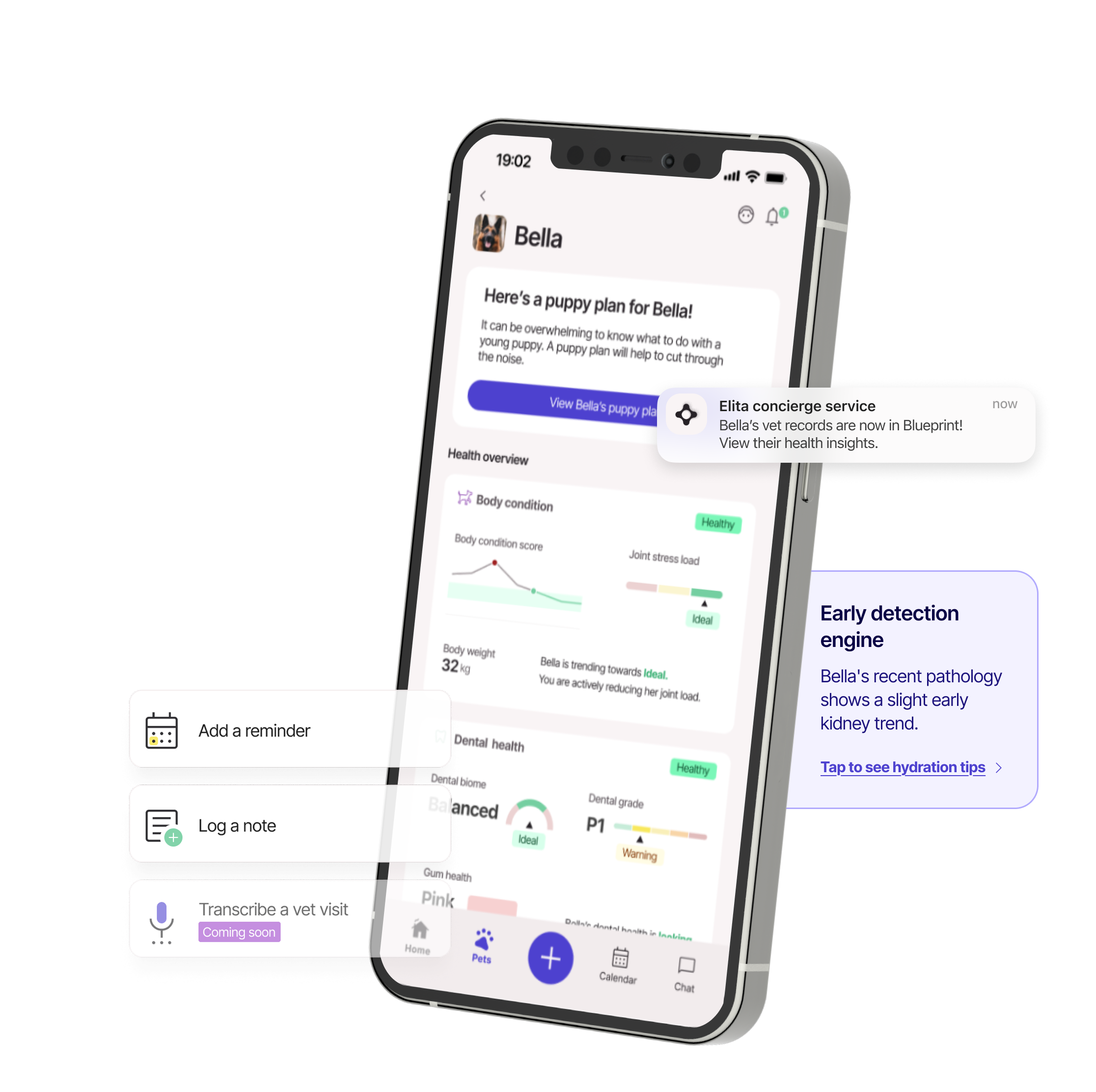
Owners using the Elita Blueprint tend to catch subtle changes earlier than owners relying on memory.
FAQ: Hip dysplasia in dogs
Is hip dysplasia painful for dogs?
Yes, but dogs mask it. Most express pain as reduced activity, not whining. By the time a dog limps visibly, the joint has usually been deteriorating for months.
What age does hip dysplasia start in dogs?
Signs can appear as early as 4 months in severely affected puppies, but most owners notice symptoms between 1 and 2 years, or again in senior dogs as arthritis sets in.
Can a dog with hip dysplasia live a normal life?
Yes. With weight management, the right exercise, and early intervention, most dogs with mild to moderate hip dysplasia live full lives without surgery.
Is hip dysplasia covered by pet insurance in Australia?
Usually only if it was not a pre-existing condition when the policy started. Some insurers exclude hereditary conditions entirely. Always check the PDS before assuming you're covered.
Does walking make hip dysplasia worse?
Short, regular, low-impact walks help. Long walks, running on pavement, and high-impact play make it worse. Swimming is ideal.
TL;DR
- Hip dysplasia is genetic, common in large breeds, and usually shows before age 2.
- Early signs (bunny hopping, stiffness, narrow rear stance) matter more than a visible limp.
- Treatment ranges from $600/year conservative care to $14,000 for total hip replacement — stem cell therapy sits in the middle for mild to moderate cases.

Your dog’s health, made simple.
Feel confident in every decision you make for your dog’s health. All the personalised support you need, finally in one place.