How much do dog vaccinations cost in Australia? C3 vs C5, explained

How much do dog vaccinations cost in Australia? C3 vs C5, explained
You ring a vet clinic in Australia and suddenly you're hearing "Do you want C3 or C5?" Then you get a price that feels a bit random.
If you're trying to budget for a p uppy, boarding, or a newly adopted dog, you're not alone. Here's a simple breakdown of what C3 and C5 mean, what they cost, and how to plan the first year without surprise bills.
The quick answer on dog vaccine costs in Australia (price snapshot)
The quick answer on cost
Prices vary by clinic, location, and what's included in the visit. These are typical ranges Australian owners report seeing:
One thing worth checking when comparing prices: some clinics include a full health check in the vaccine visit. Others list it separately. Make sure you're comparing like for like before assuming one clinic is cheaper than another.
C3 vs C4 vs C5 in plain English
Those "C" labels are shorthand for which diseases the vaccine covers.
C3: core vaccines
C3 is the standard core set, recommended for most dogs regardless of lifestyle. It covers:
- Canine distemper — a serious viral illness affecting the respiratory, gastrointestinal, and nervous systems
- Infectious canine hepatitis (adenovirus) — a viral liver disease
- Canine parvovirus — a highly contagious and potentially fatal gut infection
These diseases are widespread, and parvovirus in particular can survive in soil and on surfaces for months. That's why C3 is considered essential even for dogs that mostly stay at home.
C4 and C5 — kennel cough cover
C4 and C5 build on C3 by adding protection against the most common causes of kennel cough, a contagious respiratory illness that spreads easily wherever dogs are in close contact.
- C4 adds Bordetella bronchiseptica — a bacterial cause of kennel cough
- C5 adds both Bordetella bronchiseptica and canine parainfluenza virus
If your dog goes to boarding, daycare, grooming, training classes, or dog parks, most facilities will require C5. If your dog has minimal contact with other dogs, C3 may be all that's needed. Your vet should be recommending based on your dog's actual lifestyle, not a default.
Australia note on rabies
Rabies vaccination is not part of routine pet care in Australia. It only becomes relevant for international travel — if you're planning to take your dog overseas or bring a dog into Australia from another country, timing and requirements depend on the destination and travel pathway. Check current biosecurity requirements well in advance, as lead times can be significant.
Planning the first year and beyond
Vaccines are not a one-and-done job, especially for puppies. Getting the schedule right from the start is the easiest way to keep costs predictable and avoid gaps in protection
Puppy vaccination schedule and what the first year can cost
Puppy vaccines are given as a series. The timing matters because a puppy's early maternal immunity needs to fade before vaccines can take full effect — which is why multiple doses are spaced out rather than given all at once.
A common Australian schedule:
Visit 1, around 6 to 8 weeks
Visit 2, 3 to 4 weeks later
Visit 3, 3 to 4 weeks later
Some pups need two doses in the primary course, others need three, it depends on the age they started and the vaccine brand used. Your vet will advise.
Most people land somewhere in the A$200–A$450+ range for the full puppy course, depending on which vaccines are used, whether health checks are bundled, and clinic location.
If you miss a dose, start late, or do not have records
This is common with rescue dogs and rehomed dogs. If there's been a significant gap, your vet may recommend adjusting or restarting the course. That's not about selling more vaccines, it's about making sure your dog has a reliable immune response rather than a partial one. You can always find a reliable titre test if you want to be sure (read more here)
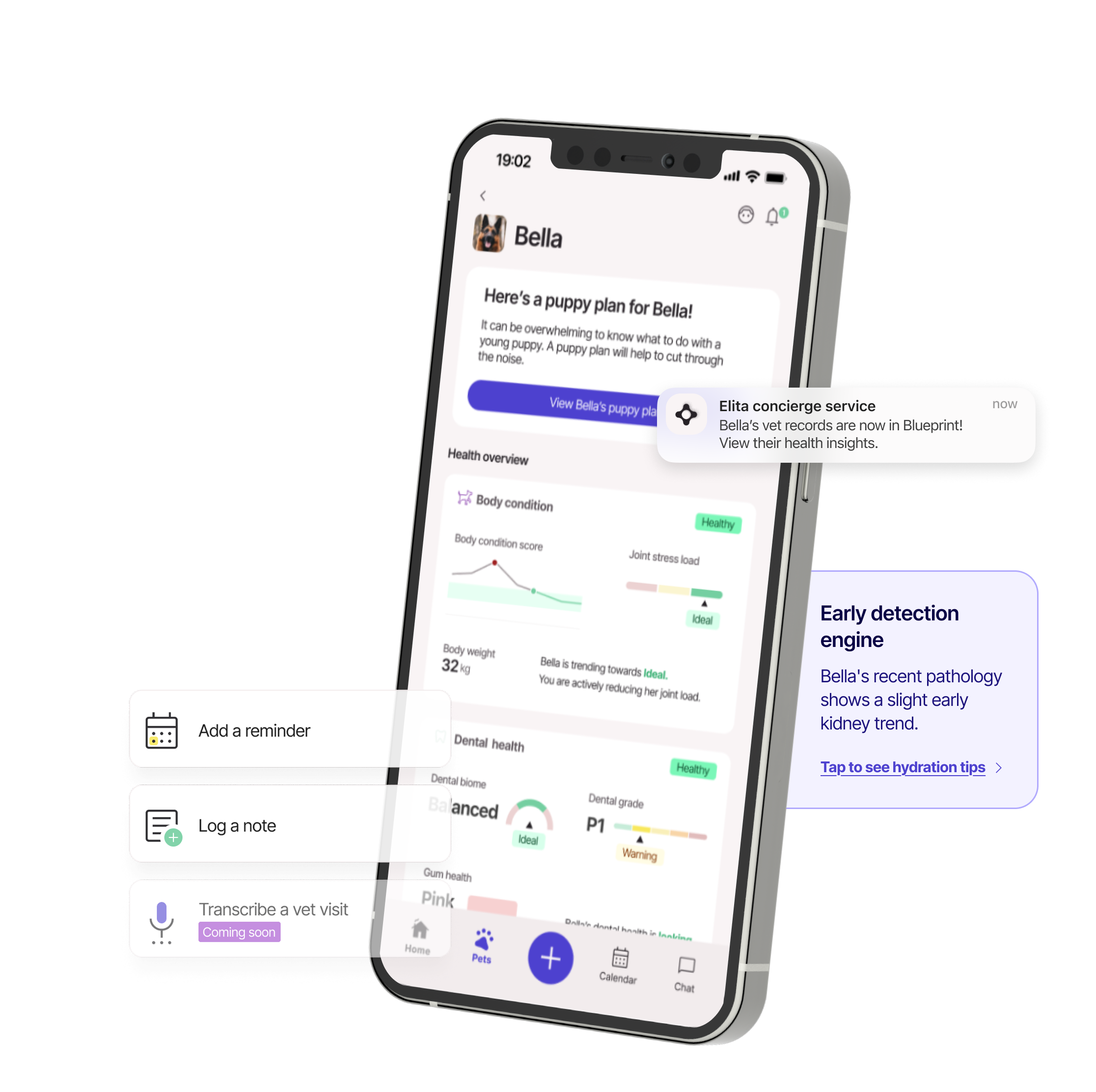
Elita Blueprint is useful here too. If you're not sure what your dog has had or when, keeping a record going forward means you're never in that position again. Vaccine dates, types, and clinic notes all in one place.
Adult dogs: does every dog need a vaccine every year?
This is where a lot of owners get a blanket yes that doesn't reflect current thinking.
Not every vaccine needs repeating every year for every dog. Many core vaccines provide strong protection well beyond 12 months. Adult booster schedules depend on the vaccine type, your dog's history, and their lifestyle — and a good vet will factor all of that in rather than applying a one-size-fits-all rule.
Titre testing is worth knowing about here. Rather than automatically boosting, a titre test checks whether your dog still has adequate antibody levels for certain diseases — so you're only vaccinating when there's an actual reason to. It's not the right call for every dog in every situation, but for adult dogs with a solid vaccination history, it's a conversation worth having. Read more about Titre testing here.
The extras that change the bill
A lot of bill shock isn't the vaccine itself. It's what else is included, or what owners assume is included.
Common add-ons that may appear on a vaccine visit bill:
- Consultation fee — often A$80–A$120 on top of the vaccine cost
- Annual health check — sometimes bundled, sometimes separate
- Heartworm test — typically A$30–A$60, often recommended at the annual visit
- Parasite prevention — flea, tick, and worm treatments if you stock up at the same time
- Kennel cough intranasal vaccine — sometimes priced separately from the injectable component
If the quote feels higher than expected, it's fine to ask for a line-by-line breakdown before you confirm.
How to save money safely (without skipping protection)
Planning ahead is the simplest lever.
- Keep vaccine records in one place so you're not paying for duplicate shots if you switch clinics or end up at an emergency vet
- Book the annual health check at the same time as boosters — you're paying the consult fee anyway, so combining visits saves money
- Ask your vet which vaccines are actually relevant to your dog's lifestyle before defaulting to C5 every year
- Consider titre testing for adult dogs with a strong vaccination history — it may save you an unnecessary booster
Blueprint keeps your dog's vaccine history, dates, and types in one place. If you switch clinics, move, or end up at an emergency vet, you're not starting from scratch or guessing what was last given. It also means you stay ahead of what's due rather than realising mid-boarding-booking that you have no idea when the last C5 was.
Side effects: what's normal and what's not
Most dogs are completely fine after vaccination. Mild effects can include:
- Lethargy or low energy for a day or two
- Mild soreness or a small lump at the injection site
- Reduced appetite for 24 hours
- A mild temperature
These usually settle on their own within a day or two and don't require treatment.
Seek same-day help if you notice:
- Facial swelling, hives, or itchy skin shortly after the appointment
- Vomiting or diarrhoea in the hours following vaccination
- Collapse, extreme weakness, or difficulty standing
- Laboured breathing or pale gums
Serious reactions are uncommon, but they can happen. If you're at all unsure in the hours after a vaccine visit, call your clinic.
Make vaccine planning simpler next year
The paperwork is the part most people lose. The schedule is the part most people forget. Neither should be the reason your dog gets a duplicate shot or you're scrambling before a boarding booking.
Blueprint keeps your dog's vaccine history, dates, types, clinics, in one place. So next year's booster is already in your calendar, and your vet has the full picture without you having to reconstruct it from memory.
If you have a vaccine certificate sitting somewhere, photograph it now. Future you will be glad you did.

Your dog’s health, made simple.
Feel confident in every decision you make for your dog’s health. All the personalised support you need, finally in one place.