How much does the vet cost in Australia? Real numbers, why prices vary, and how to plan ahead

How much does the vet cost in Australia? Real numbers, why prices vary, and how to plan ahead
The moment you hear “we recommend tests”, your brain often goes straight to the bill. If you are trying to budget, or you have just had a shock vet visit, you are not alone.
Below are realistic cost ranges, why vet bills vary so much, and a few simple ways to avoid nasty surprises without skipping care.
1. Typical vet costs in Australia (quick ranges you can budget around)
Vet prices are not fixed. They change by suburb, state, clinic type, and even the time of day. A Tuesday morning visit can cost very differently to a 2am emergency. Its always good to remember that healthcare unfortunetly does have a cost (one we're so lucky to avoid in Australia!) so sometimes it can feel like a lot, but really it's the cost associated with time, experience, consumables, rent, wages, medical equipment and more.
These are ballpark ranges many Aussie dog owners see. Use them as budgeting guides, not guarantees.
It also helps to know what you are paying for. Many bills include more than one line item.
A typical vet bill might include a consult fee, then tests, then medicines. It can also include consumables like bandages, and sometimes a hospital stay.
For a real-world look at how clinics explain pricing and after-hours loadings, these pages are helpful:
Vaccines are another common budgeting question. Puppies usually need a course of vaccinations close together. Adult boosters depend on age, lifestyle, and local disease risk.
Some core vaccines protect for longer than a year in many dogs. That is why some clinics use longer booster intervals for some vaccines, plus a yearly health check.
2. Why your vet bill can jump fast (what you are actually paying for)
It is easy to think the consult is the big cost. Most of the time, the consult is the smallest line item.
Here is what usually pushes the total up.
After-hours fees
Emergency clinics need staff, equipment, and vets available overnight, weekends, and public holidays. You are also paying for speed and access.
Your dog’s size, age, and health history
Bigger dogs often need higher medication doses, which can cost more. Older dogs may need extra checks before certain procedures. Dogs with existing issues can be more complex to manage safely.
Anaesthetic time and monitoring
If your dog needs a dental, wound repair, or imaging where they must stay still, anaesthesia or sedation may be needed. Costs include the drugs, monitoring equipment, and trained staff watching closely during and after.
This is one reason dental bills vary so much. A full dental exam and clean needs anaesthesia so the vet can check below the gumline properly.
Diagnostics, and how fast you need answers
Some tests are run in-house. Others are sent to an external lab. In-house can be quicker, and speed can matter, but urgent processing can add cost.
Imaging that needs sedation
An x-ray sounds simple. In real life, many dogs cannot lie perfectly still while sore, scared, or wriggly. Sedation can make imaging safer and clearer, but it adds time and monitoring.
A simple rule of thumb helps. The more your visit needs extra people, extra time, and extra equipment, the more the bill usually rises.
Five real-life vet visit scenarios (and how costs build)
Below are common situations. Each one shows what you might notice, what the vet may do, what you are paying for, and what can push it higher.
Scenario A. Vomiting or diarrhoea
What you notice at home
Your dog vomits once, or has a few loose poos. They might still seem happy. Or they look flat and will not eat.
What the vet may do
First comes an exam and questions about timing, diet changes, and possible scavenging. The vet may give anti-nausea treatment or gut support.
They may suggest a poo test for parasites, blood tests, or an x-ray if there is concern about a blockage.
What the cost usually includes
A consult, medications, and sometimes a parasite test. Blood tests are common if dehydration is a concern.
What might push it higher
Repeated vomiting, blood in vomit or poo, dehydration, or a puppy that is getting worse quickly. After-hours visits change the price fast.
Practical money saver
If your dog is unwell, booking early in the day can help. It gives time for tests and treatment before it turns into an after-hours problem.
Scenario B. Ear infection
What you notice at home
Head shaking, ear scratching, or that “corn chip” smell. Some dogs yelp when you touch the ear. Others act totally normal.
What the vet may do
The vet checks the ear canal and the other ear. They may take a quick ear swab, which is a small sample of wax and debris.
They look at it to see if yeast, bacteria, or inflammation is more likely. Treatment often includes ear drops, and sometimes a cleaner. A recheck is common.
What the cost usually includes
A consult, an ear swab test, and prescription drops. If it is very sore, pain relief may be added.
What might push it higher
If ear infections keep coming back, costs creep up over time. It is often worth looking for a pattern like swimming, grooming, or allergies.
Scenario C. Itchy skin or allergies
What you notice at home
Scratching, licking paws, rubbing the face, red skin, or recurring ear trouble. It can flare up, settle, then come back.
What the vet may do
Skin problems often start with rule-outs. The vet checks for fleas and mites and asks about parasite prevention.
They may suggest a skin scrape, a flea plan, a diet trial, or medications to settle the itch while you work out the trigger.
What the cost usually includes
A consult, parasite treatments, and sometimes tests. Medications can add up if this becomes long-term.
What might push it higher
Chronic problems are where the lifetime cost climbs. Catching patterns early can prevent weeks of scratching and infections.
Simple habit that helps
Write down flare-up dates, food changes, shampoos used, and the weather. Skin problems are often about the story over time.
Scenario D. Limping
What you notice at home
Your dog is limping after a run, or they are slow to get up. It might come and go, or start suddenly.
What the vet may do
The vet checks joints, paws, nails, and range of motion. A common first plan is rest, pain relief, and a recheck.
If it is not improving, x-rays may be recommended. Imaging may happen sooner if the pain is severe, there is swelling, or your dog cannot use the leg.
What the cost usually includes
A consult and pain relief. X-rays are a common next step if the limp persists.
What might push it higher
Sedation for imaging, referral to a specialist, or surgery for ligament injuries.
Scenario E. Dental disease
What you notice at home
Bad breath, brown build-up on teeth, red gums, or your dog dropping food. Some dogs still eat normally even with a painful mouth.
What the vet may do
The vet can check the mouth while your dog is awake, but they cannot see everything. A full dental is done under anaesthetic so the teeth can be cleaned properly and checked below the gumline.
Dental x-rays may be suggested. If teeth are loose or infected, extractions may be needed.
What the cost usually includes
Pre-anaesthetic checks, anaesthetic and monitoring, the scale and polish, and pain relief. Extractions add time and complexity.
What might push it higher
Extractions, dental x-rays, and longer anaesthetic time. Two dogs can both “need a dental” and have very different totals.
Myth to clear up
Dental is not cosmetic. In many dogs, it is about pain control, infection, and quality of life.
3. How to reduce your lifetime vet spend without cutting corners
Big vet bills often come from problems that started small. The goal is not to avoid vets. It is to avoid emergencies and avoid problems dragging on.
Prevention habits that often cost less than crisis care
Parasite prevention
Fleas, ticks, and worms can trigger skin problems, tummy upsets, and serious illness. Staying consistent is usually cheaper than treating the fallout.
Healthy weight
Extra kilos stress joints and can worsen arthritis and breathing issues. Keeping dogs lean is strongly linked with better long-term health.
Basic dental home care
If your dog tolerates it, brushing a few times a week helps. Dental chews can help some dogs too. They are not magic, but they can slow build-up.
Senior checks earlier rather than later
Many owners wait until a dog “seems old”. Catching changes earlier can sometimes mean simpler treatment.
Budgeting that reduces panic decisions
A “vet buffer” helps more than people expect. Even A$10 to A$25 a week builds a cushion for vaccines, ear infections, or an unexpected limp.
If you have had a big bill before, keep going. The buffer is there to make the next surprise feel manageable.
How to talk about money with your vet without guilt
You are allowed to ask clear money questions. It helps the clinic tailor a plan that is safe and realistic.
Try these:
Pet insurance in plain English
Insurance is usually most helpful for big surprises like emergencies, surgery, and hospital stays. Routine care is often not covered unless you have an optional extra, and even then there may be limits.
Also watch for waiting periods and exclusions. Some conditions are not covered if they existed before you took out the policy.
Myths that make vet bills feel worse than they need to
Myth 1. The consult fee is the main cost
Truth. Tests, imaging, anaesthesia, monitoring, and hospital care add up quickly.
Myth 2. Waiting a day or two always makes it cheaper
Truth. Sometimes it becomes an emergency and costs more, especially after-hours.
Myth 3. Dental is cosmetic
Truth. Dental disease can be painful. Anaesthetic time is a big cost driver.
Myth 4. All vets charge the same
Truth. Prices vary, and it is reasonable to ask what is included in a quote.
When not to wait
Some signs are worth getting checked quickly, especially after-hours. These include:
If you are worried about a possible poisoning, Australia has a dedicated advice line that can guide your next step.
A calmer way to manage vet costs over time with Blueprint
Most expensive problems do not start expensive. They start as small changes you could easily miss. A bit less appetite. A new ear smell. Scratching that comes and goes. A limp that only shows after big walks.
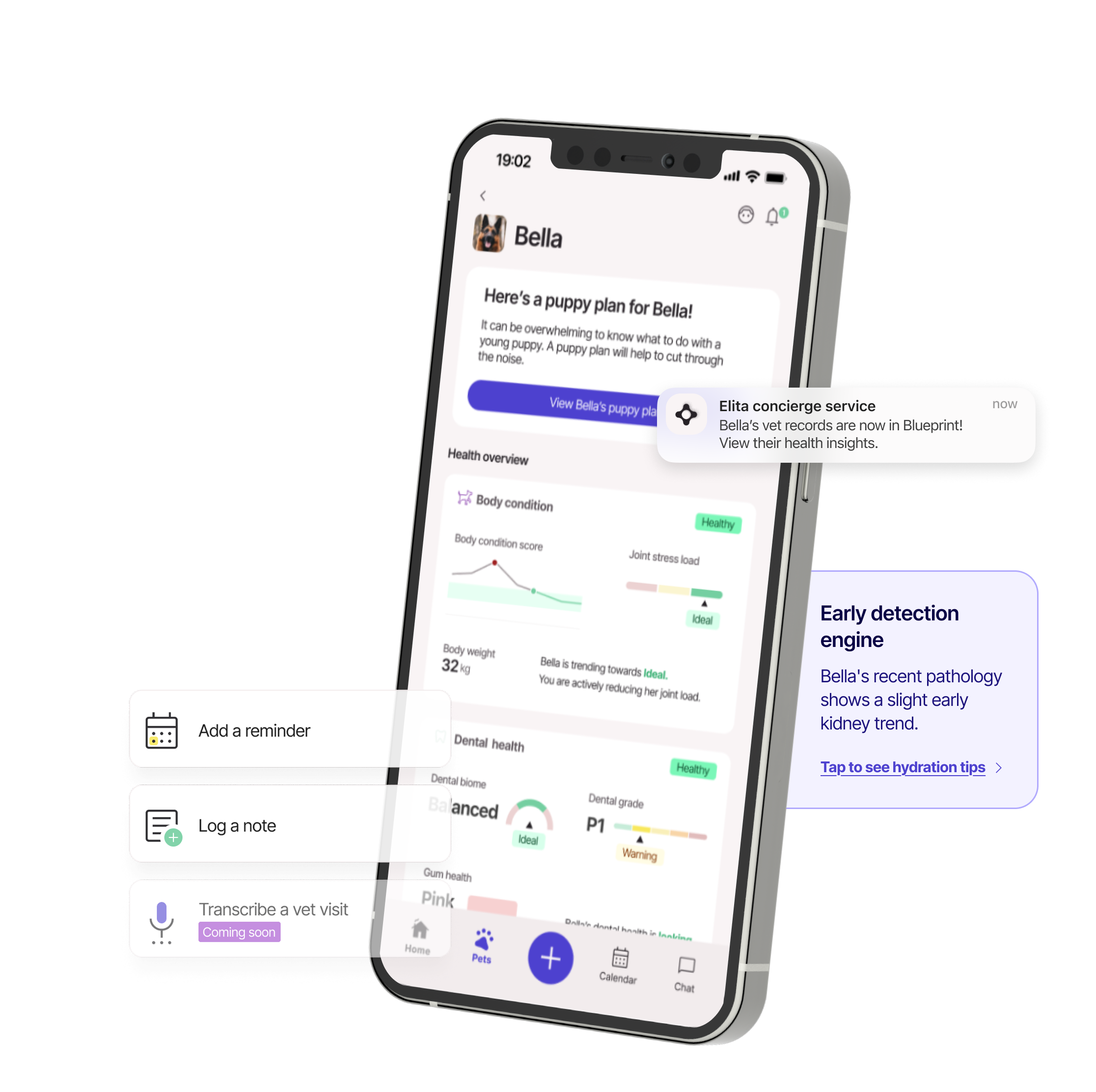
Blueprint helps you track what is normal for your dog, so you spot changes earlier. You can keep a simple timeline of appetite, poo, vomiting, scratching, ear issues, energy, and mobility.
That timeline is useful in appointments. It cuts down on guesswork and helps you make clearer decisions sooner. Acting earlier is one of the most reliable ways to avoid after-hours stress and the bigger bills that often come with it.

Your dog’s health, made simple.
Feel confident in every decision you make for your dog’s health. All the personalised support you need, finally in one place.