Is your dog in pain? The quiet signs most owners miss

Is your dog in pain? The quiet signs most owners miss
Your dog is still eating and still wagging their tail, but something feels “off”. There is no obvious limp or yelp, yet you can tell they are not themselves.
This guide gives you a simple checklist, the subtle signs people miss, clues by body area, what you can do today, and the red flags that should not wait.
1) Why dog pain is easy to miss (and why that is normal)
Many dogs hide pain. It is a normal survival instinct. It can fool even very caring owners.
Veterinary pain guidelines also stress that pain is often seen as changes in behaviour and daily routine, not just crying or limping. That is a core message in the AAHA pain management guidelines for dogs and cats, which focus on watching the whole dog, including movement, mood, sleep, and appetite changes. (AAHA pain management guidelines)
It also helps to think about two broad “styles” of pain.
Acute pain often looks sudden. You might see a new limp, a sudden yelp, or refusal to use a leg.
Chronic pain can be sneaky. It often looks like slowing down, stiffness after rest, sleeping more, or being less playful. Many owners assume it is “just getting old”, but long-term pain is often manageable with the right plan.
Pain can also look like other problems. A sore dog may pant, tremble, pace, or hide. That can look like anxiety. Tummy discomfort can cause drooling, lip licking, or a flat mood, which can look like nausea.
The useful trick is to look for a cluster of small changes, then compare them to your dog’s usual baseline.
2) The quick checklist: common signs your dog might be in pain
Try not to hunt for one “perfect” sign. Look for change from normal. If you notice 2 to 3 changes together, treat it as meaningful.
Movement and posture changes you might see
Sensitivity to touch
Face and body language
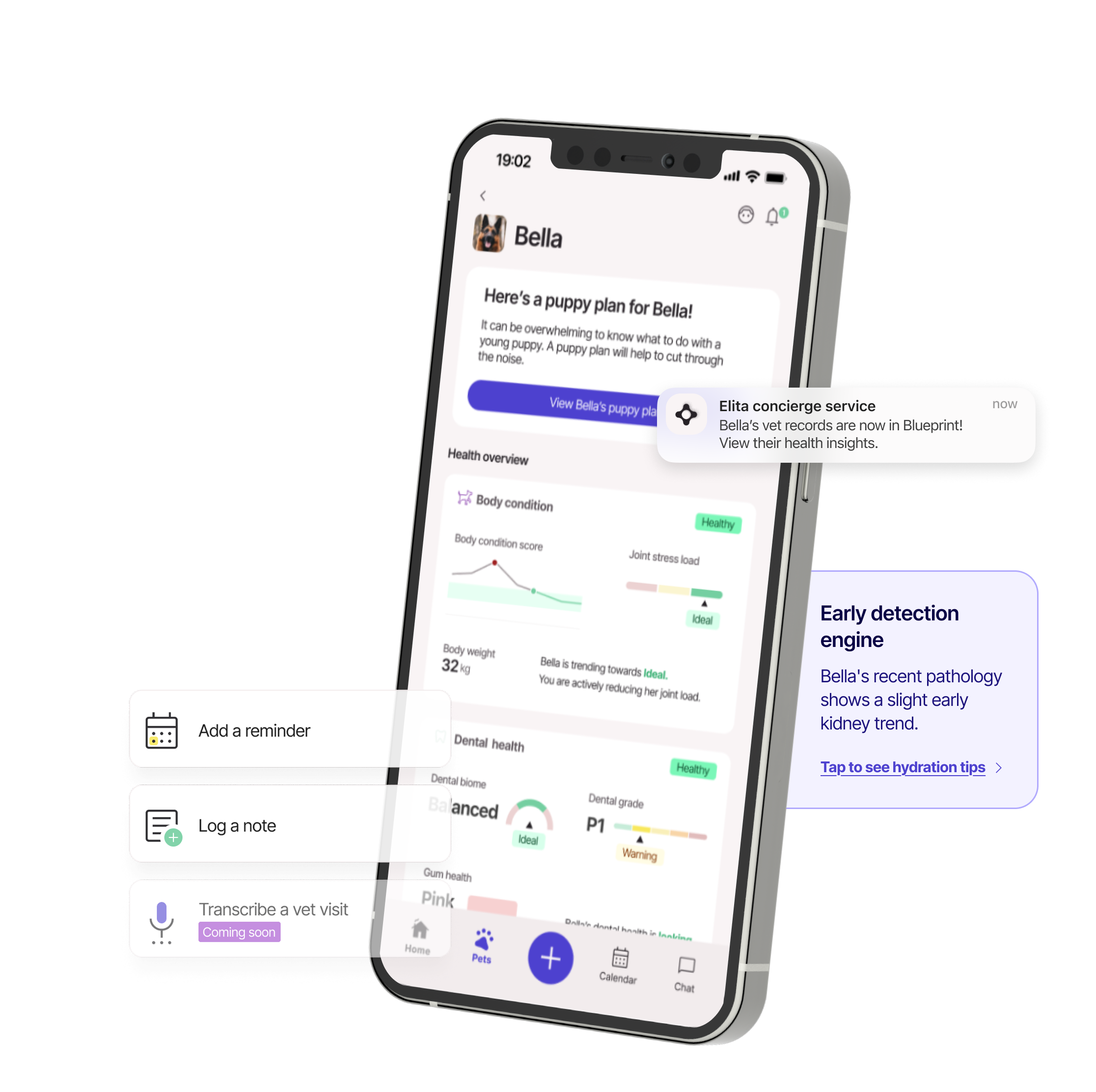
Elita Blueprint incorporates validated pain scoring, drawing on university-developed scales and clinically relevant assessments — so tracking how your pet is doing over time is built in, not an afterthought.
Mood and routine shifts
Other everyday clues
Many dogs do not cry out. A lack of yelping does not mean a lack of pain.
3) The subtle signs people miss (the small changes that add up)
These are often the earliest signs. They are easy to explain away until you put them together.
Small changes in routine
Eating changes that can hint at discomfort
Licking and chewing that can be a pain clue
When a dog repeatedly licks or chews a specific area, it's often an attempt to soothe discomfort, the same instinct that drives them to lick a wound. With joint pain, this behaviour tends to appear over the affected area and becomes more frequent as discomfort increases. It's easy to miss because it looks like grooming, not distress.
A 60-second daily check for 7 days
Same time each day, same order. You're looking for changes in coat, skin, eyes, gait, and behaviour — things that are easy to miss when you're with your dog every day. Consistency is what makes it useful. Seven days of quick observations gives you a pattern, not just a moment.
4) Where pain hides: clues by body area (simple at-home observations)
These are things to notice and share, not diagnose. Many conditions look similar at home.
Mouth and teeth
Dental pain is often silent. Most dogs keep eating, but they may favour one side, drop food, or slow down at meals. Bad breath that's new or worsening is worth flagging.
Ears
Head shaking, scratching at one ear, or tilting to one side. Discharge or smell. Sensitivity when you touch around the ears or jaw.
Belly or tummy discomfort
Reluctance to be touched on the abdomen, a hunched posture, or not wanting to lie on their stomach. A hard, visibly distended belly with signs of distress is urgent — go straight to emergency.
Joints and arthritis-type discomfort
Hesitation before jumping, stiffness after rest, or a subtle change in how they get up. You'll often notice this before any visible limp appears. Sleeping more, playing less, and avoiding stairs are early signals worth tracking.
Back and neck
Reluctance to look up or down, flinching when touched along the spine, or a tense, guarded posture. Some dogs with neck pain carry their head low and move carefully.
Paws and nails
Licking or chewing at a specific paw, holding a leg up intermittently, or reacting when a paw is touched. Overgrown nails can also affect gait and cause discomfort higher up the leg.
Urinary discomfort
Straining with little output, frequent attempts, crying when urinating, or blood in the urine. If your dog cannot urinate at all, treat that as an emergency.
5) What to do right now
Limit jumping on and off furniture, keep walks short and on soft ground, and help them navigate stairs. This reduces load on sore joints and backs, and makes it easier to observe what's actually going on without adding to the problem.
Don't push exercise through pain assuming movement will help. Don't assume a good day means the issue is resolved. And don't give human pain medication, ibuprofen and naproxen are a common cause of serious poisoning in dogs, leading to stomach ulcers and kidney damage. Even small doses can cause significant harm. If you've already given one, call a vet immediately and tell them exactly what, how much, and when.
Film them walking, getting up from rest, and using stairs if relevant. Write down when it started, how often you're seeing it, and anything that seems to make it better or worse. A short video is more useful at an appointment than a long verbal description — it shows your vet what words often can't.
Blueprint: make pain clearer by tracking patterns, not guesses
Pain is often a pattern of small changes. One day it is slower stairs. Then it is less play. Then it is restless sleep.
Elita Blueprint helps you keep a simple record of what “normal” looks like for your dog, then spot when things shift. It also helps you keep timelines, notes, and videos in one place, so you can explain what you are seeing clearly at appointments. Over time, that makes it easier to tell if a plan is helping, or if your dog is still uncomfortable in the background.

Your dog’s health, made simple.
Feel confident in every decision you make for your dog’s health. All the personalised support you need, finally in one place.