Mucus in your dog's poop: causes, home care, and when to call the vet

You scoop the poop, and there it is. Clear slime, a whitish coating, or little jelly blobs that do not look “normal”.
This is common, and it is usually a sign your dog’s gut is irritated. Most of the time it settles with simple care. The key is working out if this is a one-off, or a repeat pattern.
1. What mucus in dog poop is (and when a little is normal)
Mucus is a slippery coating your dog’s gut makes. It protects the gut lining and helps poop pass smoothly.
A tiny amount can be normal, and you may never notice it. If you can clearly see mucus on the stool, or your dog is passing mucus with very little poop, it often means the lower gut is irritated.
Many vets link visible mucus to irritation in the large bowel, which is the last part of the gut where stool firms up. When the large bowel is irritated, dogs often strain, feel urgent, and pass smaller amounts more often.
A helpful mindset is this. Do not focus only on the latest poop. Look for a pattern over 24 to 72 hours.
2. How to read the pattern (what else to look for)
Clues that often point to the large bowel
Large bowel problems often look “messy and urgent”. You might see:
- More toilet trips, but less poop each time
- Urgency, like your dog cannot hold on
- Straining, squatting, or taking longer than usual
- Mucus coating a stool that is still somewhat formed
- Bright red blood that looks fresh, often on the outside of the stool
What the mucus can look like
- Clear or whitish slime on a formed stool can happen with mild irritation.
- Jelly blobs with little poop often means the bowel is producing extra mucus.
- Mucus plus bright red blood can happen when irritation is close to the end of the gut.
- Black, tarry stool is different. It can suggest digested blood from higher up in the gut, and it is more concerning than a small fresh streak.
Common causes
1) Diet-related irritation
This is the most common trigger, and often something that felt minor at the time. Switching food too quickly, new treats, rich table scraps, new chews, or getting into the bin, compost, cat food, or wildlife poop can all upset the gut. If you've recently changed anything, a short bland diet (plain boiled chicken or a novel protein with plain pumpkin) gives the gut a genuine reset before you layer anything else in.
2) Stress colitis
Stress can show up in the gut fast. You might notice mucus and urgency after boarding or daycare, visitors staying over, moving house, storms and fireworks, or a change in routine.
3) Parasites
Parasites are common, especially in puppies and dogs who visit dog parks or drink from puddles. A few that can be linked with mucus or soft stools include Giardia, whipworms, and roundworms or hookworms (more common in puppies). You cannot confirm parasites by looking at poop alone. Testing is usually needed.
Other causes that matter if it keeps happening
If mucus keeps coming back, vets may also consider infections that spread between dogs, food intolerance or sensitivity, longer-term gut inflammation especially with weight loss or appetite changes, and other issues like eating foreign material or toxin exposure.
What to do in the next 24 hours
1) Check the dog, not just the poop
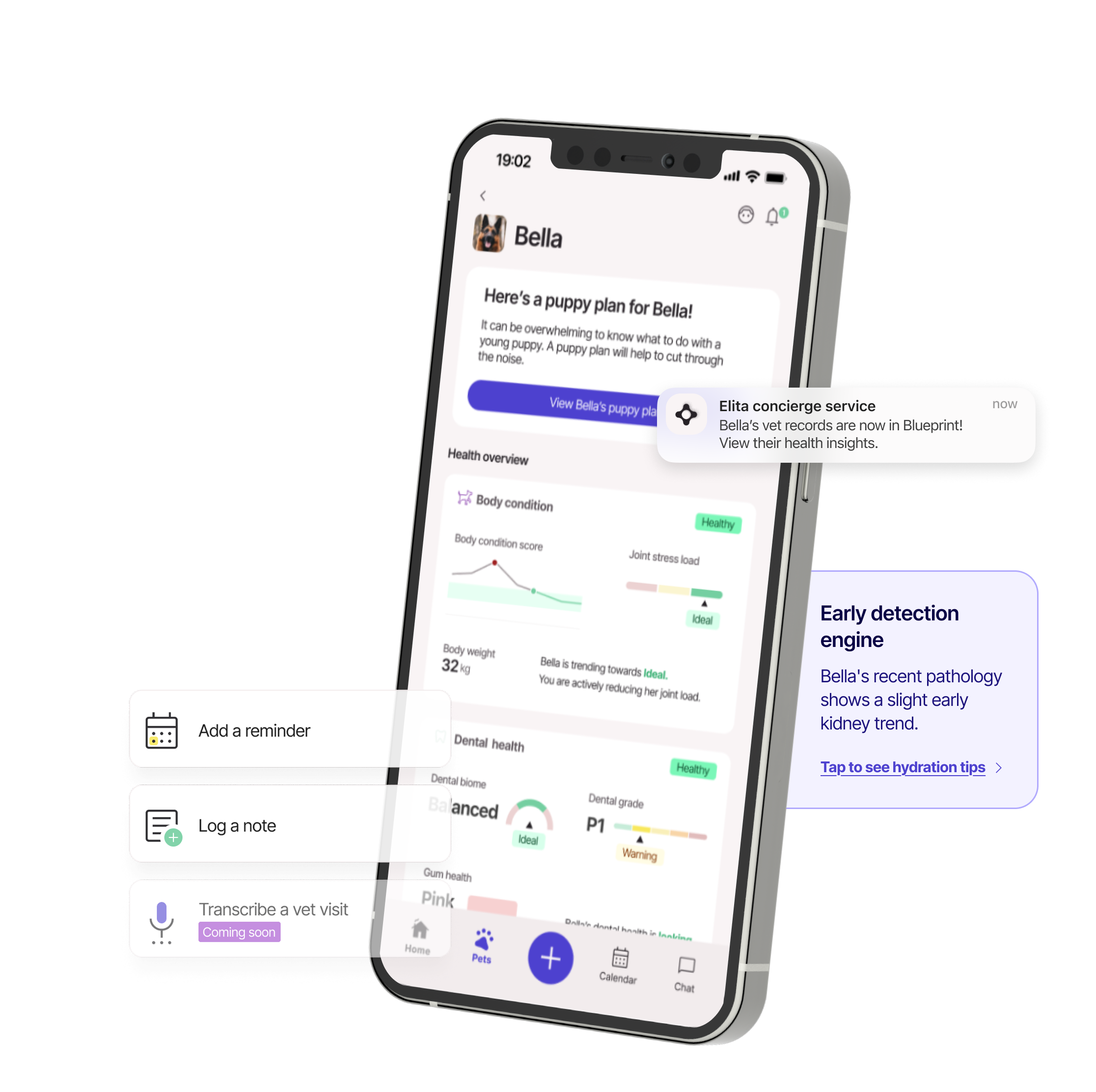
A few times today, do a quick whole-dog check: energy (playful, or flat and tired?), appetite (eating normally?), water (drinking as usual?), vomiting (any vomiting changes the picture), pain (tense belly, or flinching when picked up?). Use Elita Blueprint to easily track changes for a 72 hour period.
If your dog seems unwell overall, skip the wait-and-watch approach. When in doubt, check in with your vet.
2) Pause the extras for a few days
Keep food simple: no treats, no chews, no table scraps. If you recently switched foods, try not to keep changing things daily. Too many changes can keep the gut unsettled.
3) Make hydration the main focus
Loose stool can dehydrate dogs faster than many owners expect. Keep fresh water available, encourage small frequent drinks, and watch for dry or tacky gums, sunken-looking eyes, or unusual sleepiness.
4) Keep food simple, and give the gut a real reset
If symptoms are mild, a short bland diet is often the first and most effective step. Plain boiled chicken (if no known protein sensitivity) and a tablespoon of plain canned pumpkin can help settle the gut and firm things up. Pumpkin won't fix the underlying cause, but soluble fibre genuinely helps many dogs in the short term. Skip treats, chews, and table scraps until things have been normal for at least 48 hours.
5) Gather the info that makes a clinic visit easier
- A clear photo of the stool and mucus stored in your pups Blueprint profile
- A fresh stool sample, sealed in a bag or container
- Notes on changes in the last 48 hours (food, treats, chews, stress, daycare, dog park visits)
- Dates of parasite prevention which are easily stored in Blueprint
When to monitor, when to book, and when it is urgent
Monitor for up to 24 hours
Watching at home can be reasonable if all of these are true: one-off episode, your dog is bright and eating, no vomiting, small amount of mucus, no more than a tiny streak of fresh red blood.
Book a visit within 24 to 48 hours
Try to be seen soon if: mucus continues beyond 48 hours, diarrhea continues beyond 24 to 48 hours, episodes keep coming back every few weeks, your dog has accidents overnight, there is a clear parasite risk, or small streaks of blood keep happening.
Seek same-day care
Same-day care is a good idea if: your dog is a puppy, senior, pregnant, or has a long-term health condition; blood is more than a small streak; vomiting or marked lethargy; signs of dehydration; belly pain or a bloated abdomen; possible toxin exposure or foreign object; or profuse watery diarrhea that is frequent.
What the vet might do
Common next steps include stool testing (often a first step for ongoing mucus or diarrhea, including testing for Giardia when risk is high), deworming decisions based on symptoms and risk, diet support like a short bland diet plan or sensitive-stomach diet, and extra checks for recurrent cases including blood tests or imaging if there are worrying signs.
Myths that make mucus poop more confusing
- Myth: Mucus always means worms. Truth: Worms are one possibility, but diet changes and stress are very common too.
- Myth: If my dog acts normal, I should ignore it. Truth: A mild one-off stool can be watched. Repeating mucus, or mucus with blood, deserves a plan.
- Myth: Antibiotics are the standard fix. Truth: Many cases settle without antibiotics. Treatment depends on the pattern and test results.
3. How to reduce the chance of repeats
Many mucus episodes are triggered by something that felt small at the time. A new chew. A weekend of extra treats. A stressful night. A missed parasite dose. A sneaky bin raid.
A few habits that often help: change foods slowly over about a week, keep treats boring while your dog’s gut is settling, keep trash and compost out of reach, stay up to date with parasite prevention, and if stress is a trigger, plan ahead for daycare, travel, fireworks, and visitors.
4. A simple poop log that makes patterns obvious
Tracking beats guessing, especially with gut issues that come and go. For the next two weeks, keep it simple: date and time, photo, stool firmness, mucus (yes or no), blood (yes or no), anything new in the last 48 hours, and parasite prevention date if it applies.
Most of the time, the answer is in the pattern. You just need a clear way to see it.

Your dog’s health, made simple.
Feel confident in every decision you make for your dog’s health. All the personalised support you need, finally in one place.