Do dog microbiome tests work, and what the science actually supports
Interest in dog microbiome testing has grown quickly, and the science continues to advance. Gut microbiome tests can provide useful snapshots of bacterial composition at a point in time, but they do not offer definitive answers on diagnosis or treatment in isolation. Research shows the gut microbiome is dynamic, shaped by diet, age, stress, medications, and illness. Understanding what these tests can, and cannot, reliably tell you is essential before using results to guide decisions about your dog’s health.
What microbiome tests are actually designed to measure
Most dog microbiome tests are designed to measure relative bacterial DNA found in a stool sample. This allows labs to estimate which microbial groups are present and their proportions at that moment in time. It’s important to understand that these tests are measuring presence and balance, not function, causation, or disease.
In the lab, one of the biggest challenges is separating meaningful signal from normal biological noise. A dog’s microbiome naturally fluctuates based on recent meals, stress, medications, travel, and illness. At Elita, we spend a lot of time interrogating which signals are stable enough to track, which ones move predictably, and which are simply part of healthy variation. This is why microbiome data is most useful when viewed as part of a broader health system, not as a standalone answer.
How to interpret test results in a way that leads to better decisions
Microbiome test results are most useful when they’re treated as directional information, not instructions. A report can highlight trends in diversity or relative abundance, but those findings only become meaningful when interpreted alongside symptoms, recent diet changes, medications, and overall health history.
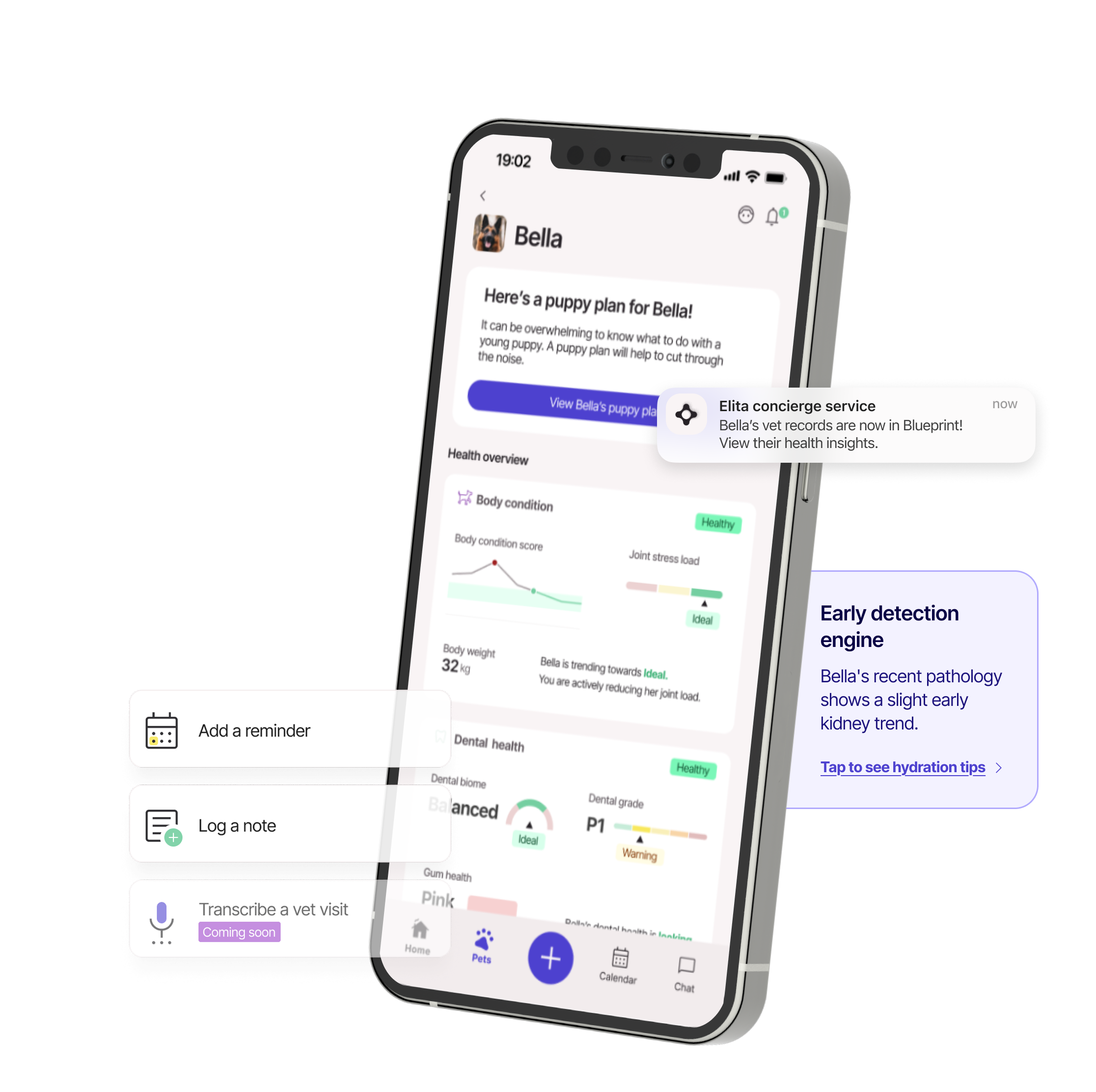
If you’ve already done an at-home microbiome test, one of the most valuable next steps is keeping that result connected to everything else that’s happening with your dog. Uploading reports into Blueprint allows results to sit alongside stool changes, skin symptoms, appetite shifts, behaviour, and vet notes. This broader view makes it easier to ask better questions, avoid overreacting to isolated data points, and focus on decisions that genuinely support long-term health.
Turning gut health insight into a long term prevention plan
The most valuable gut health decisions are rarely reactive. They’re built through small, consistent inputs that reduce the chance of issues escalating later. Gut health insight works best when it informs everyday care, how diet is adjusted, how symptoms are monitored, and when further investigation is actually needed.
A prevention mindset shifts the focus from fixing problems to maintaining resilience. By keeping gut-related observations, test results, and changes over time connected, owners are better placed to make decisions that protect comfort, immune balance, and long term health, rather than responding only once symptoms become disruptive.

Turn gut data into a clear plan
Gut data is only useful when it leads to clearer decisions. Blueprint lets you keep test results, stool changes, diet, supplements, symptoms, and vet notes in one place, so you can spot patterns over time and act early with confidence. Already done an at-home test? Upload the report into your dog’s Blueprint docs so it sits inside their wider health picture, not in isolation. (Or wait till we release our Aussie-made biome tests in 2026, developed by a dog obsessed team of scientists and vets)