Dog diarrhoea and gut health, what it can signal and when to look deeper
Diarrhoea is one of the most common signs of gut disruption in dogs, but its causes range from short-term dietary upset to more complex health issues. Occasional loose stools can be normal, particularly after changes in food or routine, while recurring or persistent diarrhoea may signal an imbalance in digestion, absorption, or gut-associated immunity. Looking at diarrhoea in context, rather than as a single event, helps distinguish temporary disruption from patterns that deserve closer attention.
Why diarrhoea is often the first visible sign of gut imbalance
Diarrhoea is one of the earliest and most obvious ways gut disruption shows up, because it reflects changes in digestion, absorption, and gut motility. Short-lived diarrhoea can occur with diet changes or mild stress, but recurring or unexplained episodes often point to deeper imbalance within the gut environment.
From a biological perspective, diarrhoea can reflect shifts in microbial populations, inflammation of the gut lining, or altered communication between the gut and nervous system. Because the gut is closely linked to immune response and the gut–brain axis, changes in stool quality often appear alongside other subtle signs, such as appetite changes, restlessness, skin flare-ups, or altered behaviour. Looking at diarrhoea as part of a pattern, rather than an isolated event, is where insight begins.
What diarrhoea patterns can tell you, and what to track first
Diarrhoea becomes most informative when you look at frequency, timing, and triggers, not just severity. Occasional loose stools after a dietary change are very different from recurring diarrhoea that appears during periods of stress, after exercise, or alongside skin or behavioural changes.
Tracking these patterns over time helps clarify whether diarrhoea is transient or part of a broader gut issue. Logging stool consistency, diet, treats, supplements, medications, and life events creates a timeline that can reveal relationships a single test or visit might miss. This kind of pattern recognition is often what allows owners and vets to intervene earlier, before symptoms escalate or become chronic.
Knowing when diarrhoea is a signal, not just a symptom
Not all diarrhoea is a concern, but patterns matter. When loose stools become frequent, prolonged, or appear alongside changes in appetite, skin, energy, or behaviour, they often signal broader gut disruption rather than a simple dietary upset.
Recognising diarrhoea as a signal allows earlier, calmer action. Tracking timing, triggers, and recovery helps distinguish short-term disturbance from something worth deeper attention. This approach supports more informed decisions and reduces the risk of repeated flare ups being dismissed or normalised.

Make diarrhoea patterns easier to understand
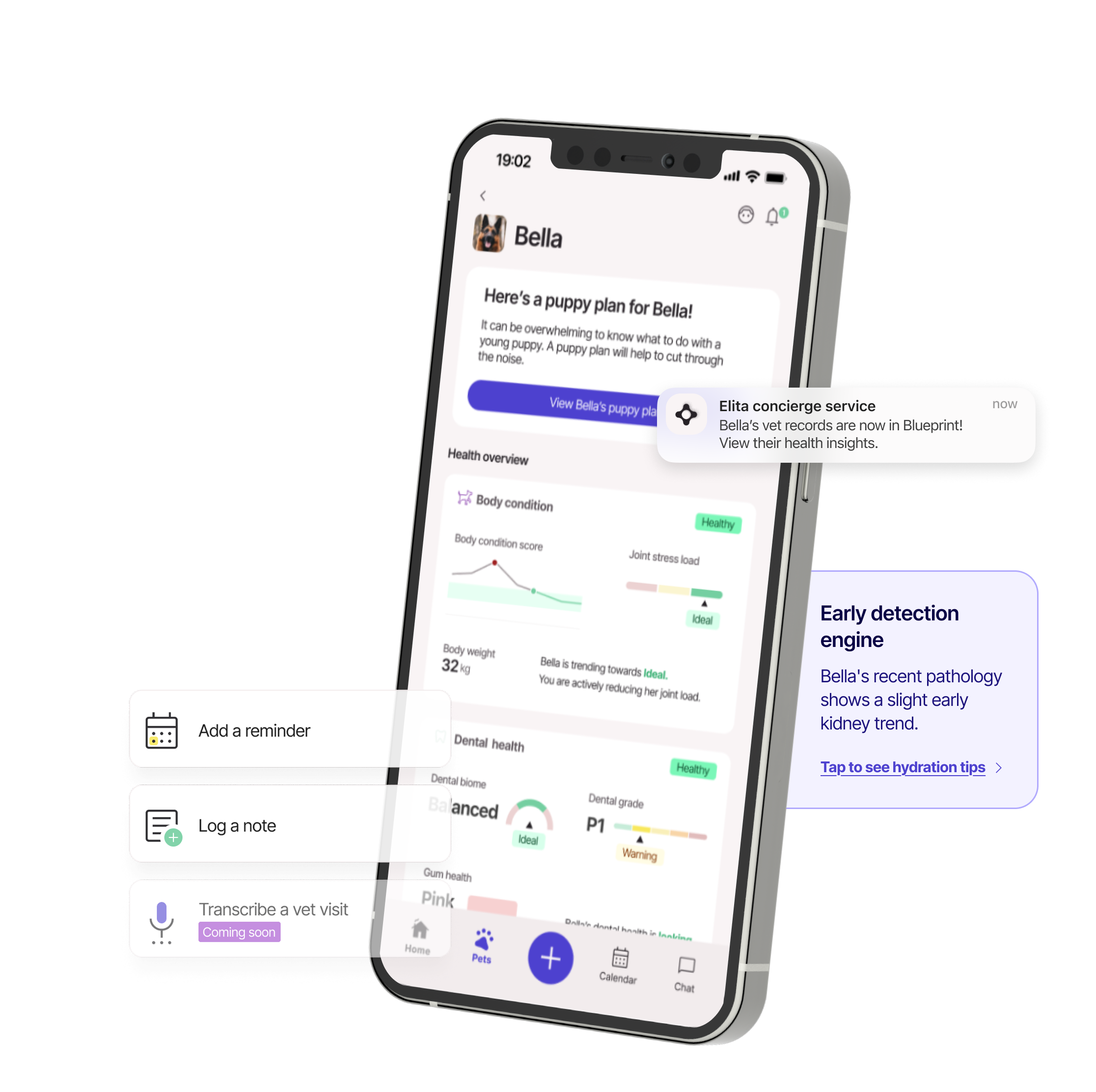
Diarrhoea becomes much easier to interpret when you can see what changed around it. With Blueprint, you can log stool quality, meals, treats, supplements, stressors, and routines, then view it as a timeline, so triggers and trends are easier to identify. That context is what helps you make smarter next steps, and get far more out of your next vet visit.