Dog gut health symptoms, subtle signs owners often overlook
Dog gut health symptoms can include diarrhoea, constipation, excessive gas, itching, recurrent infections, or changes in mood and energy, many of which are often treated in isolation rather than viewed together.

Connecting gut related symptoms to patterns you can actually see over time
Gut related symptoms rarely occur in isolation. Subtle changes such as intermittent diarrhoea, increased itching, fluctuating appetite, or shifts in behaviour often appear sporadically, making them easy to overlook or dismiss. When viewed individually, they can seem unrelated or insignificant.
Over time, however, these symptoms often follow patterns. They may correlate with dietary changes, environmental exposures, stress, travel, medication, or seasonal shifts. Seeing these connections requires more than memory, it requires a clear record that brings symptoms together in one place.
Tracking gut related symptoms over time allows patterns to surface naturally. When changes are logged consistently, it becomes easier to identify recurring triggers, escalating trends, or periods of stability. This visibility supports earlier intervention and more informed conversations about gut health.
Why gut related symptoms make more sense when viewed together
Gut-related symptoms often overlap with other systems, influencing skin, immunity, energy, and behaviour as well as digestion. When these signs are looked at separately, they can appear disconnected or minor, even though they may share a common underlying driver.
Viewing symptoms together reveals patterns that aren’t obvious in isolation. For example, recurring digestive upset alongside itching or behavioural changes may suggest a broader gut-related issue rather than unrelated events. These connections are easy to miss without a way to bring information into one place.
Seeing symptoms collectively helps shift care from reactive to proactive. It allows earlier recognition of emerging issues and creates a clearer foundation for understanding what’s actually changing over time.
How to spot triggers and reduce flare ups over time
Many gut related issues aren’t constant, they flare, settle, and reappear. Identifying what triggers those changes often matters more than treating individual episodes in isolation. Triggers may include food changes, stress, travel, medications, or routine disruptions.
Tracking when symptoms appear alongside lifestyle changes makes patterns easier to spot. Over time, this can reveal which factors reliably precede flare ups and which ones don’t. That insight allows owners to adjust proactively rather than respond after symptoms escalate.
Reducing flare ups isn’t about eliminating every possible trigger. It’s about understanding your dog’s tolerance and supporting stability where it matters most.

Turn symptoms into signals
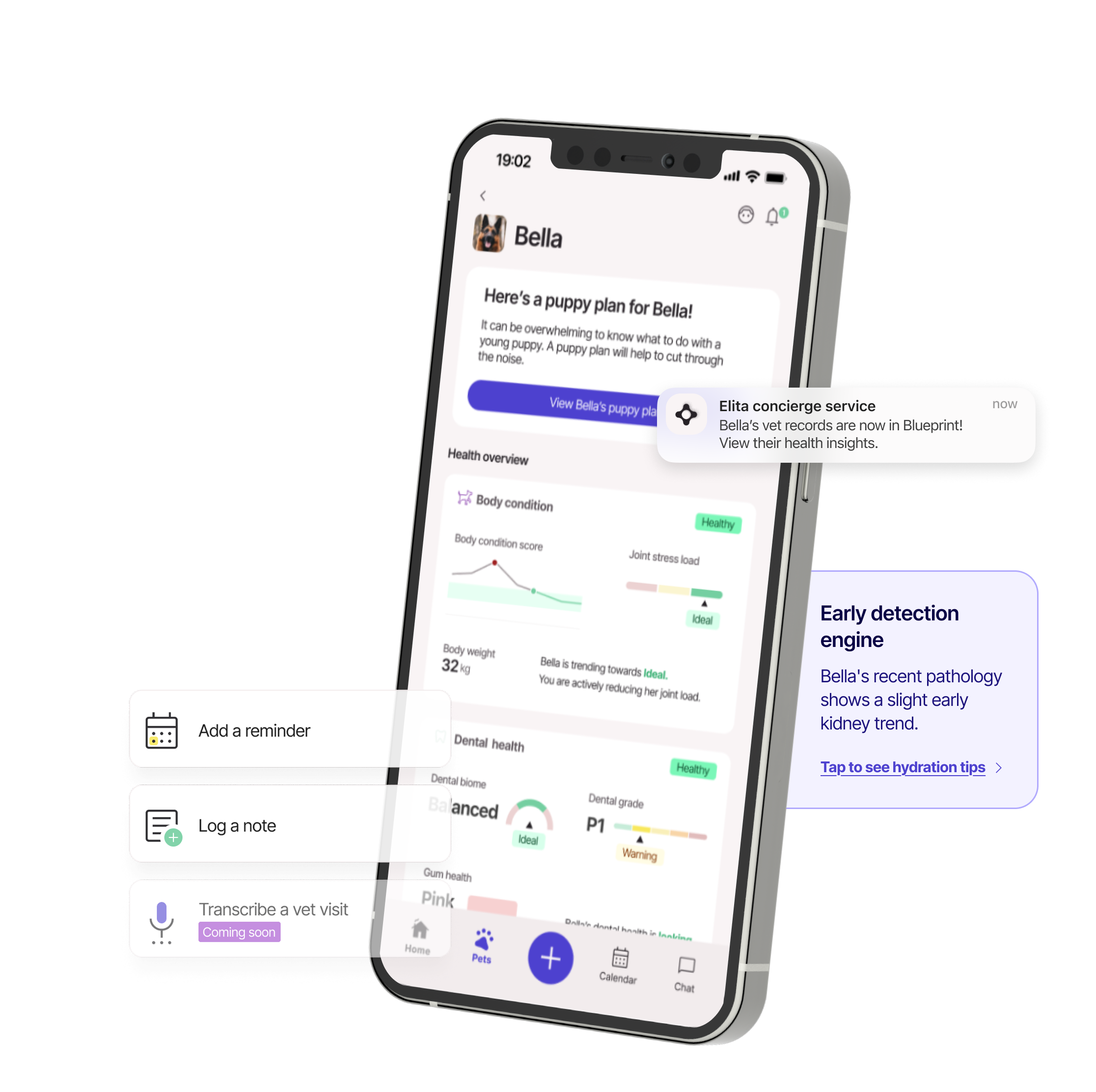
One-off symptoms are easy to dismiss. Patterns are where the insight lives. Blueprint makes it simple to log what you’re seeing and build a clear story over time, so decisions are based on data, not guesswork.