Dog gut health testing, what’s available and how to choose wisely
There are now several types of gut health tests marketed for dogs, most focusing on microbiome composition through stool analysis. While these tools can offer insight into bacterial diversity and relative abundance, they vary widely in methodology, reference databases, and clinical validation. Choosing a test requires understanding how results are generated, what comparisons are being made, and how the findings should be used alongside real-world health information rather than as standalone answers.

The different types of gut health tests and what they’re built for
Not all gut health tests are created for the same purpose. Most consumer-facing tests focus on microbiome composition, while others may include parasite screening, inflammatory markers, or digestive indicators. Each type answers a different question, and none provides a complete picture on its own.
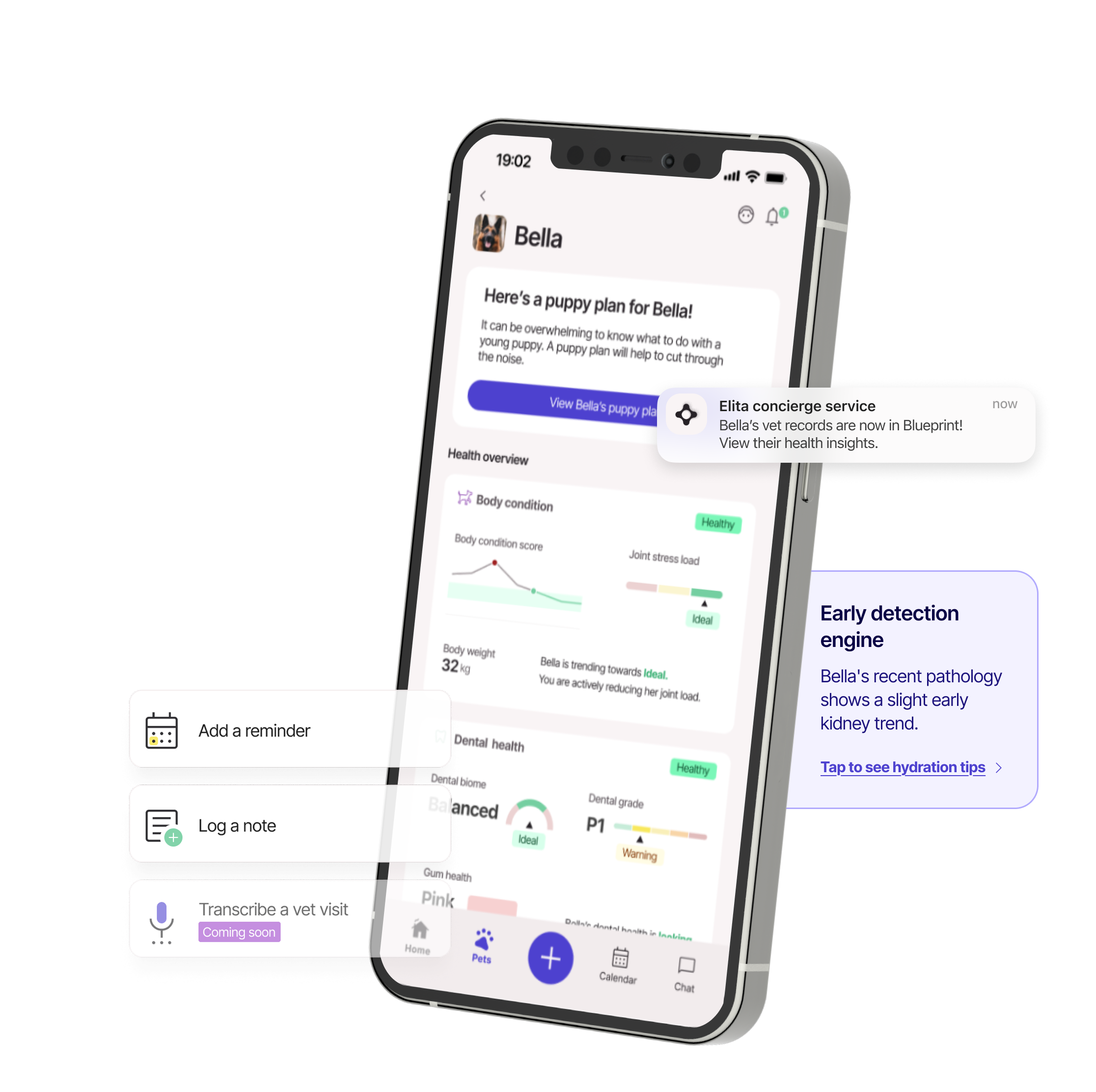
What matters most is matching the test to the decision you’re trying to make. A microbiome test can help contextualise chronic or recurring symptoms, but it won’t replace clinical assessment, history, or observation over time. At Elita, our focus is on integrating biological data with longitudinal health tracking, so test results sit within a wider framework of symptoms, behaviours, and environmental factors. That’s where gut health insights become actionable rather than overwhelming.
How to choose the right test based on your dog’s symptoms and goals
Not every gut issue requires testing, and not every test answers the same question. The right choice depends on what you’re trying to understand. Chronic diarrhoea, recurring skin issues, unexplained behavioural changes, or poor response to dietary adjustments may justify testing, while short-lived symptoms often benefit more from observation and tracking first.
Clarifying your goal, whether it’s ruling something out, guiding diet changes, or understanding recurring patterns, helps determine whether testing will add value now or later. When tests are used intentionally and interpreted within a broader health context, they support clearer decisions rather than creating more uncertainty.
Making gut health decisions that hold up over time
Quick fixes can feel reassuring, but they rarely support long term gut health. Decisions that hold up over time are based on patterns, not single data points. Whether adjusting diet, trialling supplements, or choosing to test, the goal is steady improvement rather than immediate perfection.
Consistency matters more than intensity. Observing how your dog responds over weeks rather than days reduces unnecessary changes and builds confidence in what genuinely helps. This measured approach lowers the risk of cycling through interventions and supports sustainable gut health outcomes.

Choose the right gut test with confidence
The best gut test is the one that answers the question you actually have. Blueprint helps you build enough context, symptoms, history, and patterns, to decide whether testing is worth it now, and how to use results properly if you do test. If you already have a report, upload it to Blueprint so it can be interpreted alongside real-world changes and your dog’s full health record.