Dog gut test accuracy, what affects reliability and interpretation
When people ask about gut test accuracy, they’re usually asking two things: how reliably the lab measures what’s present, and how confidently those results can be interpreted for their dog. Accuracy can be influenced by sample collection and handling, the testing method used, and the reference database the lab compares against. Interpretation matters just as much, because the gut microbiome varies naturally with diet, age, stress, medications, and illness, and can also shift alongside behaviour and mood through the gut brain axis. A result becomes far more useful when it’s read alongside symptoms and history, not in isolation.
Why accuracy depends on more than the lab method alone
Accuracy in microbiome testing isn’t just about whether a lab can detect bacterial DNA correctly. It’s also shaped by how the sample was collected, how recently the dog ate, whether they’ve been on medication, and what else is happening in their body at the time.
Even with robust lab techniques, interpretation remains the limiting factor. The gut microbiome shifts naturally in response to stress, illness, diet changes, and ageing. Without context, a result can look concerning or reassuring when it’s actually part of normal variation. Accuracy improves when results are viewed alongside longitudinal health information, allowing patterns to emerge rather than relying on a single data point.
What makes a result more reliable, and what can distort it
Several factors influence how reliable a microbiome result is. Sample timing, recent diet changes, antibiotics, probiotics, stress, and illness can all temporarily alter the gut environment. Even the way a sample is collected and stored can affect what’s detected.
Reliability improves when results are interpreted with an understanding of what was happening around the time of testing. Without that context, it’s easy to mistake short-term disruption for a long-term issue. Recording relevant events alongside test dates helps separate meaningful signals from normal fluctuation, reducing the risk of unnecessary intervention.
Why context matters more than precision alone
Precision without context can be misleading. A highly detailed gut result might look exact, but without knowing what your dog eats, how often their diet changes, how they respond to stress, or what symptoms come and go, that precision has limited value.
Context is what turns data into understanding. When gut information is viewed alongside feeding patterns, lifestyle changes, behaviour, skin health, and digestion over time, it becomes far easier to tell whether a shift represents healthy adaptation or genuine imbalance. This is especially important when supporting a varied, fresh, or raw diet, where flexibility and response matter more than fixed numbers.

Make gut results more reliable by adding context
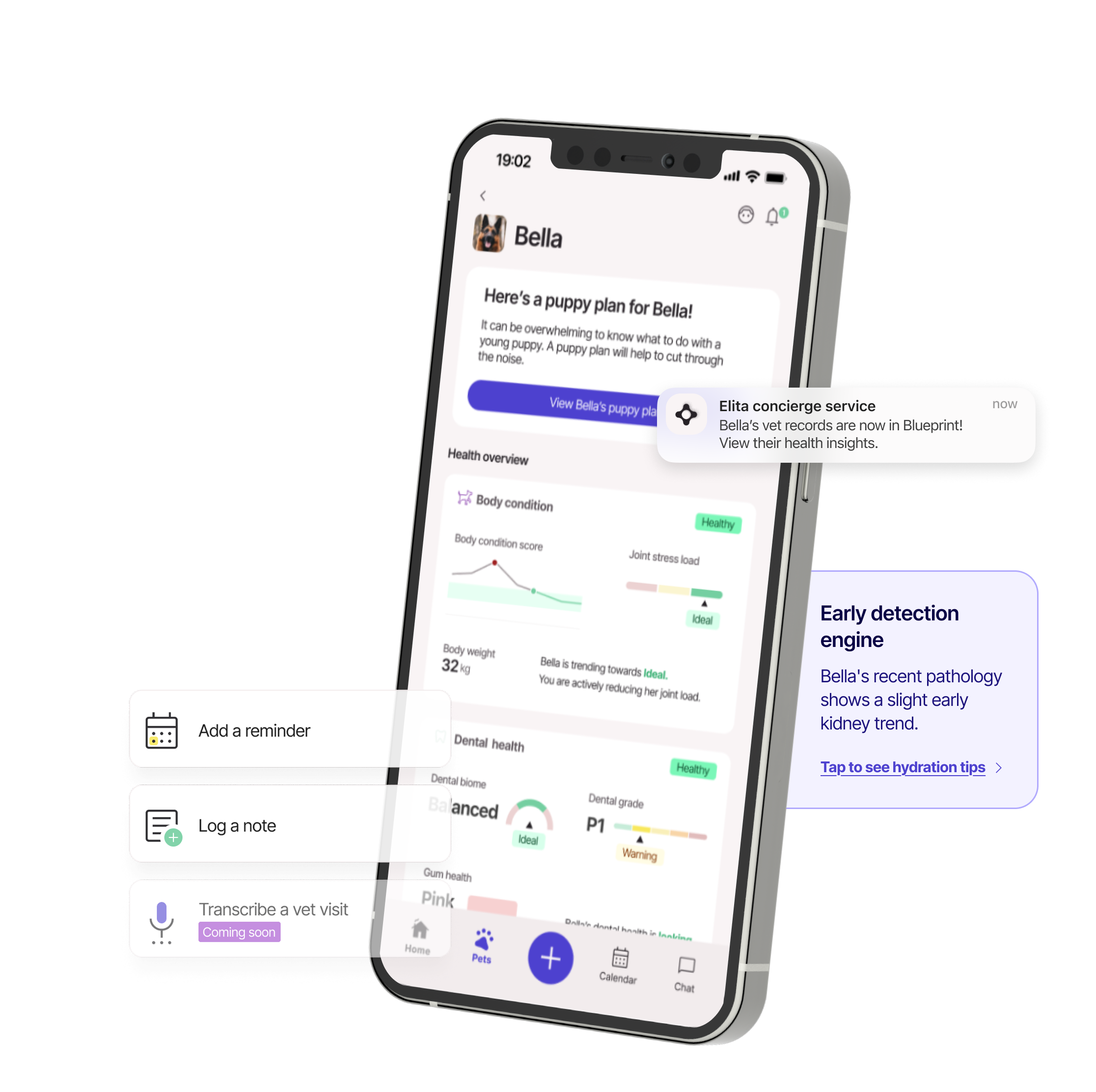
A result is only as useful as the story around it. Blueprint helps you record what was happening when the sample was taken, diet changes, antibiotics, stress, travel, probiotics, illness, so you can understand what might have influenced the outcome. That added context makes it easier to separate short-term disruption from a true pattern worth acting on.