Dog licking paws red: allergy or habit?
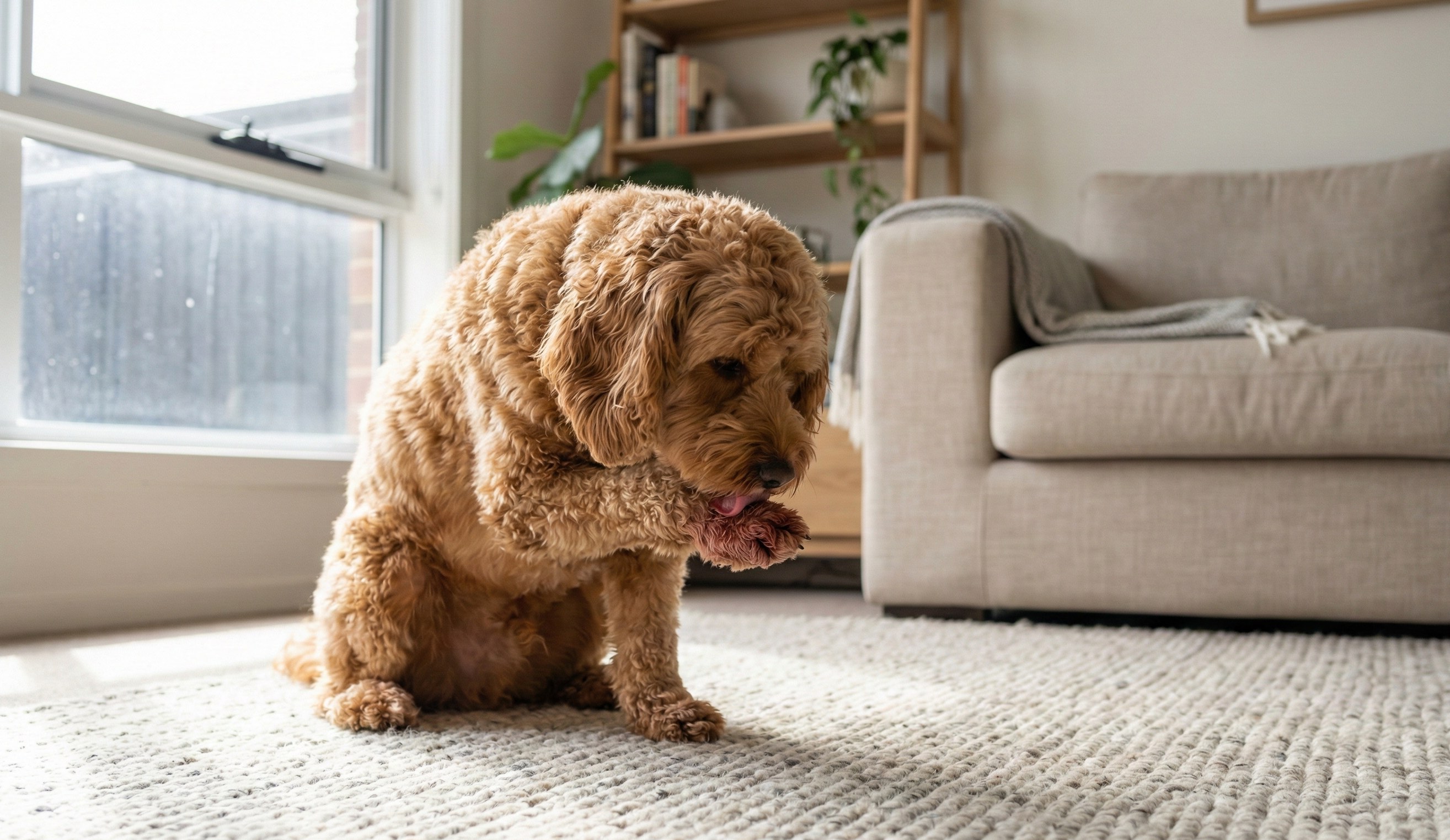
Seeing your dog constantly licking their paws is frustrating, but seeing the fur turn a rusty red colour is a clear biological signal. That red staining isn't blood; it is caused by porphyrin, a pigment found in saliva and tears that stains light fur when it is constantly wet. This tells us the licking has been chronic. While owners often dismiss this as "habit" or "boredom," biologically, it is almost always a sign of inflammation, allergy, or infection. The paw is the site of the symptom, not the cause.
The role of environmental allergens
The most common cause of rusty paws is atopic dermatitis, essentially hay fever for dogs. Because dogs absorb allergens through their skin and walk directly on grass and pollens, their feet take the brunt of the immune reaction.
The itch sensation drives them to lick, which creates a moist environment perfect for yeast and bacteria to overgrow. This secondary infection makes the itch even worse, creating a cycle that is hard to break without medical intervention. It is rarely just a "behavioural" issue.
Gut health and food sensitivities
Sometimes the trigger comes from the inside. Food sensitivities (often to chicken, beef, or wheat) can manifest as systemic inflammation that pushes out through the skin and ears. If the paw licking is accompanied by soft stools, gas, or ear infections, the gut is likely involved.
Addressing this often requires an elimination diet to identify the protein trigger, rather than just treating the paws topically. You have to lower the total histamine load on the body to stop the itch.
Correlating the flare ups
Allergies are often seasonal or tied to specific events. This is where Elita Blueprint becomes your detective tool. By logging when the licking starts and stopping, our system builds a timeline.
We hold the data that allows you to see patterns: does the licking spike every Spring? Did it start two weeks after changing food brands? Elita tracks these inputs in the background, helping you and your vet identify the trigger rather than just treating the symptom forever.

Find the root cause
Rusty paws are a sign of a system under stress. Use Elita Blueprint to log inputs, track flare-ups, and help your vet identify the allergic trigger hidden in your dog's environment or diet.