Dog microbiome tests in Australia, how they work and how to read the results
Most dog microbiome tests in Australia work by analysing microbial DNA from a stool sample to estimate which organisms are present and in what relative amounts. Reports may include measures of diversity and notes on organisms associated with gut balance, digestion, or inflammation. The key to reading results well is remembering they’re a snapshot, they need to be interpreted alongside what’s happening for your dog day to day, including stools, appetite, skin, energy, and behaviour, because gut health can influence multiple systems, including via the gut brain axis. The goal is to use the report to guide smarter questions and next steps, not to treat it as a diagnosis.

How dog microbiome tests generate and classify results
Dog microbiome tests typically use sequencing methods to identify bacterial DNA fragments present in a stool sample. These fragments are then matched against reference databases to classify bacteria into groups or species, depending on the resolution of the test.
From there, results are often summarised into charts or scores intended to simplify complex data. While these summaries can be helpful, they also introduce interpretation layers that aren’t always transparent. Understanding how results are generated, what comparisons are being made, and what assumptions sit behind any scoring system helps owners use reports more critically and avoid over-interpreting a single outcome.
How to read a report without overinterpreting it
Microbiome reports often include charts, rankings, or scores designed to simplify complex data. While these summaries can be helpful, they can also create a false sense of certainty if taken at face value. A high or low value doesn’t automatically mean action is required.
A more useful approach is to ask how the findings align with your dog’s symptoms and trends. Are changes persistent or improving? Do results match what you’re seeing clinically? Treating the report as a starting point for questions, rather than a set of instructions, helps keep decisions measured and evidence-informed.
Moving from gut data to confident, measured action
Gut data is most useful when it supports confident experimentation, not hesitation. Whether you’re introducing new proteins, increasing dietary diversity, or trialling supplements, the goal isn’t to avoid change, it’s to understand response.
Measured action means making one change at a time, observing how your dog adapts, and adjusting based on evidence rather than assumption. Over time, this builds trust in your decisions and reduces the need for reactive interventions. Tracking turns gut data into a feedback loop, allowing owners to act earlier, with more clarity and far less guesswork.

Read your report with clarity, not guesswork
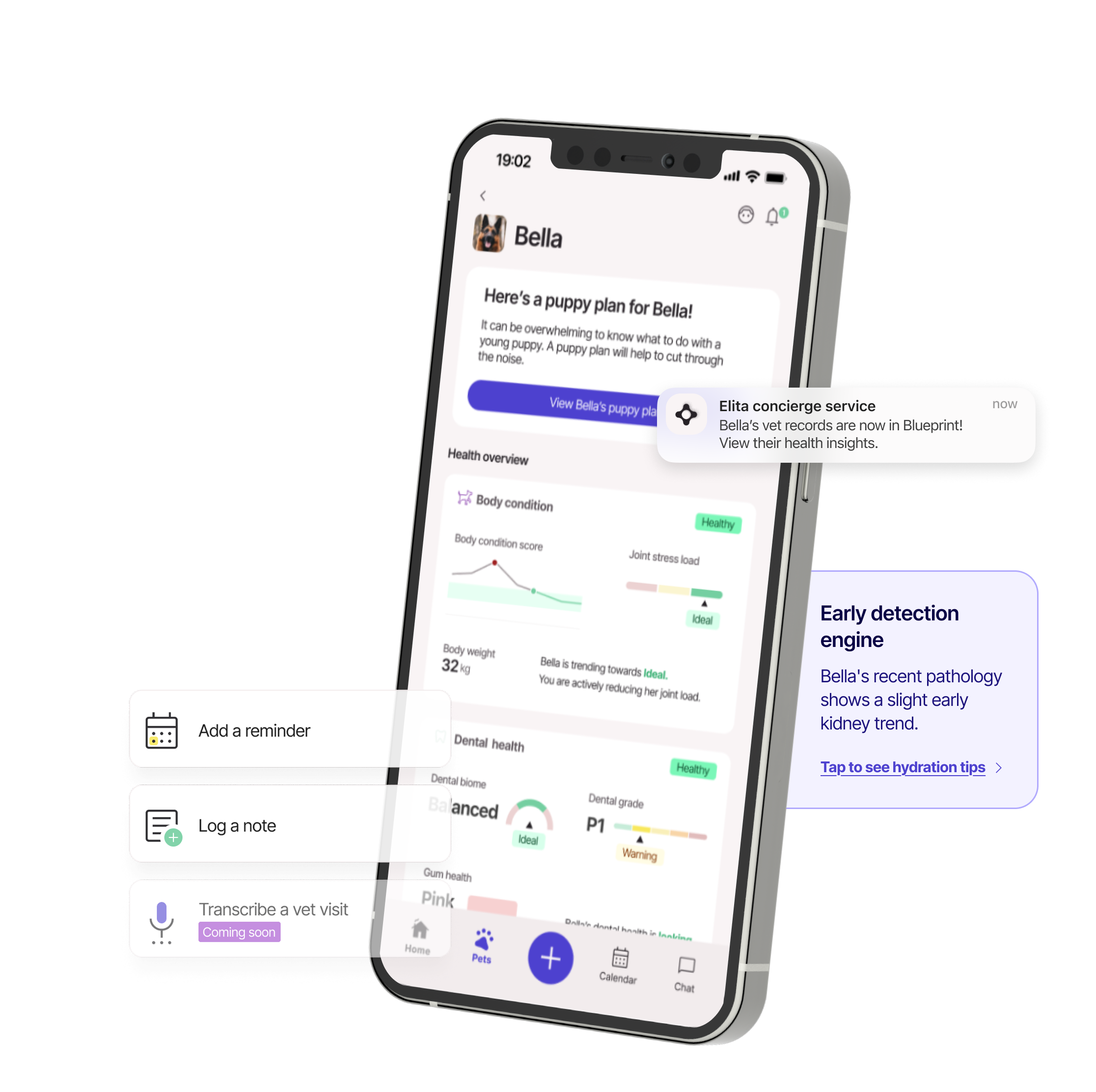
Gut reports can look definitive, but the real value is in interpretation. Blueprint keeps your report alongside longitudinal notes and observations, so you can check whether the findings actually match your dog’s trends over time. This helps you avoid overreacting to a single number while still acting early when something consistently shifts.