Dog microbiome test reviews, how to assess quality and credibility
If you’re reading dog microbiome test reviews, it helps to look beyond online ratings and focus on whether the test is methodologically credible and clinically useful. Useful questions include: what technology is used, what reference populations the results are compared to, how transparent the company is about limitations, and whether recommendations are personalised or generic. It’s also worth considering whether the product supports real decision-making, for digestion, skin issues, recurrent symptoms, or behaviour changes that may link back to the gut brain axis, rather than simply producing a report. The best tests are the ones you can interpret in context and use alongside your dog’s broader health record.

What to look for when reading microbiome test reviews
When reading reviews of dog microbiome tests, it’s useful to look beyond overall satisfaction and focus on whether the test actually supported better decisions. Credible reviews often mention clarity of reporting, transparency around limitations, and whether results felt personalised rather than generic.
It’s also worth considering how the test fits into ongoing care. A useful test is one that can be revisited, compared over time, and integrated with broader health records. Reviews that emphasise understanding trends, symptoms, and next steps tend to be more informative than those focused purely on novelty or one-off insights.
How to judge whether a test is genuinely useful for your dog
A gut health test is most useful when it changes what you do next. If results won’t influence diet, monitoring, or further investigation, tracking symptoms and building a clearer baseline may be more valuable than testing immediately.
Signs that testing may add value include recurring or unexplained symptoms, poor response to initial interventions, or the need for additional context in ongoing care. When tests are chosen deliberately and interpreted alongside longitudinal health data, they support clearer decisions and more confident conversations with your vet.
Choosing tools that support understanding, not overwhelm
Not every tool that produces data helps understanding. Some reports generate more noise than insight, especially when they’re disconnected from day-to-day health observations.
The most supportive tools are the ones that integrate information rather than fragment it. When gut data, symptoms, diet, and behaviour live in the same place, patterns become easier to see and decisions become simpler, not more complex. This approach encourages curiosity and learning, rather than anxiety or overcorrection.

Pick a test that actually supports better decisions
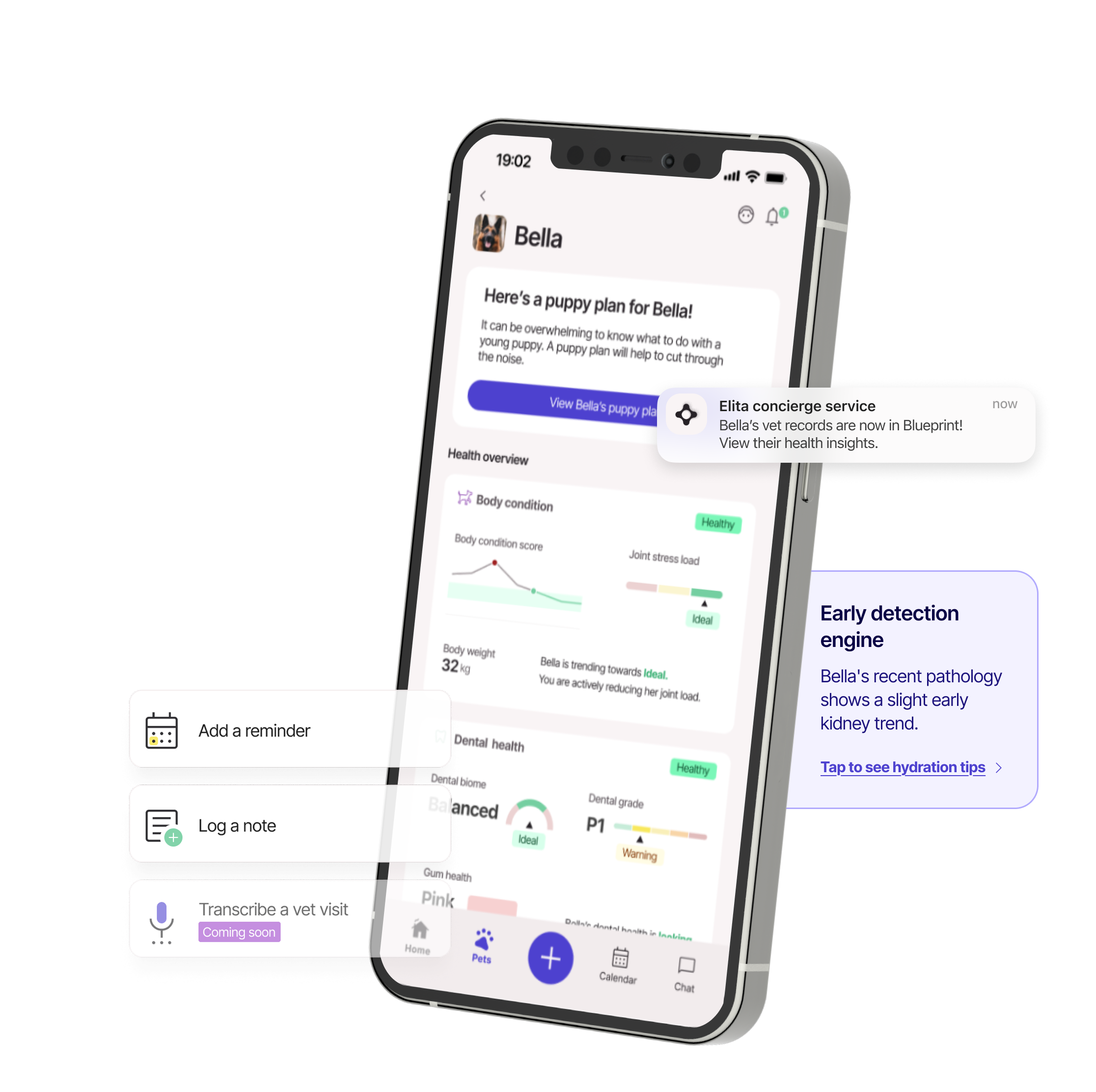
The point of testing isn’t data, it’s better decisions. Blueprint helps you clarify your goal first, then track outcomes after any change, so you can see whether a test result or intervention is genuinely helping. If you choose to test, upload the report to Blueprint so it sits alongside your dog’s history and helps your vet conversations stay grounded and specific.