Dog microbiome testing explained, what it measures and what it can’t confirm
Dog microbiome testing measures the relative presence of different bacteria in a stool sample, offering insight into microbial diversity and balance at a specific point in time. What it does not do is diagnose disease, predict outcomes with certainty, or explain cause and effect on its own. Many factors, including recent diet, medications, stress, and illness, can influence results. Because the gut is connected to immune function, metabolism, and behaviour through pathways such as the gut brain axis, test findings are most useful when considered alongside symptoms, health history, and observed changes, rather than as a standalone explanation.

What microbiome testing captures and where its limits sit
Microbiome testing captures a snapshot of bacterial composition in the gut at the moment a sample is taken. It can highlight patterns in diversity and relative abundance that may help explain recurring digestive issues or provide context for symptoms that don’t have an obvious cause.
Where its limits sit is in what it cannot confirm on its own. Microbiome tests do not diagnose disease, predict outcomes with certainty, or account for how the gut is functioning day to day. They also can’t fully capture how the gut interacts with other systems, including immunity, metabolism, and behaviour. This is why microbiome data is most powerful when treated as one input among many, and interpreted as part of a wider longitudinal dataset, rather than a definitive answer.
How to use testing as part of a longer health picture
Gut testing is most effective when it’s used as one moment within an ongoing health story, not as a one-off verdict. A single result can provide context, but its real value comes from how it’s compared over time and alongside changes in symptoms, diet, environment, and life stage.
For owners who have already completed testing, keeping those results connected to future observations is key. When microbiome reports sit alongside longitudinal records, such as digestive changes, skin symptoms, energy levels, and behavioural shifts, they become easier to interpret and far more actionable. This approach supports continuity, allowing gut health to be monitored as part of overall wellbeing rather than treated in isolation.
Making gut health part of your dog’s long term health strategy
Gut health isn’t a one-off project, it’s an ongoing contributor to long-term wellbeing. When supported thoughtfully, the gut plays a role in immune resilience, inflammatory balance, metabolic health, and even behavioural stability across a dog’s life.
Treating gut health as part of a long-term strategy allows owners to think beyond short-term symptom control. It supports proactive care, smarter feeding choices, and earlier recognition of changes that matter, all of which compound over time into better health outcomes and more good years.

Build a longer health picture, not a one-off result
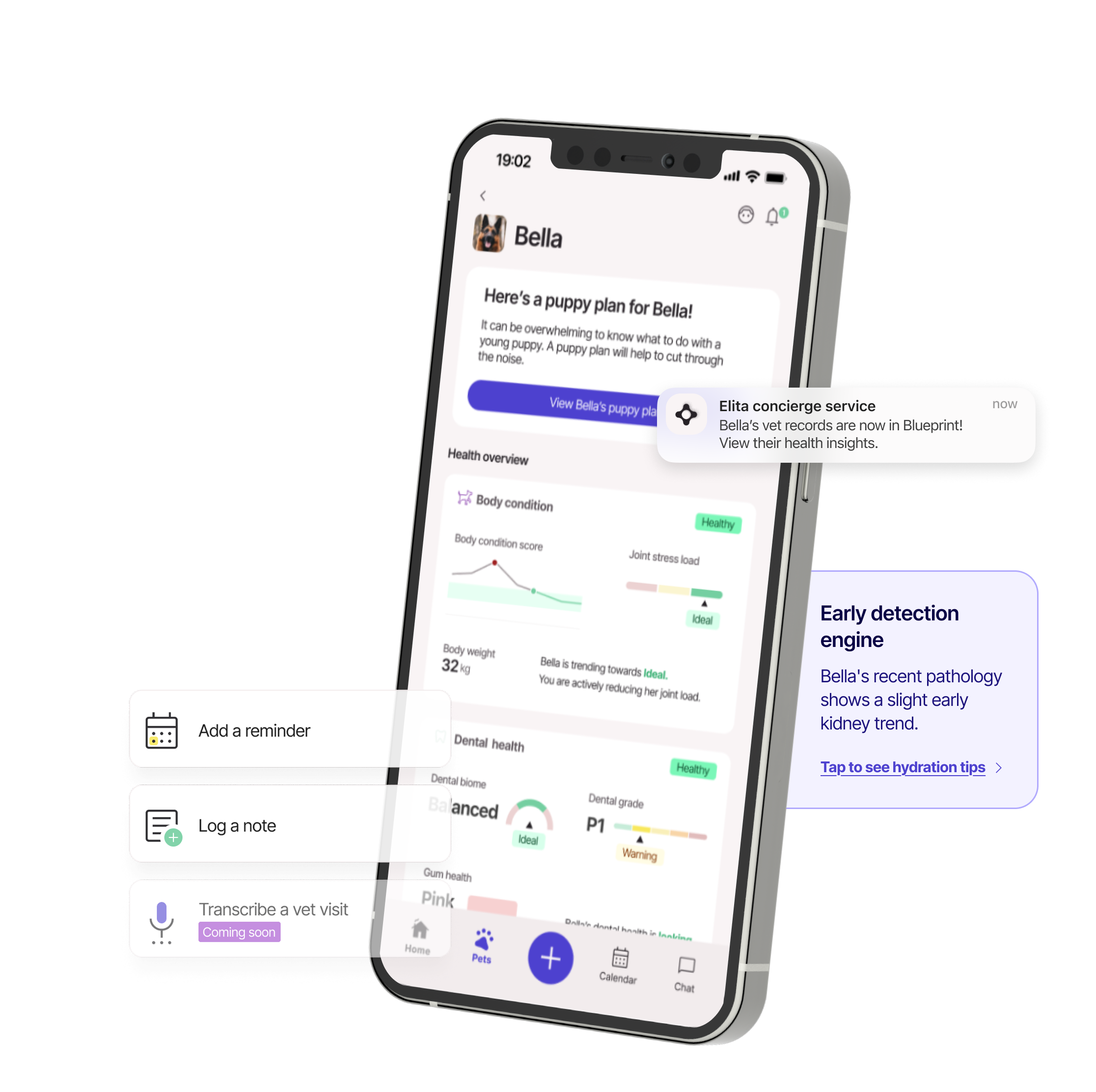
One-off results can be interesting, but long-term patterns are what drive better health decisions. Blueprint is designed to help you build a continuous record of your dog’s health, bringing together gut data, symptoms, diet, behaviour, and vet history in one place. When test results are viewed as part of that longer story, they’re easier to interpret and far more useful for guiding proactive care over time.