How much does dog teeth cleaning cost in Australia?
If your vet has mentioned a dental clean or you’ve noticed bad breath, tartar, or red gums, it’s natural to ask how much dog teeth cleaning costs in Australia. Dental care is one of the most common procedures dogs undergo, but prices vary widely depending on your dog’s needs and the type of care involved. Understanding the cost, and the why behind it, helps you make better decisions earlier.

Typical dog teeth cleaning costs in Australia
In Australia, professional dog teeth cleaning typically costs between $400 and $1,500. This usually includes a full dental assessment, cleaning under anaesthesia, and polishing.
The final price depends on more than just the clean itself. Some dogs require dental X-rays, longer anaesthetic time, or additional procedures if disease is present. What starts as routine maintenance can become more complex if issues have been developing quietly over time.
Did you know?
While your dog is already under anaesthesia for a dental procedure, this can be an ideal opportunity to store their healthy stem cells. It’s a one-time collection that may support future treatment options as your dog ages.
Learn more about stem cell storage with Elita here
What affects the cost of dog teeth cleaning?
Several factors influence how much a dental procedure will cost:
Severity of dental disease
Early plaque buildup is quicker and simpler to treat than advanced gum disease or infected teeth.
Anaesthesia time
Longer procedures require longer monitoring and support.
Dental X-rays
These help vets assess issues below the gum line that aren’t visible during an exam.
Extractions
Removing damaged or infected teeth increases time, complexity, and cost.
Dog size and age
Larger dogs and older dogs may require more tailored care.
Many owners are surprised by costs because dental disease often progresses without obvious symptoms until intervention is unavoidable.
Why proactive dental care matters
Dental health isn’t just about teeth. Ongoing dental disease can contribute to pain, inflammation, and impacts on organs like the heart and kidneys.
The most effective way to reduce both health risks and costs is early detection and consistent monitoring. Tracking dental changes, procedures, and vet recommendations over time helps shift care from reactive to preventative, which is better for your dog and more manageable for you.

See dental health clearly, before problems escalate
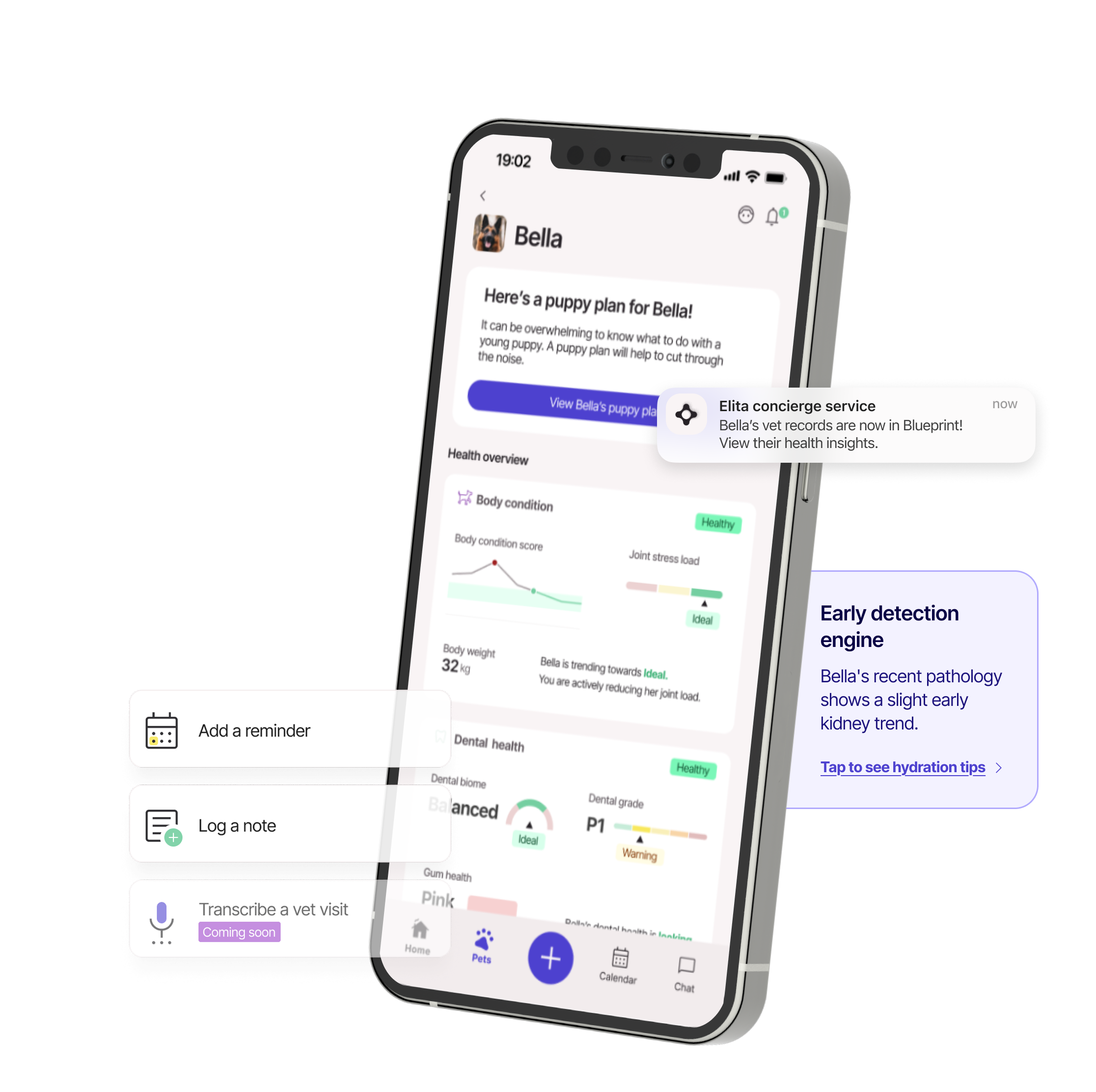
Dental issues don’t appear overnight. They develop gradually, often without obvious signs. Blueprint helps you track your dog’s health over time, including dental procedures, vet visits, and early changes, so you can make informed decisions sooner and support long term wellbeing.