dog teeth cleaning cost australia
Dog teeth cleaning costs in Australia: what you are really paying for
You call two vets and get two very different quotes. Now you are wondering if one clinic is overcharging.
The truth is dog dental pricing in Australia really can vary a lot. Below is what a “dental clean” usually includes, typical price ranges, and how to compare quotes without getting stung by surprise add-ons.
What “dog teeth cleaning” usually means in Australia
Most proper dental cleans for dogs are done under a general anaesthetic. Your dog needs to stay still so the team can work safely. It also lets them clean under the gumline, which is where many problems start.
A dental clean often includes:
The biggest difference between quotes is usually what is assumed.
A straightforward clean is often a scale and polish under anaesthetic, with basic checks.
A clean with dental X-rays takes longer and needs extra equipment. It can also pick up problems you cannot see just by looking.
A clean with extractions is a bigger job again. It takes more time and can need stronger pain relief. It may also include take-home meds and a recheck.
The Australian Veterinary Association explains why “awake” dentistry is limited, and why anaesthesia is usually needed for a proper clean under the gumline.
Source: Australian Veterinary Association (AVA), policy on non-anaesthetic dentistry
https://www.ava.com.au/policy-advocacy/policies/companion-animals-health/non-anaesthetic-dentistry/
Dog teeth cleaning cost in Australia: typical ranges and why quotes vary
Here are realistic ballparks you will often see in Australian clinics:
These are ranges, not a promise. Your dog’s mouth, age, and the clinic’s setup matter.
Pet insurance education hubs and large vet networks commonly describe similar price brackets. They also point out that extractions and complexity are what push costs up the most.
Source: PetSure Australia, overview of dental disease and treatment costs
https://petsure.com.au/knowledge-hub/dog-dental-disease/
Source: Greencross Vets, dental disease information and treatment considerations
https://www.greencrossvets.com.au/pet-library/articles-of-interest/dental-disease-in-dogs/
Dental X-rays are another big divider between quotes. Global veterinary dental guidelines note that a lot of dental disease sits below the gumline. That means X-rays can change the plan, even when teeth look “okay” on the surface.
Source: WSAVA, global dental guidelines (importance of assessing disease below the gumline, often with dental radiographs)
https://wsava.org/global-guidelines/dental-guidelines/
So why do quotes vary so much, even for the “same” service?
Here is a simple table to show what usually changes.
ScenarioWhat is usually involvedWhy the cost changesMildScale and polish under anaesthetic. Little or no gum inflammation.Shorter time. Often no extractions.ModerateScale and polish plus dental X-rays. A few teeth may need removing.More time, more equipment, more pain relief.SevereX-rays plus multiple extractions, including difficult teeth. Longer recovery care.Longer anaesthetic time, surgical work, and more aftercare.
One money tip that helps. A low quote is not automatically “bad”. A higher quote is not automatically “greedy”. What matters is what is included, and what happens if they find problems mid-procedure.
Copy and paste checklist: what to ask when comparing quotes
Ask for an itemised estimate before you book. That helps you compare apples with apples.
Copy and paste these questions into an email, or take them to your appointment:
If money is tight, ask about options like a staged plan, timing it with other care, or a payment plan. Some clinics can work with you.
Also ask this one simple question: “What would make this quote go up?” A good clinic will explain the likely scenarios.
How to reduce the chances of a $2,000+ dental later
Dental problems creep up. Many dogs keep eating even if their mouth hurts. That is why it can feel like a sudden, expensive problem.
Prevention is not fancy. It is small habits done often.
Try brushing your dog’s teeth three times a week to start. Build up if you can. Use dog toothpaste, not human toothpaste. Keep it quick and reward-based.
Dental chews can help reduce build-up on some teeth. They do not replace brushing. Think of them as a helpful extra.
Regular dental checks matter too. If problems are caught early, it is more likely to be a simple clean. It is less likely to turn into multiple extractions.
Small dogs are often more prone to dental disease. If you have a tiny breed, early brushing habits can save a lot of stress later.
RSPCA Australia has practical, step-by-step guidance on home dental care, including brushing.
Source: RSPCA Australia, home dental care and tooth brushing guidance
https://kb.rspca.org.au/knowledge-base/how-can-i-take-care-of-my-pets-teeth/
No-anaesthetic teeth cleaning: where it fits and where it does not
It makes sense that no-anaesthetic cleaning is tempting. It is usually cheaper. It can also feel like it “must be safer”.
It may remove some visible tartar. That can improve how the teeth look.
But it is not the same as a full dental clean under anaesthetic.
This is why some dogs still end up needing a full dental later, even after an “awake” clean.
If you are unsure what is right for your dog, ask your vet once you have a quote in hand and a clear goal.
It is also worth booking a check if you notice any of these signs:
Blueprint: plan ahead and catch changes earlier
Dental disease is sneaky. A bit of bad breath can become “normal”. A little fussiness with food can get written off as “picky”. Then one day you get a big quote.
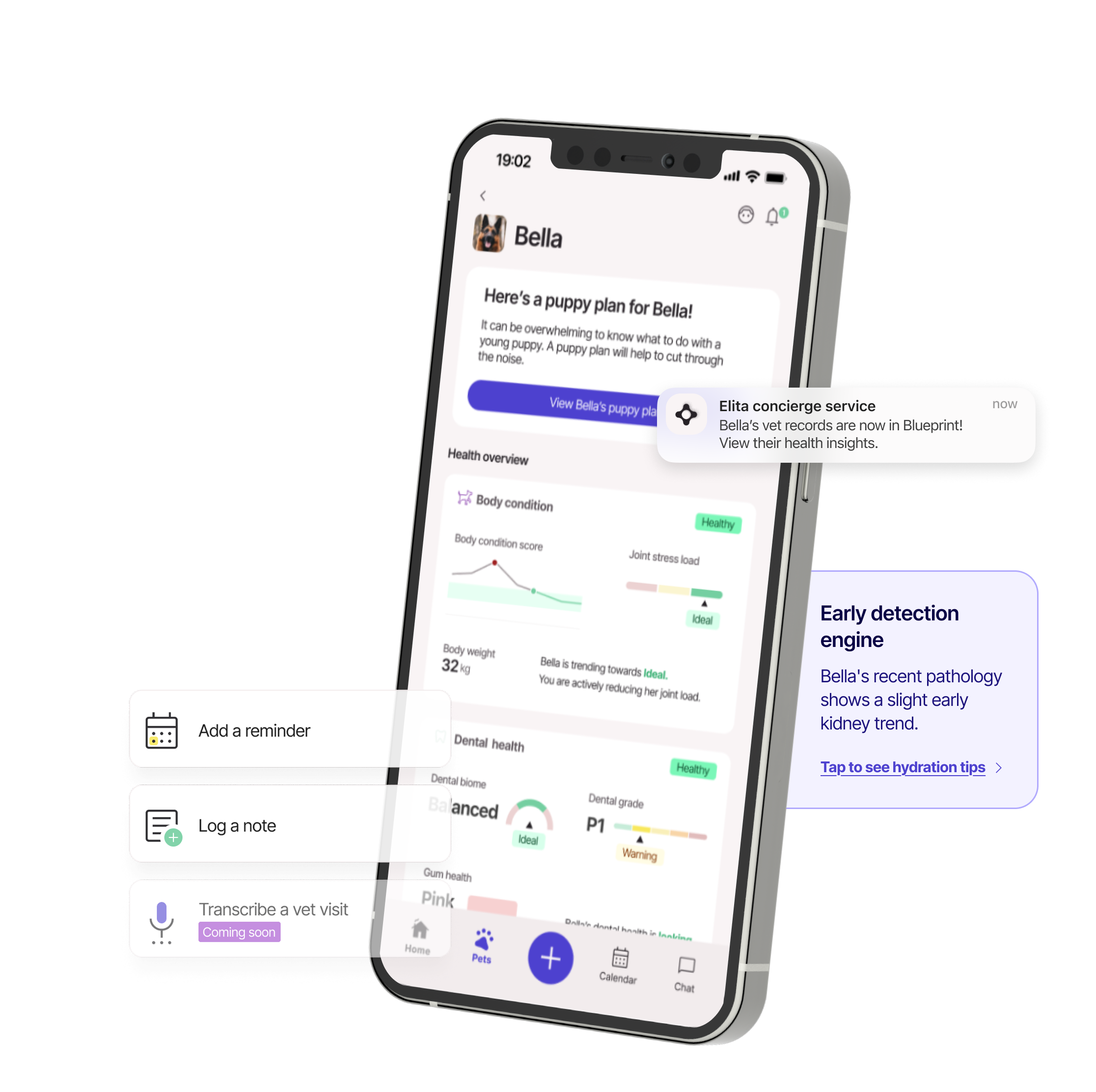
Blueprint helps you spot slow changes, because you are looking at a pattern over time, not a single moment.
A simple way to start is to track a weekly breath rating and a quick “mouth comfort” note. Also log small behaviour shifts, like chewing on one side, dropping food, pawing at the mouth, drooling, or avoiding hard treats.
If your dog does need a dental, those notes help you explain what changed and when. They can also help you plan earlier, while it is more likely to be a simpler clean.