High liver enzymes in dogs causes: interpreting the blood work
Hearing that your dog has “high liver enzymes” can be alarming, but biologically, the liver is a resilient organ with a remarkable ability to adapt and recover. Elevated enzymes are a signal that liver cells are under stress or have been injured, allowing enzymes to leak into the bloodstream.
Common markers like ALT (alanine aminotransferase) and ALP (alkaline phosphatase) tell different stories. Causes range from transient, benign changes to toxins, medications, or chronic disease. In most cases, the trend over time matters more than a single number.
Common triggers for elevation
ALT is primarily a leakage enzyme. When it’s elevated, it suggests hepatocellular injury or stress. Common causes include toxin exposure (such as xylitol or sago palm), trauma, drug reactions, or inflammatory liver disease.
ALP is often associated with bile flow issues (cholestasis), but in dogs it is also highly sensitive to cortisol. Conditions like Cushing’s disease or long-term steroid use can drive ALP markedly higher, even when other liver values remain normal. Chronic inflammatory conditions elsewhere in the body, including significant dental disease, may also contribute to mild elevations. Interpreting these results requires looking at the whole dog, not just the liver values in isolation.
Acute spike vs chronic creep
Context is critical. A sudden enzyme spike in a young, otherwise healthy dog often points to an acute insult, such as toxin exposure or infection.
A slow, progressive rise in an older dog may suggest metabolic disease or age-related changes like nodular hyperplasia. The liver’s large functional reserve means it can continue to perform its essential roles even when enzymes are elevated.
This gives time to investigate, but only if accurate history and repeat data are available.
We hold the longitudinal data
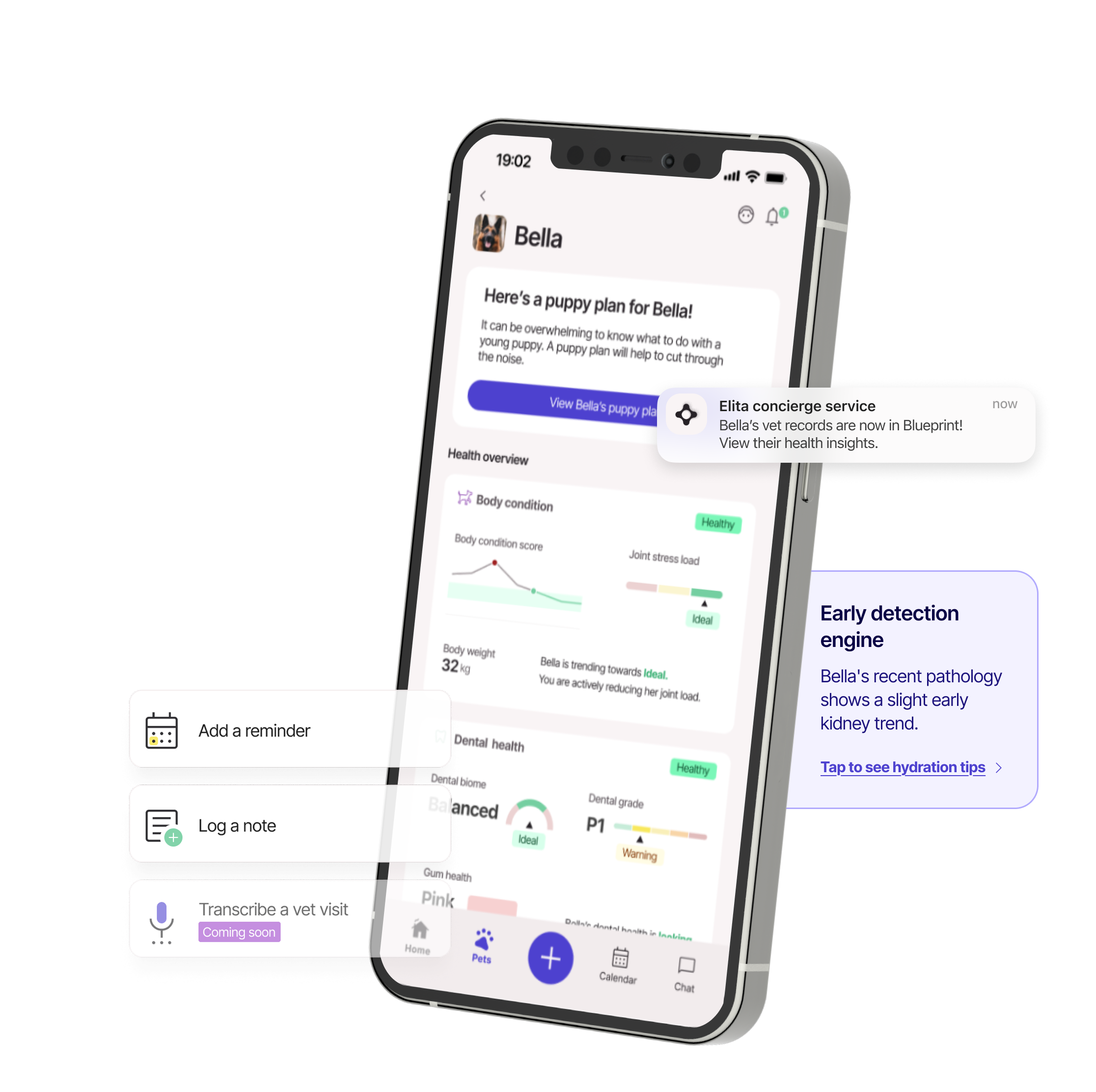
This is where Elita Blueprint adds real value. You can upload and store your dog’s historical blood work, allowing current results to be viewed alongside past baselines rather than in isolation.
Blueprint also captures factors that influence liver health, including medication use (such as NSAIDs or phenobarbital) and supplements. Presenting this complete, longitudinal picture helps your vet move from concern to a structured, data-led investigation.

Track the trends
The liver is complex, and single blood tests rarely tell the full story. By storing longitudinal health data, Elita Blueprint helps distinguish between temporary enzyme elevations and patterns that warrant deeper investigation, supporting better, calmer decision-making over time.