How gut health affects dogs beyond digestion
Gut health matters even when a dog’s stools look normal. The gut microbiome is involved in immune regulation, inflammatory balance, nutrient processing, and communication with the nervous system through pathways like the gut brain axis. That means gut disruption can sometimes show up as changes in skin, energy, appetite, behaviour, or stress tolerance before it becomes an obvious digestive issue. Understanding these connections helps owners stop treating symptoms in isolation, and start looking for the underlying patterns that link them.

How the gut influences systems far beyond digestion
The gut does far more than process food. It plays a role in immune development, inflammatory control, metabolic function, and communication with the nervous system through pathways such as the gut brain axis. This is why gut disruption can sometimes show up as changes in behaviour, stress tolerance, appetite, or energy before digestive symptoms become obvious.
Understanding the gut as a systems-level contributor helps explain why seemingly unrelated symptoms can cluster together. When gut health is supported, these systems often stabilise together. This whole-body lens moves care away from treating symptoms in isolation and toward addressing underlying biological drivers.
Why gut health changes can affect behaviour, energy, and mood
Gut health is closely linked to the nervous system through the gut brain axis. Signals between the gut and brain influence stress responses, arousal, appetite regulation, and energy levels. When gut balance shifts, these signals can change as well.
This is why gut disruption sometimes shows up as increased anxiety, restlessness, lethargy, or changes in behaviour before obvious digestive symptoms appear. Recognising these links helps owners respond earlier and avoid treating behavioural changes as isolated issues, when they may be connected to underlying gut health.
Using gut health to support behaviour, immunity, and energy
The gut doesn’t operate in isolation. Through the gut brain axis, microbial activity influences neurotransmitters, immune signalling, and inflammatory pathways that affect mood, focus, energy levels, and stress response. This is why changes in behaviour or vitality sometimes appear alongside digestive or skin symptoms.
Supporting gut health can therefore have effects well beyond digestion. When energy dips, anxiety increases, or recovery slows, looking at gut health in context can reveal contributing factors that might otherwise be missed. Viewing these systems together helps owners and vets move from isolated symptom management to whole body understanding.

Understand how gut health affects the whole dog
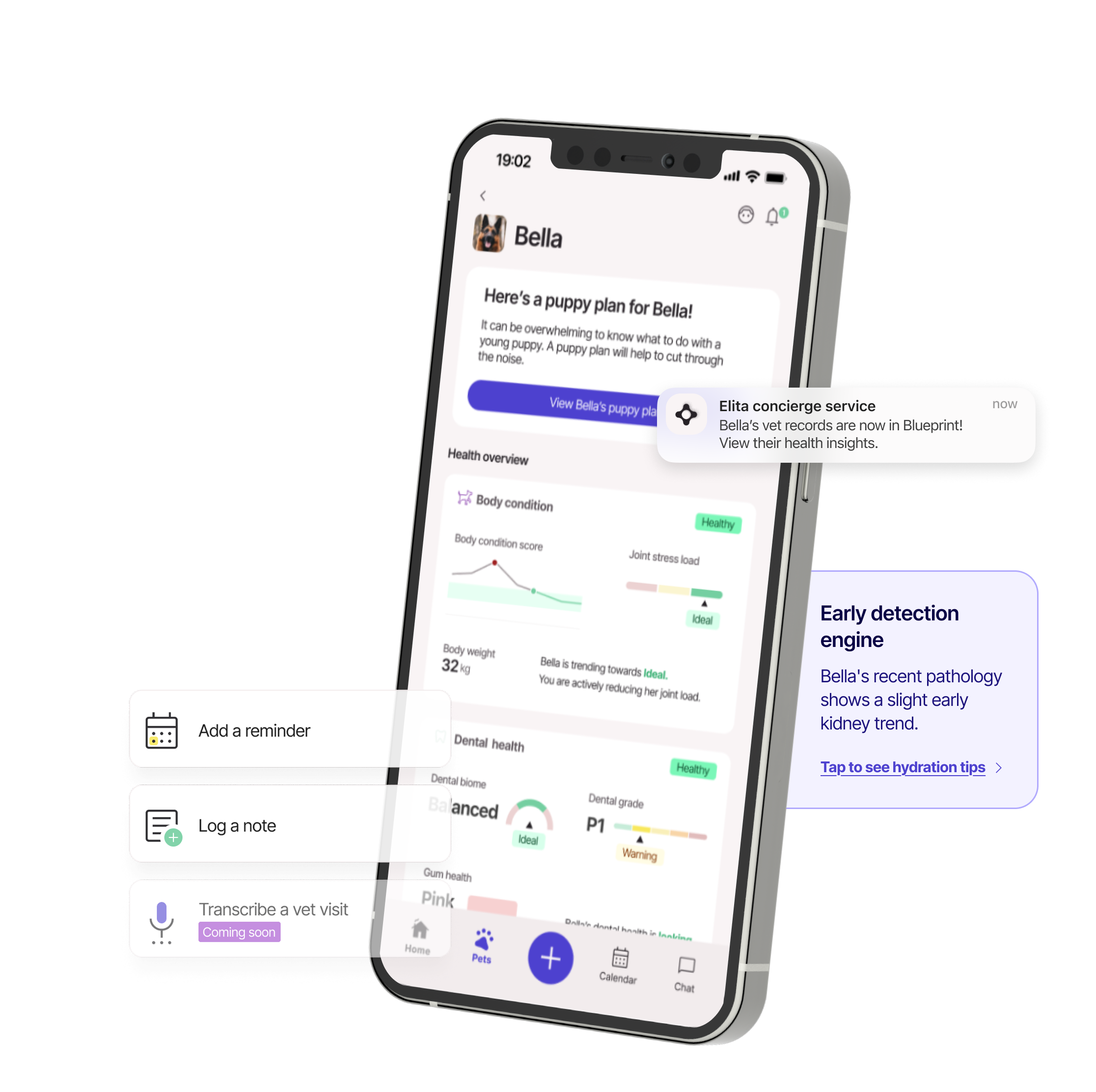
Gut health can show up through digestion, skin, energy, and even behaviour via the gut brain axis. Blueprint brings those signals together so you can see the full picture and act early with confidence. If you’ve already done an at-home microbiome test, upload it into Blueprint so it sits alongside real-world changes, not in isolation.