How much should I feed my puppy?
Feeding a puppy can feel overwhelming. Charts, brand guidelines, and advice often vary, leaving owners unsure how much is actually right. If you’re looking for a puppy feeding chart, you’re likely trying to support healthy growth without over or underfeeding.
The most useful charts are a starting point, not a rulebook.

How puppy feeding charts are used
Puppy feeding charts typically estimate daily food intake based on age, current weight, and expected adult size. They help guide portions during rapid growth phases when nutritional needs change quickly.
However, puppies don’t grow uniformly. Breed, metabolism, activity level, and even desexing timing all influence how much food is appropriate. Two puppies of the same age may need very different amounts.
This is why charts should be adjusted based on real world observation.
Signs feeding amounts may need adjusting
Changes in appetite, energy, stool consistency, and body condition are often better indicators than numbers alone. Puppies may need more food during growth spurts and less during quieter phases.
Overfeeding can contribute to excess weight, which increases long term joint stress, especially in larger breeds. Underfeeding can affect growth and development.
Monitoring trends over time helps ensure feeding supports healthy development rather than simply following a static chart.
Feeding as part of long term health planning
Early nutrition shapes more than weight. It influences body condition, growth rate, energy, digestion, and even how resilient your puppy is as they develop. The goal isn’t a perfect number, it’s building a healthy baseline and catching changes early.
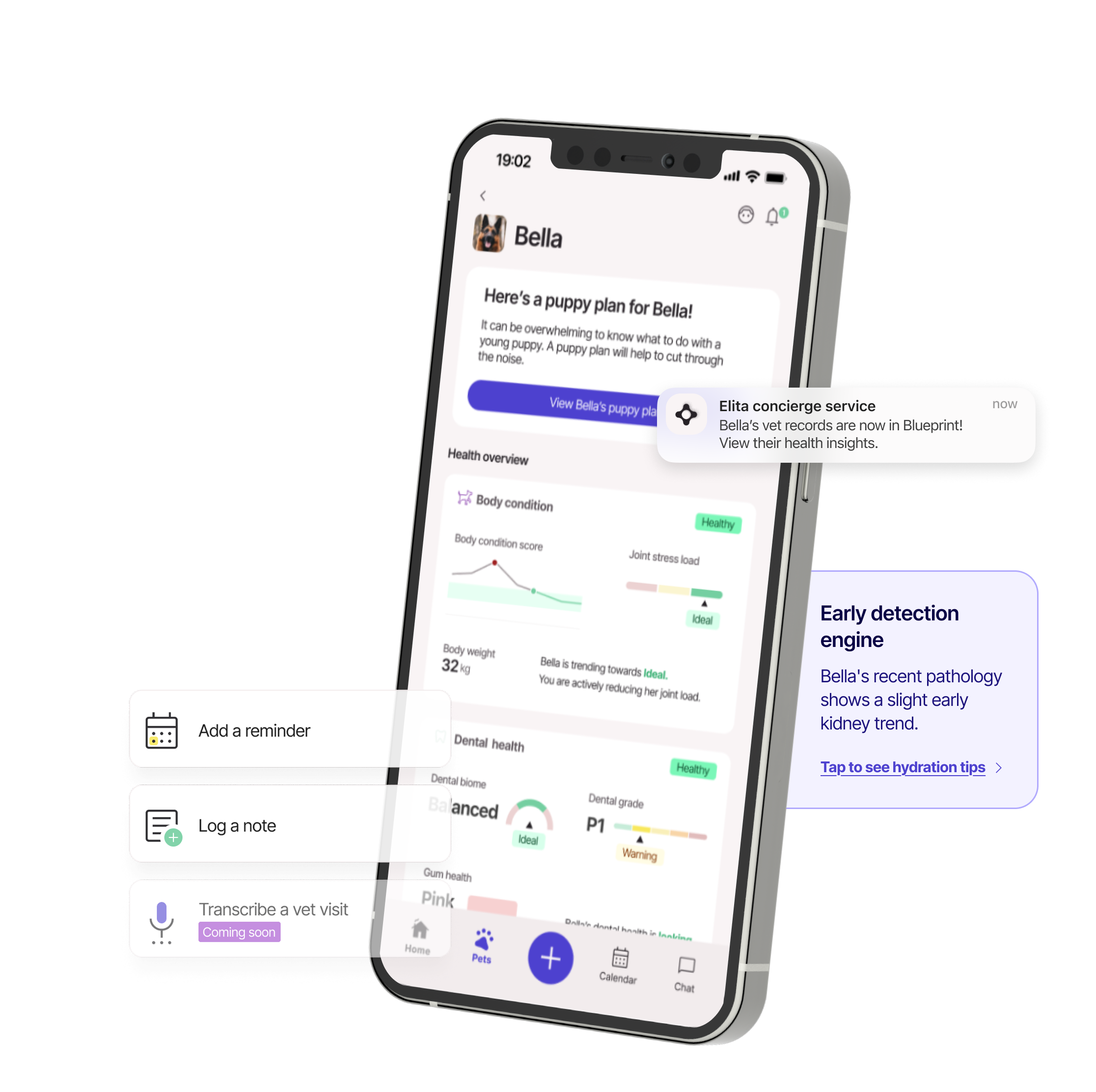
Blueprint helps you track feeding, appetite, stools, energy, growth, and body condition over time, all in one place. That means you can spot shifts before they become obvious problems, and you’re not relying on memory when something feels “slightly off.” Over time, this creates a clearer picture of your puppy’s health, not just their weight.

Feed with confidence, not guesswork
Feeding charts are a useful guide, but your puppy’s real signals matter more. Blueprint helps you track the inputs and changes that shape long term health, so you can pick up issues earlier and make more confident decisions as they grow.