My dog is limping on his back leg but doesn’t seem in pain, what’s going on?
Noticing your dog limp on a back leg, especially when they don’t appear to be in pain, can be confusing. Many dogs continue to eat, play, and act normally even when something isn’t quite right. A mild or intermittent limp is often an early signal, and understanding what could be behind it helps you decide when to monitor and when to act.
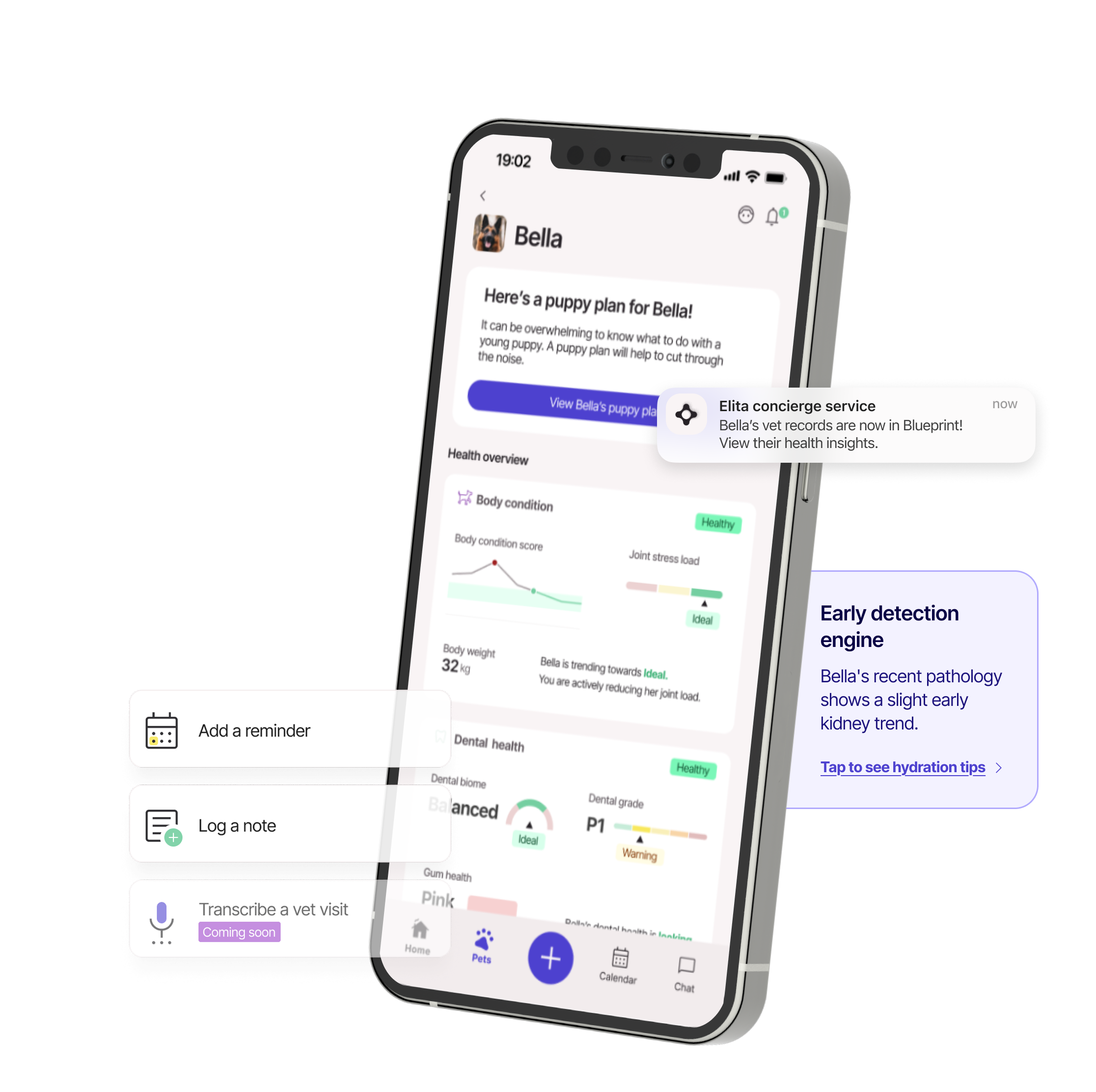
The easiest way to track and manage subtle changes in your pet’s health over time is in Blueprint. You can sign up free and keep everything in one place here.
Common reasons for a back leg limp without obvious pain
Dogs can limp on a back leg for several reasons, even if they’re not yelping or showing clear discomfort. Common causes include mild muscle or soft tissue strains, early joint changes, or gradual wear and tear that builds up over time.
Conditions such as early osteoarthritis, hip dysplasia, or a partial cruciate ligament strain often start subtly. Your dog may adjust how they move or shift weight between legs long before pain becomes obvious. In these early stages, everything else can look completely normal.
Some of these early signs are easy to miss or misinterpret as ageing. We’ve outlined several of the less obvious signals in more detail here.
When limping is mild but still worth paying attention to
A limp that comes and goes, appears after exercise, or improves with rest is easy to dismiss, but it’s often the body’s first warning sign.
• You should pay closer attention if:
• The limp persists for more than a few days
• It appears after longer walks or play
• Your dog is slower to stand, jump, or climb stairs
• You notice small changes in posture or movement
Early patterns matter. Waiting for clear pain signals can mean missing the window for simpler, preventative support.
Why early tracking makes a difference
Many back leg issues progress gradually. By the time pain is obvious, underlying joint or ligament changes may already be established.
Keeping a simple record of limping episodes, activity levels, and vet advice over time gives you and your vet a much clearer picture. This helps shift care from reactive treatment to proactive management, supporting mobility and comfort for longer.

Track changes before they become bigger problems
Subtle limping is easy to forget once it improves, but patterns over time are what matter most. Blueprint helps you track symptoms, activity changes, and vet visits in one place, so you can spot trends early and make informed decisions about your dog’s long term joint health.