my dog is limping on his back leg but not in pain
Why your dog can limp on a back leg but still act totally fine
Your dog is limping, then sprinting to the food bowl like nothing happened. It’s confusing. It can also make you wonder if you’re overthinking it.
You’re not. A limp is your dog’s way of protecting something. Below is a simple plan for what to look for, what to do over the next 48 hours, and which signs should change the plan.
What it means when your dog limps but doesn’t seem in pain
Not crying does not mean your dog is not hurting. Many dogs hide pain, especially if they are excited or focused on food or play.
Some problems only hurt in certain moments. It might hurt when they put weight on the leg, turn quickly, jump off the couch, or take stairs. That’s why you can see a limp even if your dog still seems cheerful.
Here are a few quick definitions that help you describe what you’re seeing.
A “comes and goes” limp is not automatically nothing. It can mean something is getting irritated, then settling down again.
What you can check and do over the next 48 hours
The 60-second home check (keep it gentle)
Start at the paw. It’s the most common “easy win,” and you can check it without bending joints.
Do this somewhere calm, with good light. If your dog pulls away or seems stressed, stop.
What not to do at home matters too.
If you see a torn nail, a puncture, or something embedded, it’s a good reason to get help sooner.
A simple 24 to 48 hour rest plan
If your dog is bright, eating, and the limp is mild, a short rest plan is a sensible next step. It helps mild strains settle. It also makes it clearer if the problem is lingering.
For the next 24 to 48 hours, aim for quiet.
Two things that help a lot later are video and triggers.
Film a short walking video on flat ground. Get a clip from the side, from the front, and walking away. Do it once or twice a day, not every hour.
Note what seems to set it off, such as:
A safety note on pain relief
Do not give human pain meds like ibuprofen. In dogs, ibuprofen can cause serious stomach and gut ulcers, and it can damage the kidneys.
Source: ASPCA Animal Poison Control, ibuprofen toxicity
Vet now vs book soon vs monitor at home
Vet now
Go sooner if you notice any of these.
Emergency and referral hospitals often flag non weight-bearing limping, severe swelling, and trauma as reasons to be seen urgently.
Source: BluePearl Veterinary Partners, limping in dogs
Book soon
Book an appointment if either of these is true.
At the visit, the vet will usually watch your dog walk, feel the joints, and check the paws. They may suggest x-rays. For some knee checks, light sedation may be recommended so your dog can relax.
Talk to your vet if you are unsure which bucket your dog fits into.
Monitor at home
Monitoring makes sense if it is very mild, clearly improves with 24 to 48 hours of rest, and does not return when you slowly go back to normal walks.
If it returns, treat that as useful information. It often means there is a pattern worth checking.
How to lower the odds it comes back (and what it could be)
You cannot diagnose limping at home, but common patterns can help you describe what’s happening.
Minor strain or sprain
This can happen after a slip on tiles, a weird landing, or an overexcited run. Your dog might limp after activity, then look better after rest. Mild strains often improve with a couple of quiet days.
To help prevent repeats, build activity up gradually after time off. Also add traction on slippery floors.
Knee problems that start small
A common cause of back-leg limping is a knee ligament problem (often called a cruciate ligament injury). In some dogs it starts as an on and off limp, especially after exercise, and can worsen over time.
Source: Cornell University College of Veterinary Medicine, cranial cruciate ligament disease
Keeping your dog at a healthy weight helps reduce extra load on joints. Regular, steady exercise also tends to be easier on knees than weekend-only bursts.
Kneecap that slips in and out
This is more common in small dogs. The classic sign is a skip or quick hop, then they carry on like nothing happened. Over time, it can become more frequent.
Source: VCA Hospitals, luxating patella in dogs
If you often see the same “skip,” try to avoid lots of jumping on and off furniture. Use steps or a ramp where you can.
Early joint wear and tear, hip issues, or back and nerve problems
Some dogs look stiff getting up, then improve once they warm up. Others show a “bunny hop” run, trouble rising, or less interest in jumping into the car.
Back or nerve-related issues can look different to a classic limp. Watch for toe dragging, knuckling over, wobbliness, or weakness. These signs matter, even if your dog still seems happy.
A simple way to make limping less of a guessing game with Blueprint
Back-leg limps are often on and off. By the time you get an appointment, it’s easy to forget the details. Which leg was it. How bad was it. What set it off.
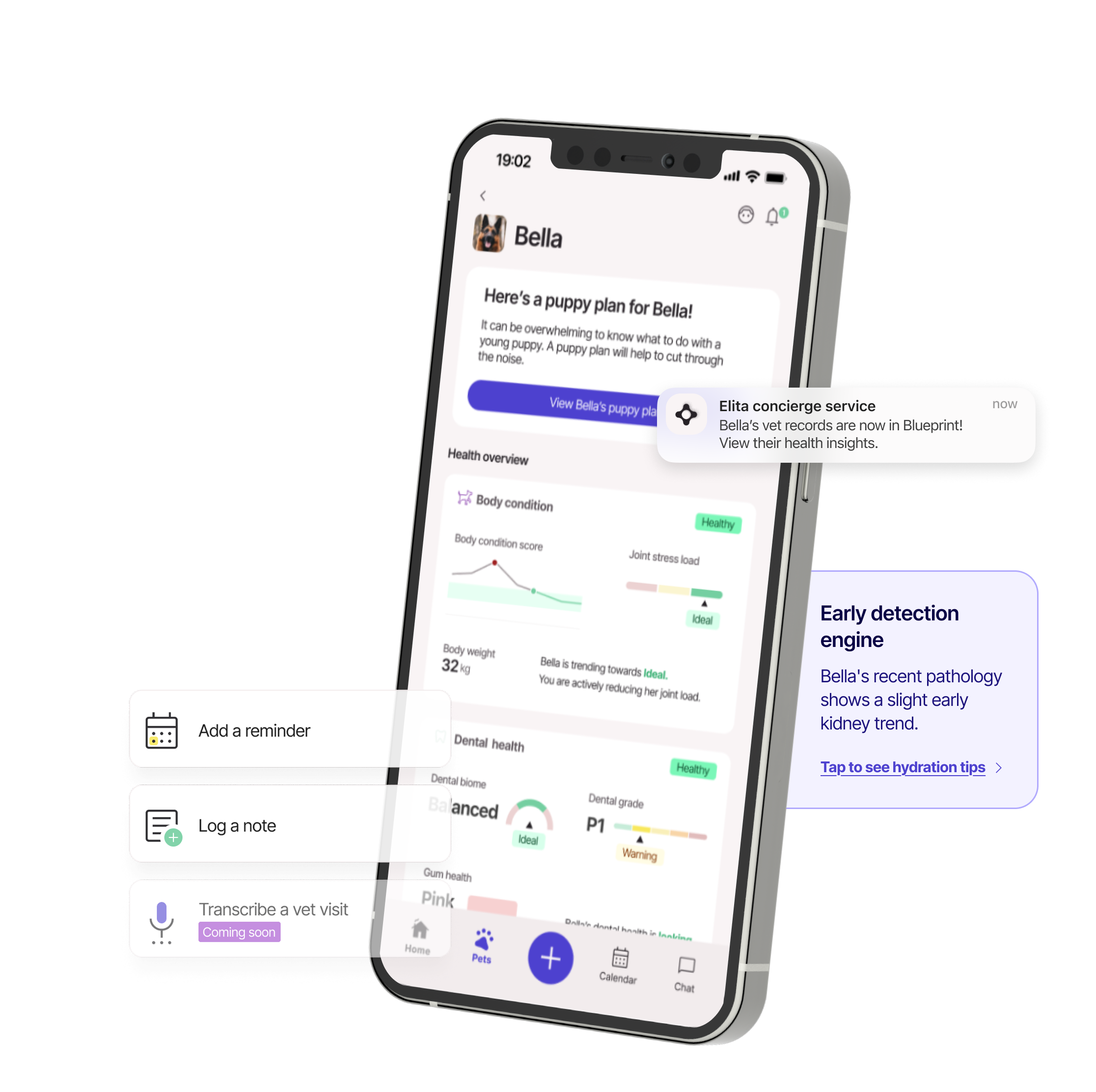
Blueprint helps you keep a clear story over time. Log when the limp happens, what happened before it, and how long it lasts. Add a simple severity score, like mild, moderate, or severe.
Save a few short walking videos in the same place. When you look back, patterns are much easier to spot. It also makes the vet visit quicker and more productive, because you are not trying to remember everything under pressure.