Puppy teething timeline: surviving the shark phase
The “land shark” phase is a rite of passage for puppy owners. Those needle-sharp teeth seem designed to test patience, hands, and furniture alike. But the biting isn’t aggression, it’s biology. Puppies go through a predictable developmental phase as their baby teeth fall out and adult teeth erupt through the gums. Understanding the timeline helps separate normal teething behaviour from training issues, and makes the chewing phase easier to survive.

The biological schedule
Teething follows a fairly consistent pattern, though individual puppies vary slightly.
3 to 6 weeks
The baby teeth (deciduous teeth) erupt while puppies are still with their mother.
12 to 16 weeks
The incisors (front teeth) begin to fall out and are replaced by adult teeth. You may spot tiny rice-grain-sized teeth on the floor, but most are swallowed harmlessly.
16 to 24 weeks
The canine teeth and premolars erupt. This is often the most intense chewing phase, when gums are inflamed and the urge to bite is strongest.
6 to 7 months
All 42 permanent adult teeth should be present. If baby teeth remain alongside adult teeth at this stage, this is considered abnormal and should be assessed by a veterinarian.
Management through temperature
You can’t stop a teething puppy from chewing, but you can give them the right outlet. During peak teething periods, the gums are inflamed and sensitive. Cold objects help by reducing inflammation and numbing the tissue. Frozen damp washcloths, chilled carrots, or purpose-designed rubber chew toys are effective and safe. Avoid ice cubes or very hard chews, which can fracture developing teeth. Redirecting chewing to appropriate items works with their biology rather than fighting it.
Tracking the dental milestones
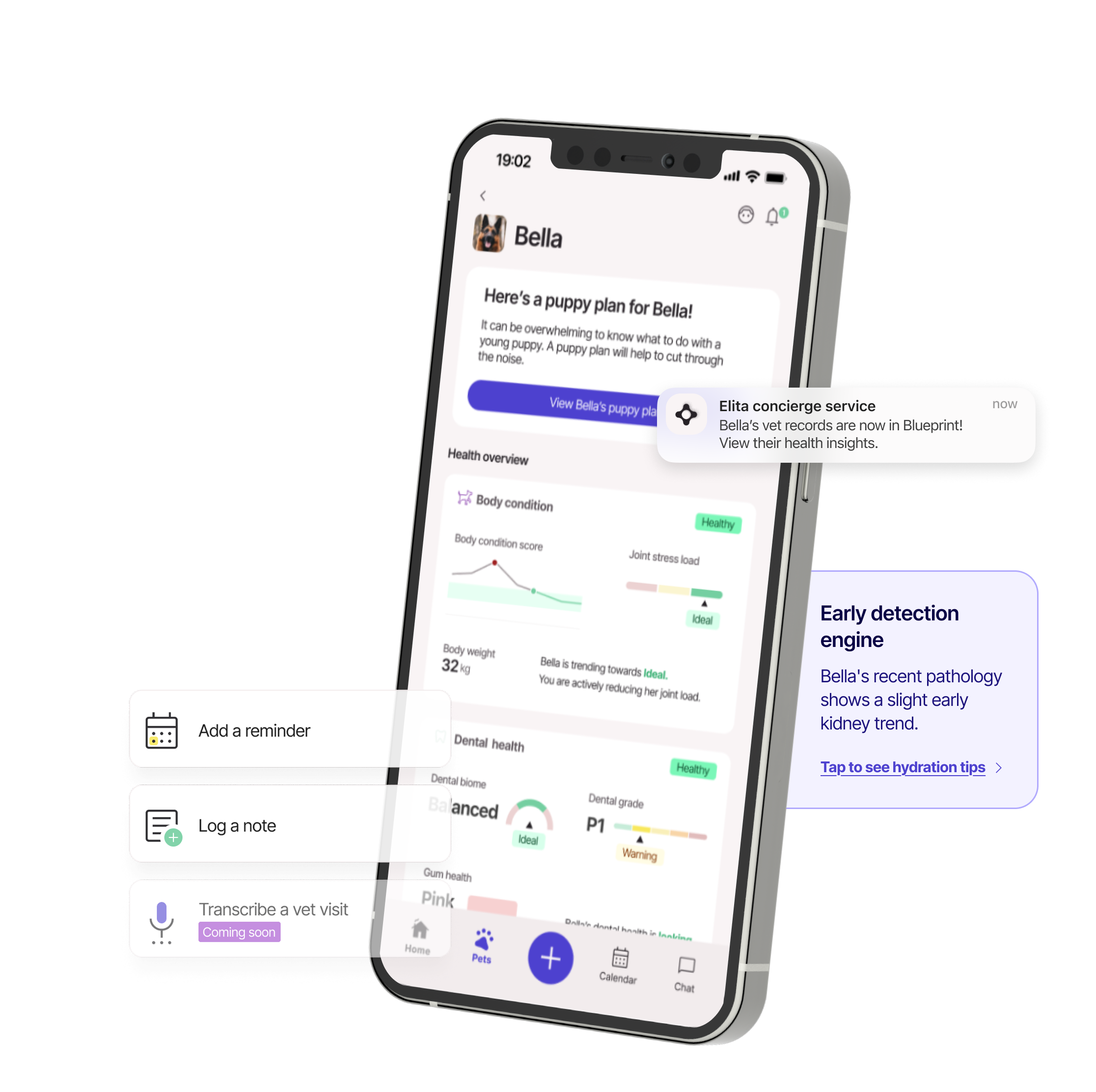
Teething is an important time to start paying attention to oral development. One common issue is retained deciduous teeth, where a baby tooth fails to fall out and the adult tooth erupts beside it. This can trap food and plaque, increasing the risk of early periodontal disease and bite problems. Elita Blueprint lets you record dental milestones and store photos or notes about your puppy’s bite over time. If a baby tooth is still present at seven months, having that history makes it easy to raise with your vet, often allowing removal to be planned alongside routine procedures like desexing.

Monitor their mouth
Teething is temporary, but adult teeth last a lifetime. Tracking dental development early helps ensure those adult teeth erupt into a healthy, functional bite and sets your puppy up for better oral health long-term.