What is the puppy vaccination schedule in Australia?
Vaccinations are one of the first health decisions you’ll make for your puppy, and they arrive at a time when everything else is changing quickly too. Feeding routines, growth, sleep patterns, and behaviour all evolve rapidly in the first few months, which can make it hard to keep track of what is normal development and what isn't. Understanding the typical puppy vaccination schedule in Australia is critical for safety, but what matters just as much is seeing those medical events in the context of your puppy’s overall growth.
How puppy vaccinations are typically scheduled in Australia
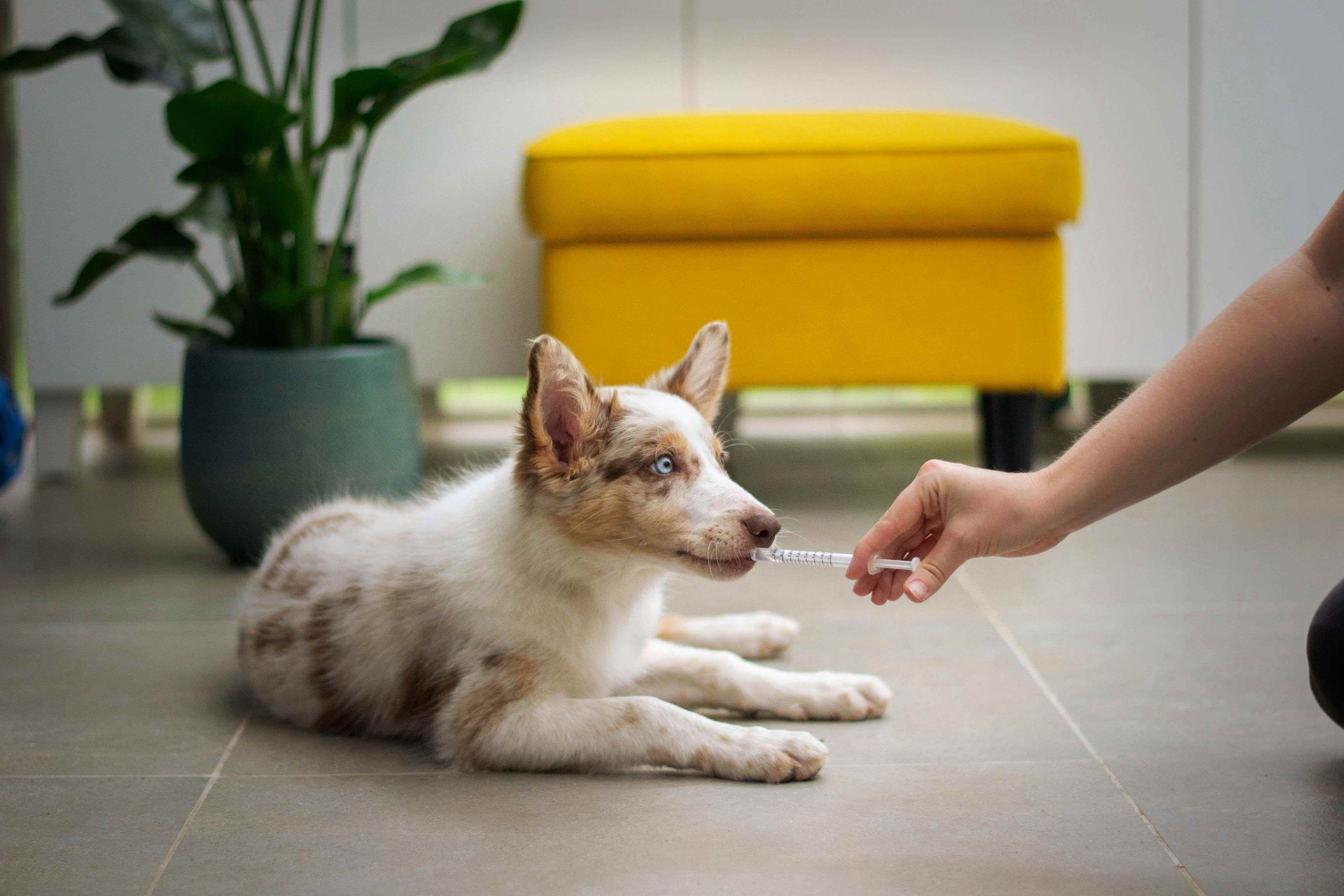
In Australia, the standard protocol usually involves a series of three vaccinations spaced out over the first four months of life. The first typically occurs at 6-8 weeks, the second at 10-12 weeks, and the final puppy booster at 14-16 weeks.
These "core" vaccines (often called C3) protect against Parvovirus, Distemper, and Hepatitis, diseases that are particularly dangerous while a puppy’s immune system is still developing. Depending on where you live and your lifestyle, your vet might also recommend "non-core" vaccines for kennel cough or leptospirosis (making it a C5 or C7).
The exact dates can shift slightly, but the priority is completing the full course to ensure there are no gaps in immunity as they begin to explore the world.
Vaccinations as part of a connected health picture
Vaccinations are important milestones, but they are also physical stressors on a young dog.
Because these appointments coincide with other big changes, like switching foods or growth spurts, it helps to look at them in context rather than as isolated calendar dates.
By tracking your puppy’s energy, appetite, and digestion immediately after a shot, you can spot patterns early and distinguish between a tired puppy and a genuine reaction.
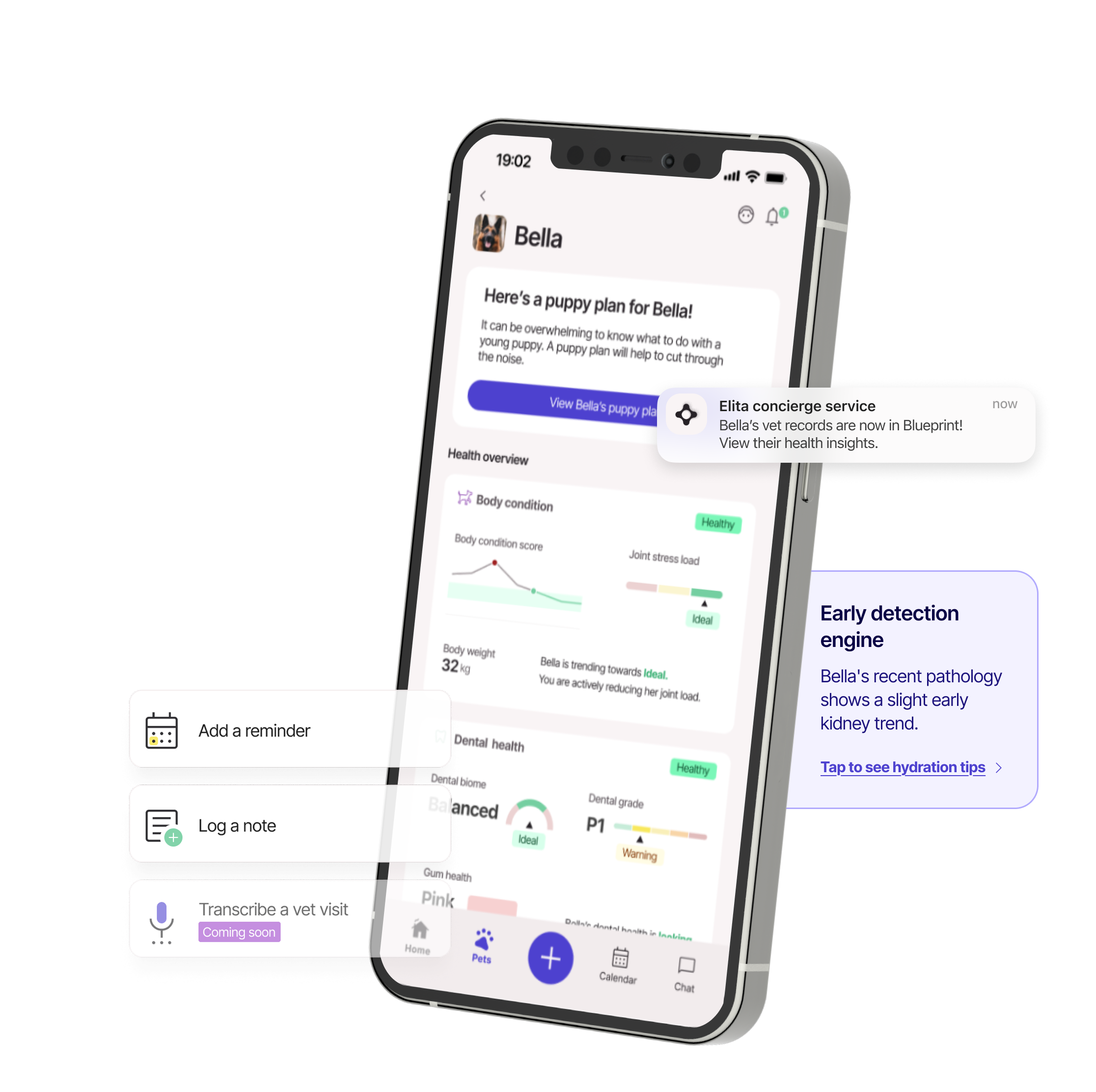
This is where Elita Blueprint helps; instead of relying on loose paper certificates, it lets you log these health events alongside daily wellness observations.
This record-keeping becomes even more valuable as your dog matures. Many owners now consider titre testing (a blood test to check antibody levels) before opting for annual boosters in adult dogs. Having a clear, centralised history of exactly when and what your dog was vaccinated with gives you the data you need to make those decisions confidently.
Early prevention and long term health
Good prevention early in life is one of the lowest effort, highest impact ways to support longevity.
While vaccinations manage immediate viral risks, the habit of monitoring your dog’s health baselines builds a foundation for the rest of their life. When you track health inputs consistently, whether that’s a vaccination, a worming tablet, or a diet change, you establish a "normal" for your pet.
This makes it much easier to notice when something is wrong later down the track. We designed Elita Blueprint to support this proactive approach. By connecting clinical records with your own real-world observations, the platform helps you stay ahead of problems rather than just reacting to them when they appear.

Start prevention with clarity
Early care moves quickly, and important details are easy to lose in the chaos of puppyhood. Keep your vaccination history, titre results, and health observations connected in one place, so you’re building a clear foundation for long term health from the very beginning.