What should my puppy worming schedule be?
Worming is one of the first health routines new puppy owners need to get right, but the schedule can feel confusing, especially in the early weeks. Different worms, different timings, and different products all play a role.
Understanding the general puppy worming schedule, and keeping track of what’s been given and when, helps you stay consistent and avoid gaps.
Typical puppy worming timelines
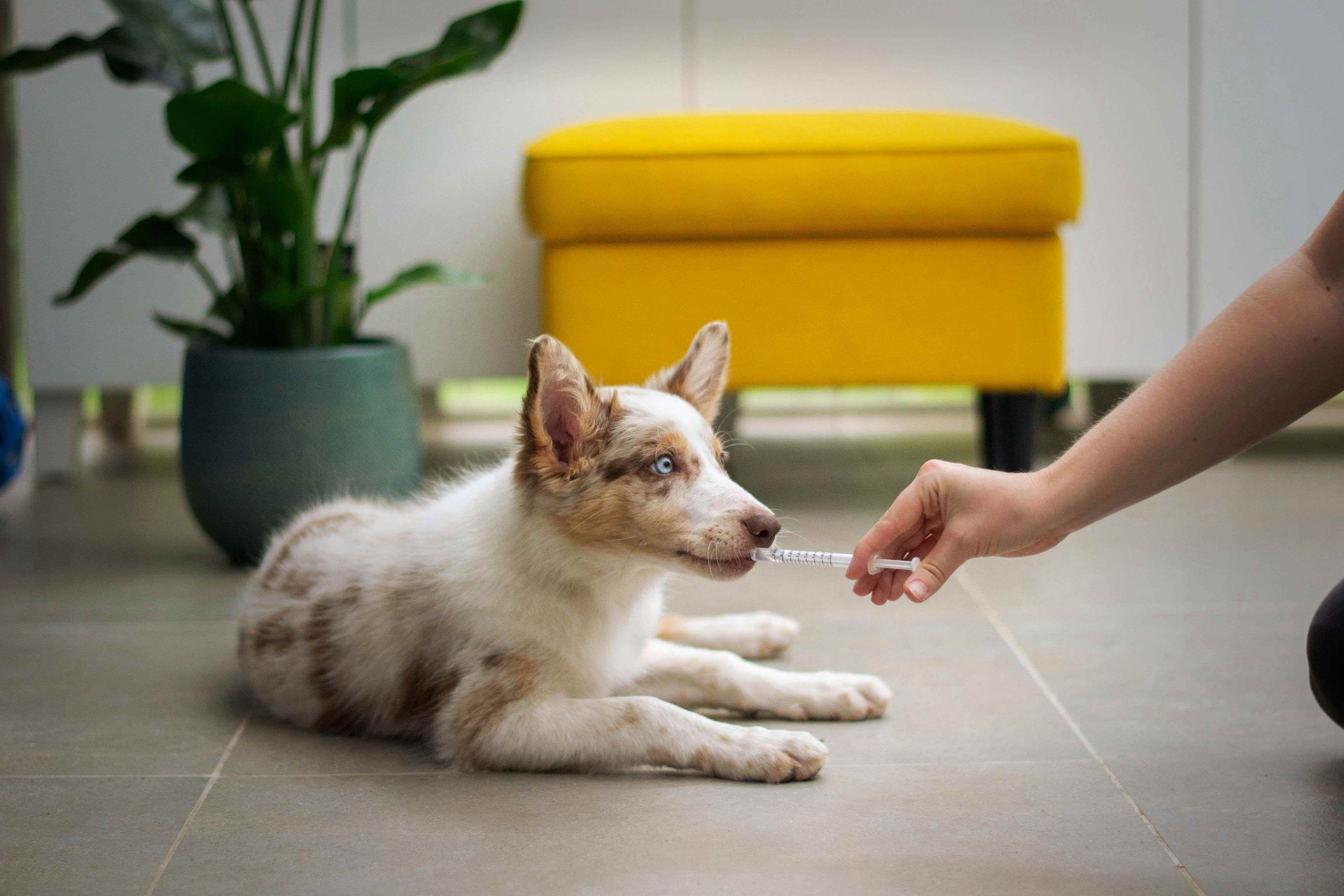
Most puppies are first wormed from a young age, often starting around two weeks old, with treatments repeated regularly throughout early development. The schedule usually becomes less frequent as puppies grow, but consistency in the early months is important.
The exact timing can vary depending on risk, environment, and the product used. This is why keeping an accurate record matters, especially when routines get busy.
In Australia, location also matters. Puppies living in or travelling through tick paralysis areas may need additional parasite protection alongside routine worming. Ticks can pose a serious risk, especially to young dogs, so prevention often looks different depending on where you live and your puppy’s exposure.
Because tick prevention, worming, and other parasite treatments can overlap, keeping a clear record helps avoid gaps or double-ups.
Why consistency matters more than perfection
Missing doses or losing track of dates can make worming less effective over time. Puppies are still developing their immune systems, which makes them more vulnerable if protection lapses.
Rather than relying on memory, tracking worming alongside other health milestones helps ensure nothing is overlooked. This becomes especially useful when different treatments overlap with vaccinations, feeding changes, and growth stages.
Using health tools to stay organised
Good prevention is one of the lowest effort, highest impact ways to support long-term health. Getting the basics right early, like parasite prevention, sets the foundation for better outcomes as your puppy grows.
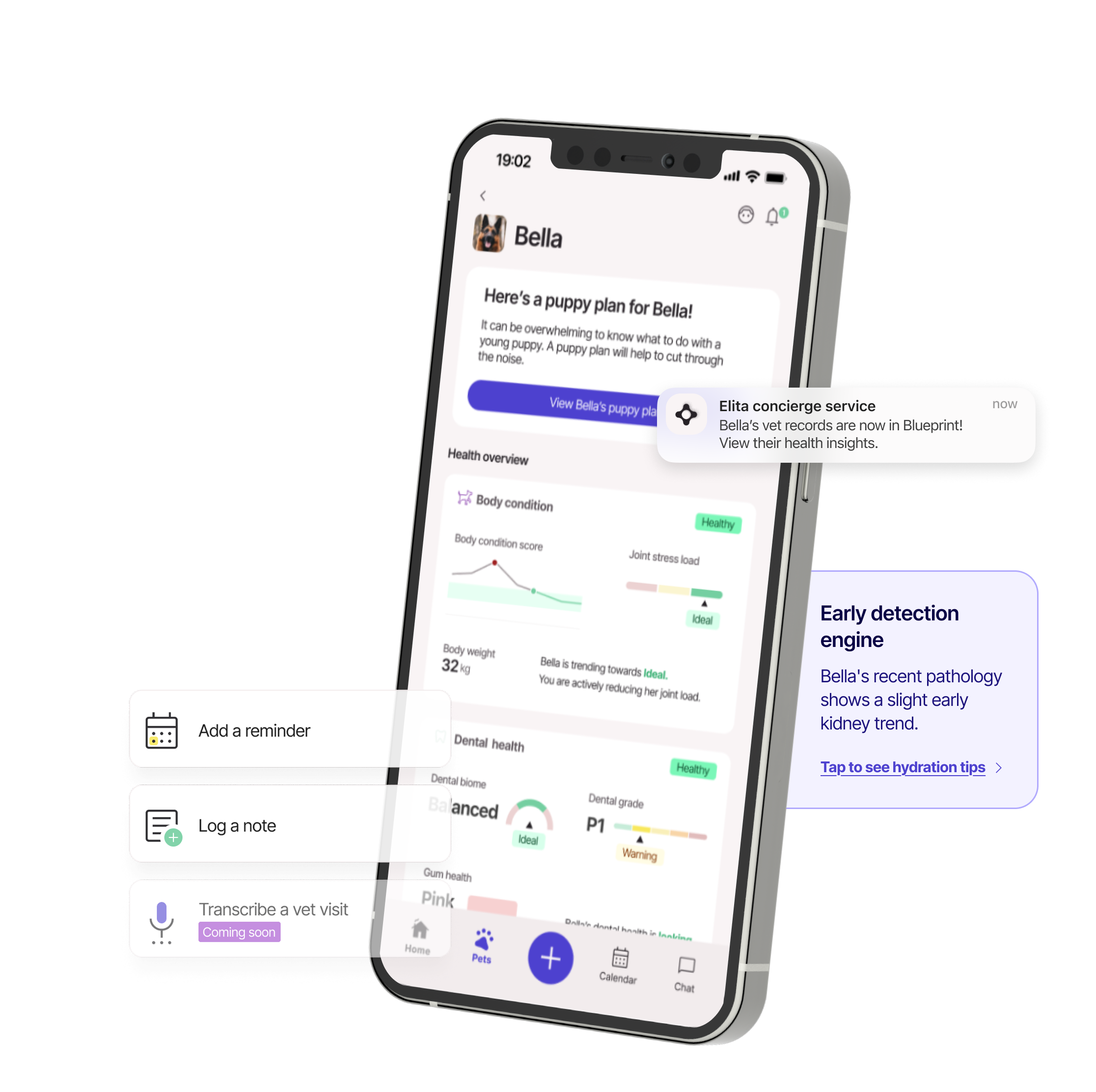
Blueprint helps you stay on top of these early health inputs while also building a broader picture of your dog’s biology over time. By keeping prevention, routines, and health changes connected in one place, it becomes easier to spot patterns, stay consistent, and make more informed decisions as needs evolve.
This context is what allows preventative care to contribute to longevity, not just short-term protection.

Stay on track with early care
Puppy worming works best when it’s consistent and well recorded. Blueprint helps you track treatments, routines, and milestones so you can build strong health habits from the very beginning.