Signs of dehydration in dogs: protecting the kidneys
Water is not just about quenching thirst. It is the medium in which every biological process in your dog’s body happens. It transports nutrients, regulates temperature, and flushes toxins. When water levels drop, the consequences are immediate and systemic.
The blood thickens, circulation slows, and the organs that rely on constant flow, specifically the kidneys, begin to struggle. Recognising the signs of dehydration isn't just about comfort. It is about preserving the delicate filtration system that keeps your dog alive. By the time the clinical signs are obvious, the internal stress is already high.
The physical tests: skin, gums, and eyes
Because dogs can't tell us they are thirsty, we have to rely on physical checks. The most common field test is the "skin tent." If you gently lift the loose skin on the back of your dog's neck or shoulders, it should snap back into place instantly. In a dehydrated dog, the skin loses elasticity and returns slowly or stays "tented." Next, check the gums. A hydrated dog has slick, wet gums. If they feel tacky, sticky, or dry to the touch, their fluid levels are critically low. In more severe cases, you might notice sunken eyes or a sudden lack of energy. These are late-stage indicators that the body is shutting down non-essential functions to preserve the core organs.
The kidney connection: why flow matters
The kidneys are the body’s filtration plant. Their job is to scrub toxins from the blood and excrete them through urine. To do this effectively, they need pressure and flow. When a dog is dehydrated, blood volume drops and blood pressure decreases. The kidneys are forced to work much harder to concentrate urine in an attempt to hold onto every drop of water.
Repeated or chronic dehydration puts immense stress on nephrons, the microscopic filtering units inside the kidney. Unlike some other cells, nephrons generally do not regenerate. Once they are damaged by ischemic (low flow) injury, that function is lost forever. Keeping your dog well-hydrated is one of the single best ways to protect their renal health over the long term.
Catching kidney stress early with data
The most dangerous thing about kidney stress is that it is silent. You often won't see physical signs of dehydration or renal decline until significant damage has already been done. This is why reliance on physical checks alone isn't enough.
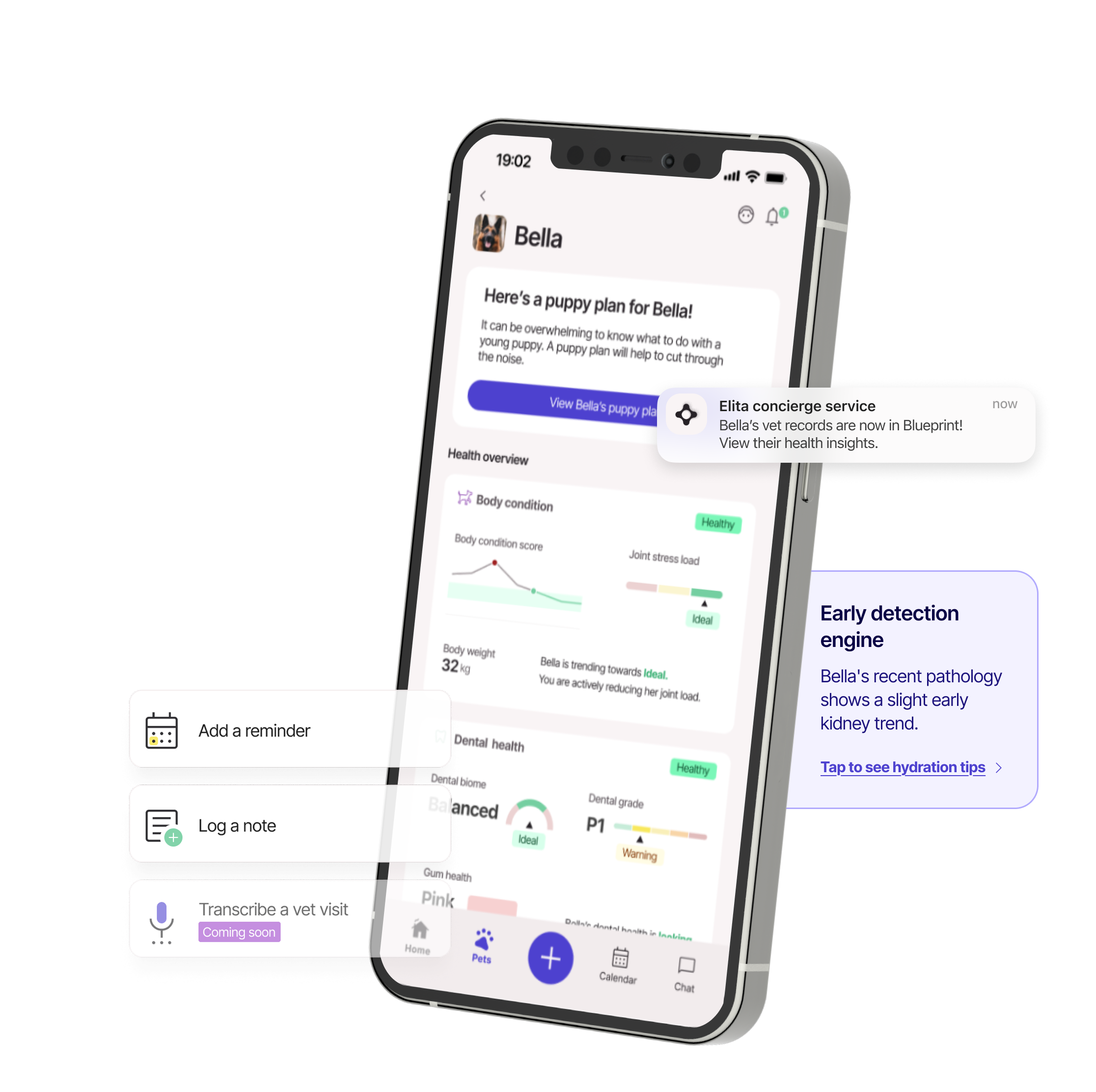
The gold standard for longevity is yearly blood health checks with your vet to measure key kidney markers like SDMA, creatinine, and urea. This is where Elita Blueprint steps in to shoulder the mental load. When you upload your dog’s historical records or fresh blood results, our system ingests that data and secures it in their permanent vault.
We monitor the longitudinal trends for you in the background. Instead of you trying to remember what their levels were three years ago, Elita holds the complete picture. We track the subtle shifts in their biological baselines over time, so you don't have to be a data scientist to know where your dog’s health stands.

We watch the trends so you don't have to
Your dog’s kidneys work 24/7 to keep them healthy. You focus on keeping their bowl full, and let Elita Blueprint handle the data. We keep their clinical history organised and monitored in the background, ensuring you always have the full picture without the admin.