Signs of diabetes in dogs: detecting the silent metabolic shift
Diabetes in dogs is a metabolic condition that often develops quietly before the signs become undeniable. It occurs when the body either cannot produce enough insulin or cannot use it effectively, leaving cells starving for energy while sugar builds up in the bloodstream. Because the early symptoms look a lot like normal aging or minor behavioral quirks, they are easily missed. We often dismiss a dog drinking more water as "feeling hot" or weight loss as a "good thing." However, viewed through a biological lens, these are urgent data points. Catching diabetes early isn't just about managing a condition; it is about preserving organ function and preventing irreversible damage like blindness.
The four classic biomarkers of canine diabetes
In the veterinary world, the signs of diabetes often follow a specific pattern, but you have to know what to look for. The most common signals form a cluster known as the "Four Ps": Polyuria (Excessive Urination): Your dog needs to go out more often or starts having accidents inside.
The body is trying to flush excess sugar out through urine. Polydipsia (Excessive Thirst): To replace lost fluid, your dog drinks aggressively.
This isn't just an extra bowl after a walk; it is a relentless thirst. Polyphagia (Increased Hunger): Because glucose isn't reaching the cells, the body thinks it is starving.
Your dog may be ravenous but never satisfied. Weight Loss: Despite eating more, your dog loses weight because the body begins breaking down its own muscle and fat reserves for energy. If you see these four signs together, it is rarely a coincidence. It is a metabolic red flag.
Beyond the basics: the hidden biological toll
While thirst and hunger are the obvious external signs, diabetes causes significant internal stress. One of the most rapidly developing complications is cataracts.
High blood sugar causes water to be pulled into the lens of the eye, disrupting its structure. This causes a sudden "cloudiness" that can lead to total blindness in a matter of weeks, not years. Additionally, the excess sugar in the urine creates a perfect breeding ground for bacteria, leading to chronic or recurring Urinary Tract Infections (UTIs). Recognising these secondary signs, cloudy eyes or frequent infections, is critical.
They are often the tipping point where a manageable condition becomes a medical emergency.
Moving from observation to data
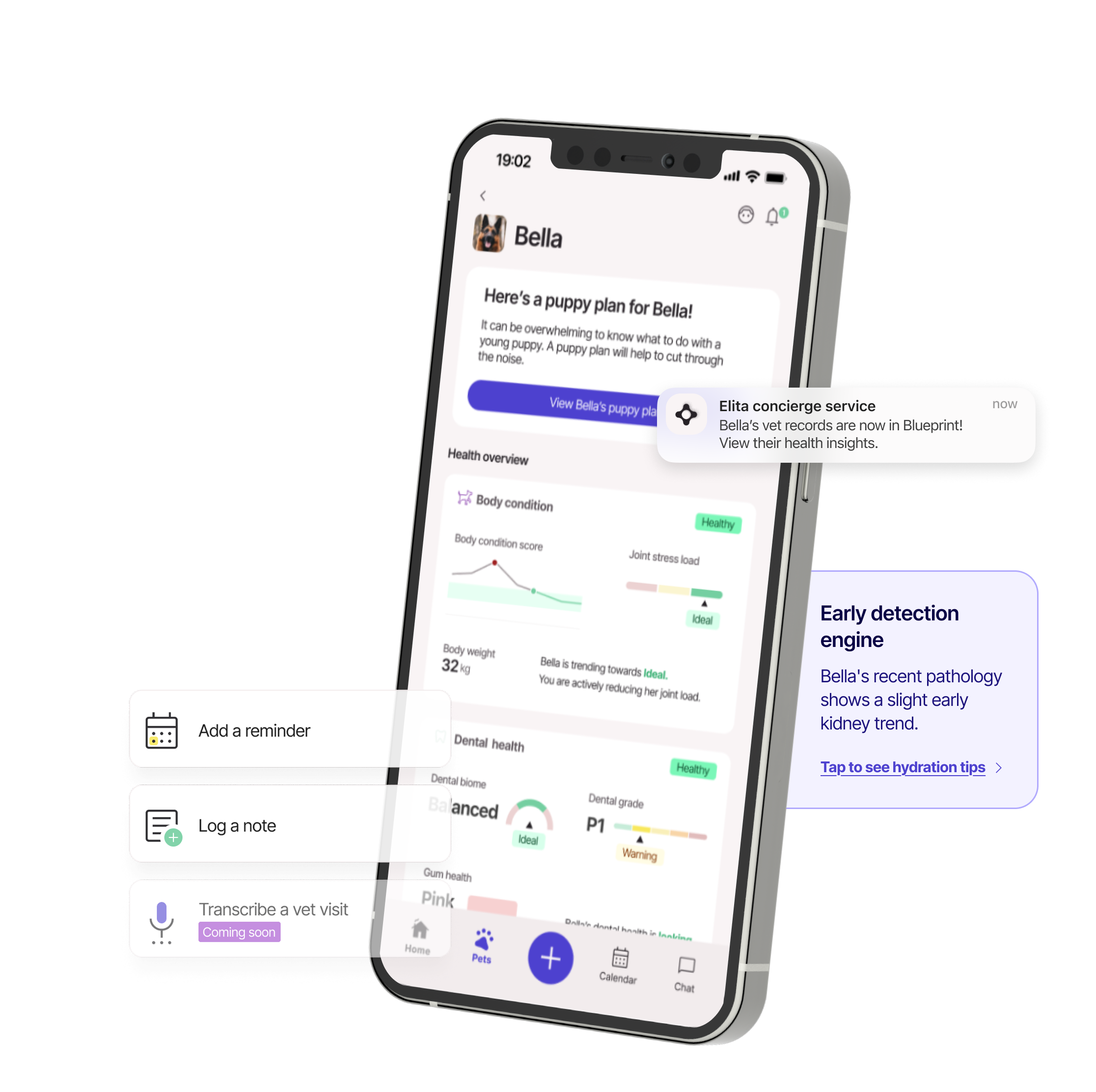
The challenge with diabetes is that the symptoms often ramp up slowly. A slight increase in water intake is hard to notice day-to-day. This is where Elita Blueprint changes the outcome. By tracking baselines, logging typical water consumption, weight trends, and appetite, you turn subjective feelings into objective data.
When you can show your vet that your dog’s weight has dropped 5% in a month while their appetite has doubled, you aren't just guessing. You are providing a clinical picture. Blueprint helps you capture these inputs so you can identify the trend line before the symptoms become severe. Early data leads to earlier diagnosis, which is the key to managing your dog’s longevity.

Don’t wait for the symptoms to shout
Metabolic changes start as whispers before they become problems. By tracking your dog’s weight, habits, and health inputs, you can spot the warning signs while there is still time to act.