Signs of poor gut health in dogs, and what they can tell you early
Poor gut health in dogs often shows up subtly, through changes in stool quality, appetite, skin, energy, or behaviour, long before it becomes an obvious medical issue, making early awareness and context critical.
Why early gut health changes are easier to spot when you track them together
Poor gut health in dogs rarely presents as a single, clear symptom. More often, it appears as a cluster of low-grade changes that develop gradually, such as inconsistent stools, increased gas, intermittent diarrhoea, reduced appetite, skin flare-ups, or shifts in energy and behaviour. These signs are commonly managed separately, even though they may share a gut-related origin.
The gut plays a central role in immune regulation, which means imbalances can influence far more than digestion alone. Changes in gut health have been linked to allergic responses, recurrent infections, inflammatory conditions, and altered stress responses. When these signs appear sporadically, they’re easy to dismiss as unrelated or temporary.
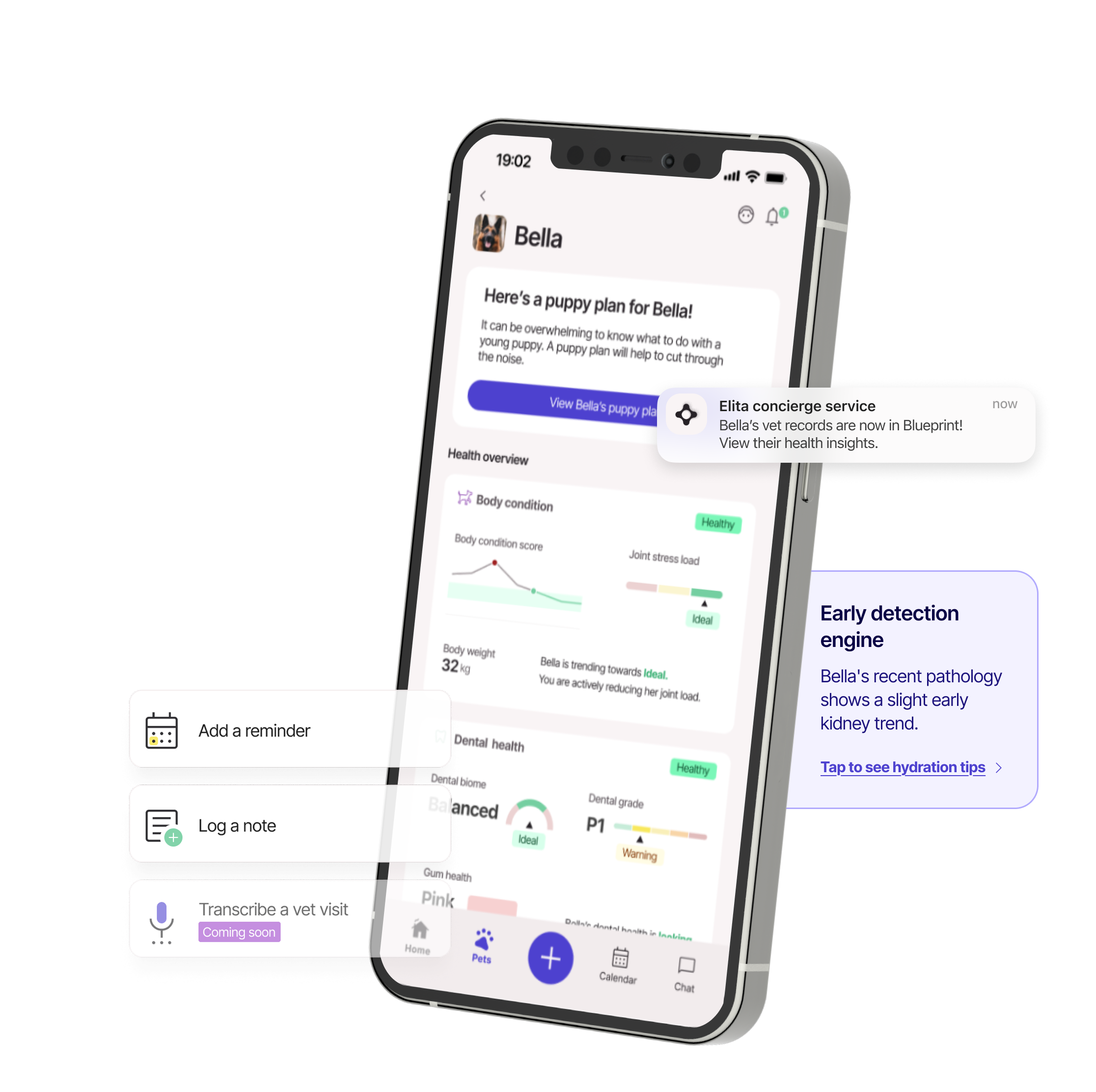
This is where tracking becomes critical. Seeing symptoms together, rather than as isolated events, makes it easier to recognise emerging patterns. When owners can view gut-related changes alongside diet, environment, and routine, early signals are easier to spot and address before they escalate.
Why gut health changes are often missed without a complete health view
Many gut-related changes don’t present as dramatic events. Instead, they appear as small fluctuations, softer stools that come and go, occasional skin irritation, minor appetite changes, or shifts in energy. When these signs are viewed in isolation, they’re often dismissed as temporary or unrelated.
The challenge is that gut health influences multiple systems at once. Digestive, immune, and behavioural changes can all stem from the same underlying imbalance, yet they’re rarely considered together unless there’s a clear framework to do so.
A complete health view brings these signals into one place. When symptoms, diet, routines, and environmental factors are seen side by side, patterns emerge that aren’t visible when each issue is treated separately. This broader perspective allows earlier recognition of change and more informed decisions about next steps.
What to do next if you’re worried about your dog’s gut health
Concern about gut health usually starts with something subtle, a change in stools, appetite, energy, or behaviour that doesn’t quite feel right. The instinct is often to look for a single answer or quick fix, but the most helpful next step is clarity rather than urgency.
Documenting what you’re seeing, when it started, and what else may have changed creates a foundation for better decisions. This includes diet, treats, environment, stressors, medications, and routines. Patterns often become clearer once observations are written down rather than held in memory.
Approaching gut concerns methodically helps avoid unnecessary intervention while still acting early. It gives you the information needed to decide whether monitoring is enough or whether further investigation is warranted.

Signs of poor gut health in dogs and what they can tell you early
Gut issues rarely arrive as one big event, they build quietly. Blueprint helps you track the small shifts that matter, across digestion, skin, energy, appetite, and behaviour, so you can act early and stay focused on prevention.