The simple pet health check that helps you catch small problems early
The simple pet health check that helps you catch small problems early
You know the moment. Your dog does something tiny that makes you think, “Huh, that’s odd.” Maybe it is bad breath, extra scratching, or they seem a bit slower on walks.
Most bigger problems do not start as emergencies. They often start as small changes you only notice in hindsight.
A simple pet health check routine helps you spot those changes early, without panic.
What a pet health check really is
Most of the time, a “pet health check” means a wellness exam. It is the regular check-up your dog gets when they seem fine, not just when they are sick.
It helps to think about health checks in two parts.
First is what you can do at home. Second is what your vet does in a proper wellness visit.
At the clinic, a typical check is a head-to-tail look over your dog. It often includes:
A common myth is that a health check is “just vaccines.” Vaccines can be part of it, but they are only one piece. The bigger value is having trained eyes and hands check for early changes you might miss.
The AVMA explains preventive care as regular exams and planning for things like vaccines, parasite control, dental health, and weight. That is the heart of a wellness visit. Source: American Veterinary Medical Association (AVMA), preventive care for pets
AAHA also encourages routine wellness visits because they help find issues early and keep prevention plans up to date as your dog’s life changes. Source: AAHA, preventive care and wellness visits
How often to book checks (and what may change with age)
A good rule of thumb is simple. Younger dogs need more visits. Healthy adults usually go yearly. Senior dogs often go more often.
Here is a practical guide.
If you are thinking, “My dog seems fine, is it still worth it?” For many dogs, yes. The point is not to hunt for problems. It is to build a baseline, so you can spot slow drift over time.
This matters because dogs are good at acting okay. Eating and wagging is great, but it does not rule out pain, dental disease, skin problems, or early illness.
Many general care guides also point owners toward regular check-ups as part of responsible dog care. Source: RSPCA Australia, dogs and caring for their health
A quick note on “screening tests”
Some clinics may suggest tests like a stool check for parasites, heartworm testing (depending on where you live), or baseline blood and urine tests in older dogs.
These tests are not about labelling your dog as sick. They can add context, especially if your dog is ageing, has symptoms, or is starting new long-term medicines.
Talk to your vet about what makes sense for your dog’s age, breed, and lifestyle.
The 10-minute monthly at-home check (plus when to book sooner)
This is the easiest habit to keep. Pick the same day each month and do a quick head-to-tail check. Many owners do it after grooming, when their hands are already on the dog.
You are not trying to diagnose anything. Your job is to notice change and write it down.
A simple head-to-tail checklist
Nose and eyes
Mouth
Ears
Skin and coat
Body shape and weight
Paws and nails
Movement
Toilet habits
Mini rule that helps: note it, do not diagnose it. If something is new, changing, or worrying, it is worth a proper check.
What to bring to the appointment (so you are not relying on memory)
Vet appointments are easier when you bring clear examples. Symptoms often disappear in the clinic, especially coughing, limping, or itching.
Bring these if you can:
VCA also encourages owners to bring notes and ask questions, because it helps the visit run smoothly and helps your vet understand what you are seeing at home. Source: VCA Animal Hospitals, your pet’s veterinary visit
Signs that are worth booking sooner
Many “odd” things can wait a day or two while you watch and take notes. Some signs should be treated as sooner rather than later.
Book sooner if you notice:
Lumps are not always cancer. Many are harmless. New lumps or changing lumps still deserve a check.
For a clear overview of signs that may need urgent help, the ASPCA lists common emergency warning signs for pets. Source: ASPCA Animal Poison Control, emergency signs
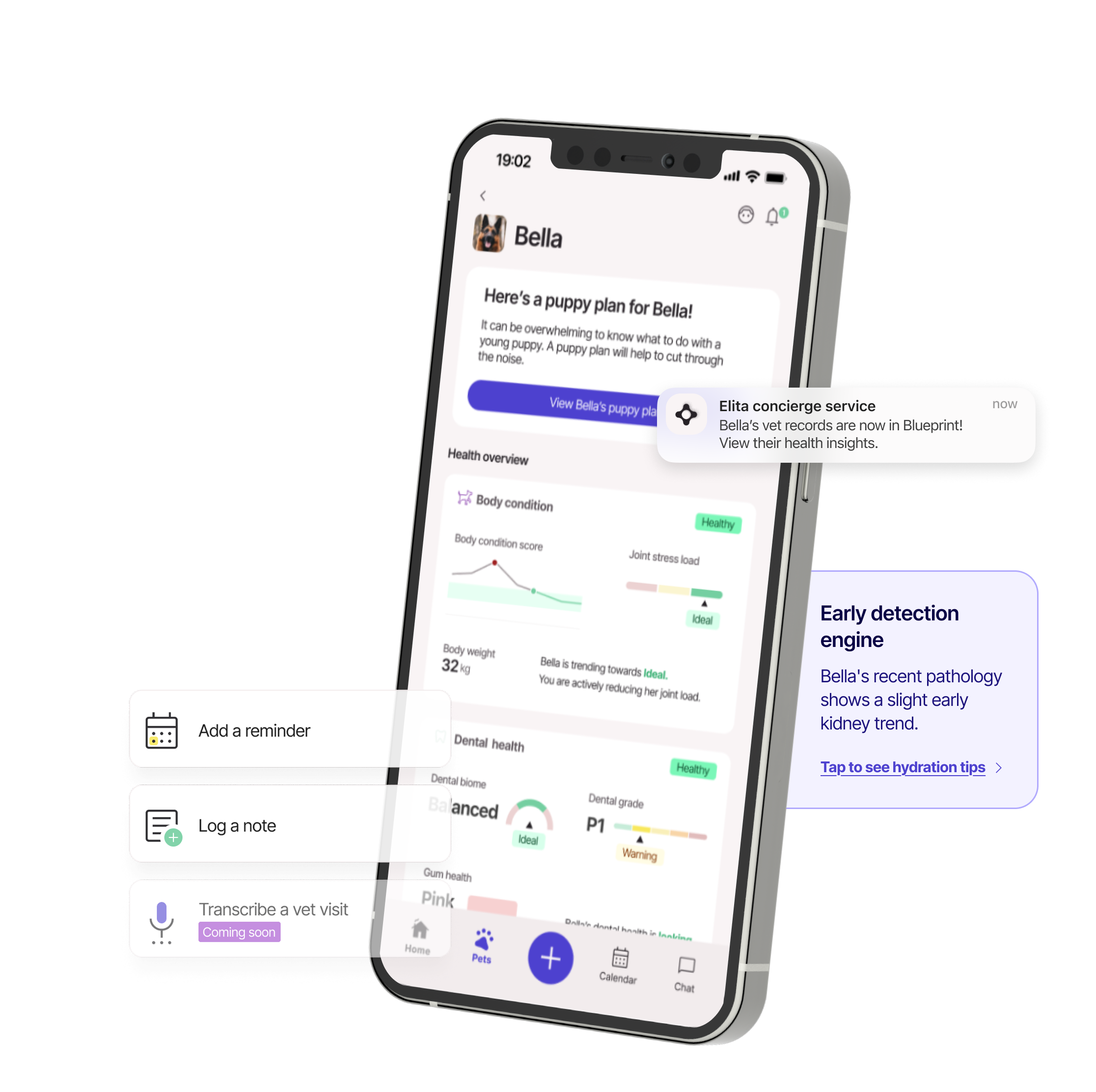
Make health checks easier over time with Blueprint
The hardest part of a pet health check is not the checklist. It is noticing slow change when life is busy.
A patterns-over-time mindset helps. If you track a few baselines, you stop guessing what is “normal” for your dog.
A simple starting point is three things:
Over a few months, patterns become clearer. You might spot gradual weight gain, a slow increase in thirst, more scratching, shorter walks, or on-and-off soft stools.
Blueprint helps you keep those notes in one place, with dates and examples. Then your next health check is not based on fuzzy memory. It is based on a simple timeline you can use and share at your next appointment.