What is the dog gut microbiome, explained simply
The dog gut microbiome refers to the community of bacteria, fungi, and other microorganisms living in the digestive tract. These microbes help break down food, support nutrient absorption, regulate immune responses, and communicate with other systems in the body. A healthy microbiome isn’t defined by one “ideal” profile, but by balance and adaptability. Diversity and resilience matter more than perfection, which is why understanding how the microbiome responds to diet, stress, and life stage is more useful than chasing a single score.

Understanding the dog gut microbiome in practical terms
The dog gut microbiome is the collection of microorganisms that live in the digestive tract and interact with the body every day. These microbes help break down complex food components, support nutrient absorption, regulate immune responses, and contribute to inflammatory balance.
In practical terms, a healthy microbiome is one that’s diverse and adaptable. It responds well to dietary variety, recovers after disruption, and supports stable digestion and comfort over time. Rather than aiming for a perfect microbial profile, the focus is on how well the microbiome supports resilience and overall wellbeing.
How to think about the microbiome without overcomplicating it
It’s easy to get lost in bacterial names and percentages, but at a practical level, the microbiome is best understood by what it does, not what it’s called. A healthy microbiome supports digestion, immune regulation, nutrient absorption, and communication with the nervous system.
Rather than chasing “perfect” profiles, it’s more useful to ask whether the gut is resilient, adaptable, and supporting comfort and function over time. This reframing helps owners use microbiome information as guidance, not as something that creates confusion or anxiety.
Using microbiome knowledge without chasing perfection
Microbiome science can feel overwhelming, especially when results highlight dozens of bacteria with unfamiliar names. But gut health doesn’t improve by chasing an ideal profile or trying to optimise every metric at once.
The most useful way to apply microbiome knowledge is pragmatically. Look for broad trends, notice how changes align with symptoms, and focus on what meaningfully improves comfort and resilience. Progress comes from consistency and context, not from trying to engineer a perfect gut environment.

Understand the gut microbiome without the overwhelm
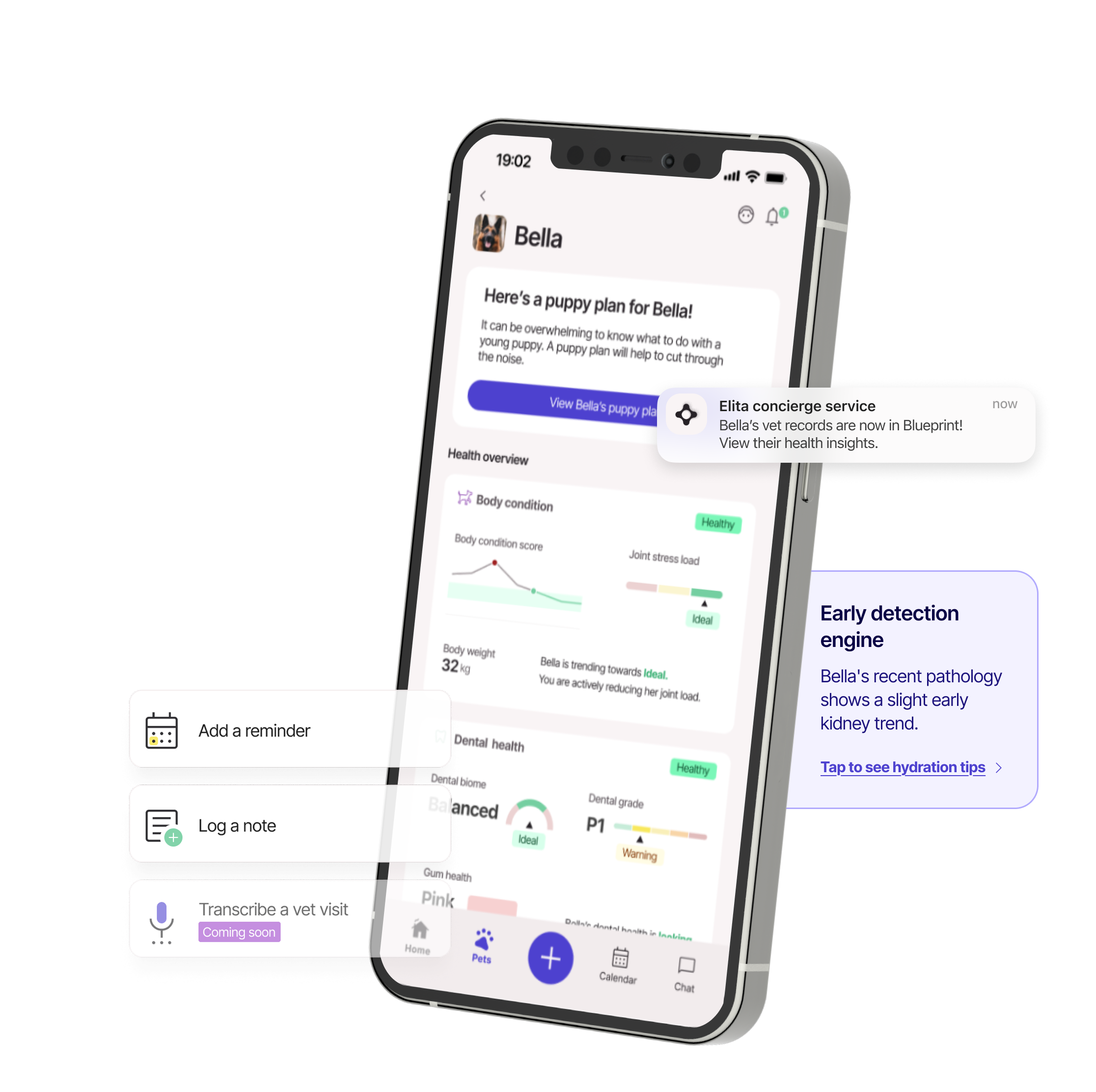
Microbiome info can be helpful, but it’s easy to overinterpret a single report. Blueprint gives you the missing layer, real-world context. Upload your test results, then track diet, symptoms, and routines over time so the data becomes practical, not stressful. The goal is understanding and action, not chasing a perfect profile.